














Required for core functionality such as security, network management, and accessibility. These cannot be disabled.

Top Generative AI Company
Award by Clutch for the Top Generative AI Company
Uncover the transformative potential of digital and mobile solutions for your industry.
Home > industries > Telemedicine Platforms Development
Transform healthcare delivery with telemedicine platform development that puts patients first. We build secure virtual care solutions connecting providers and patients seamlessly while ensuring compliance, interoperability, and exceptional user experiences that drive adoption.
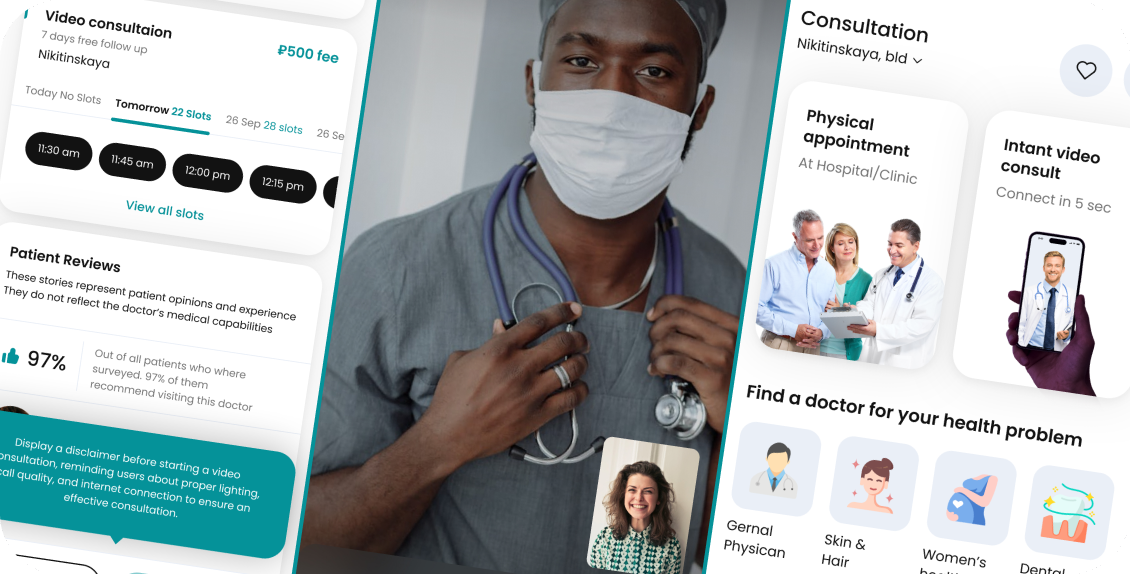
Our telemedicine platform development team builds HD video consultation platforms with secure messaging, virtual waiting rooms, multi-party conferencing, and end-to-end encryption seamlessly integrated into existing clinical workflows for comprehensive virtual visits.
We engineer telemedicine software development solutions that connects wearable devices and medical sensors to unified telehealth platforms capturing real-time vitals, automatically syncing with EHR systems and triggering intelligent alerts for proactive clinical intervention.
As a leading telemedicine app development company, we enable bidirectional data exchange using FHIR R4/R5 and HL7 standards connecting platforms with Epic, Cerner, and Meditech across multi-facility networks.
Our telemedicine mobile app development expertise delivers digital prescriptions, drug interaction verification, formulary checks, and direct pharmacy transmission with automated refill management and medication adherence tracking built in.
We build intelligent telemedicine app development solutions featuring AI symptom checkers, clinical decision support algorithms, predictive analytics delivering evidence-based recommendations, and early warning alerts improving outcomes at scale.
Our telemedicine app development services include intelligent scheduling, automated reminders, no-show prediction, secure payment processing, and digital intake forms creating frictionless patient experiences that maximize engagement and retention.
As a proven telemedicine app development company with deep healthcare technology expertise, we deliver solutions combining clinical workflow optimization with enterprise-grade engineering excellence.
We build telemedicine platforms that patients actually use and providers trust. HIPAA-compliant, EHR-integrated, and designed for real clinical workflows from day one.
See how healthcare organizations solved real virtual care challenges, from patient matching to remote monitoring, and turned them into measurable clinical outcomes.
The client's chronic care patients lacked continuous health visibility between virtual visits, with disconnected wearable devices unable to feed real-time vitals into their existing telehealth platform. They required a seamless IoMT integration that physicians could monitor remotely without adding clinical workflow complexity.
We developed a robust IoMT-enabled remote monitoring platform integrating wearable devices and medical sensors directly into their telemedicine ecosystem, giving providers real-time patient vitals between virtual visits. Built using IoT device APIs, AWS IoT Core, React Native, and FHIR-compliant data pipelines, the solution transformed passive devices into active clinical tools.
The client's telehealth wellness program relied on fragmented tools that could not track patient health behaviors, generate personalized care insights, or sustain patient engagement between virtual coaching sessions. They wanted a unified platform that could predict health patterns and deliver automated, personalized virtual care recommendations at scale.
We built a comprehensive virtual wellness platform tracking nutrition, activity, sleep, and vitals while generating AI-driven health predictions that coaches deliver during virtual sessions. Architected on Microsoft Azure, Python, Flutter, and QuickBlox with zero-downtime auto-scaling infrastructure, the platform supports large concurrent patient populations with real-time coaching and in-app communication.
The client's healthcare network struggled to connect patients with available virtual care providers in real time, creating appointment gaps, delayed consultations, and growing patient dissatisfaction. They needed a zero-downtime solution that could intelligently match patients to providers based on specialty, availability, and location without disrupting ongoing care.
We re-engineered their provider matching infrastructure with AI-powered algorithms that instantly connect patients to qualified virtual care providers based on clinical specialization and real-time availability. Built on AWS with geolocation services, push notification systems, Swift, Kotlin, and Firebase, the platform eliminated scheduling bottlenecks entirely.
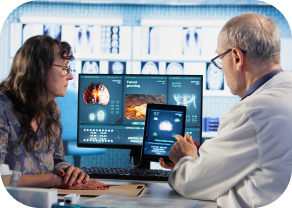
Our telemedicine platform development expertise leverages healthcare-specific frameworks, and medical device integration standards. Certified partnerships with leading cloud and healthcare technology providers ensuring optimal platform performance.

TensorFlow, PyTorch, Azure AI, AWS SageMaker for predictive analytics. Healthcare NLP using Hugging Face, spaCy, Amazon Comprehend Medical. Generative AI: GPT-4, Claude, Google Med-PaLM. MLOps platforms: MLflow, Kubeflow. Computer vision for medical imaging: OpenCV, MONAI.

FHIR R4/R5, HL7 v2/v3, CDA/CCDA, USCDI, Direct messaging protocols. Integration engines: Rhapsody, Mirth Connect, InterSystems HealthShare. SMART on FHIR applications. Epic MyChart API, Cerner OAuth, Allscripts Unity, Meditech integration.

AWS Healthcare, Azure Health Data Services, Google Cloud Healthcare API. HIPAA-compliant infrastructure with FedRAMP authorization. Kubernetes orchestration, Docker containers, Infrastructure as Code using Terraform. AWS Advanced Partner, Microsoft Azure Gold Partner certifications.
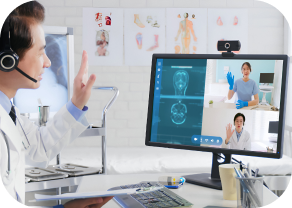
WebRTC, Twilio Video, Vonage Video API, Zoom Healthcare API. Agora.io for low-latency streaming. SendBird, TalkJS for secure messaging. HIPAA-compliant video infrastructure. Bandwidth optimization for 3G/4G networks. Recording and transcription services.

AES-256 encryption, TLS 1.3, zero-trust architecture. OAuth 2.0, SAML, FIDO2 authentication. SIEM platforms: Splunk, Azure Sentinel. Penetration testing, vulnerability scanning. SOC 2 audit preparation. HIPAA Business Associate Agreement compliance.

Healthcare leaders partner with our telemedicine app development team to eliminate technology constraints, achieve EHR interoperability, and deploy virtual care platforms that scale effortlessly
Our proven telemedicine software development approach refined through 150+ successful telehealth implementations balances rapid deployment with comprehensive testing, clinical validation, and sustained optimization.
Our telemedicine platform development expertise navigates complex regulatory landscapes spanning data privacy, medical device classification, and healthcare interoperability requirements across multi-state practice environments.
Our telemedicine platform development initiatives deploy production-grade infrastructure combining real-time video engines, FHIR-compliant interoperability layers, and AI-powered clinical decision tools. We integrate WebRTC frameworks, remote patient monitoring pipelines, and predictive analytics with existing EHR systems while maintaining uninterrupted clinical operations. Every deployment incorporates zero-trust security architectures, end-to-end encryption, and HIPAA-validated access controls ensuring protected health information stays secure throughout enterprise telehealth rollouts.
We partner with startups, scaleups, and enterprises to design and build AI-native platforms, systems, and applications that operate reliably in the real world.
From taking AI out of pilots and into production, to modernizing core systems that teams depend on every day, our work is measured by long-term outcomes—not just launches. These are the voices of teams who trusted us to build systems that scale, evolve, and deliver real impact.
Award by Clutch for the Top Generative AI Company
Award by The Manifest for the Most Reviewed Machine Learning Company in Los Angeles
Award by The Manifest for the Most Reviewed Artificial Intelligence Company in Los Angeles
Award by The Manifest for the Most Reviewed Artificial Intelligence Company in India
Award by Clutch for Top App Developers
Award by Clutch for the Top Health & Wellness App Developers
Award by Clutch for the Top Cross-Platform App Developers
Award by Clutch for the Top Consumer App Developers
Honoree for App Features: Experimental & Innovation
Awarded as a Great Place to Work for our thriving culture
Recognised by Red Herring among the Top 100 Companies
Award by Clutch for Top Enterprise App Developers
Award by Clutch for Top React Native Developers
Award by Clutch for Top Flutter Developers
Award by Manifest for the Most Number of Client Reviews
Awarded by Greater Conejo Valley Chamber of Commerce
As requirements change or expand, engagement often extends into complementary technology capabilities. Our work reflects this by supporting multiple initiatives across several technology areas—helping organizations modernize, scale, and accelerate delivery with confidence.
Stop losing virtual care appointments to providers with faster, more intuitive platforms. Partner with a telemedicine platform development company that turns fragmented virtual care infrastructure into scalable, patient-centered platforms delivering real clinical outcomes.
Telemedicine app development cost depends on platform complexity, feature scope, compliance requirements, and integration depth. Small platforms range from $50,000 to $100,000, mid-scale solutions from $100K to $200K, and enterprise-grade deployments from $200K to $500K+ depending on EHR integration and AI capability requirements.
Effective telemedicine app development solutions typically include video consultation platforms, remote patient monitoring systems, EHR integration layers, AI-powered diagnostics , e-prescribing modules, and intelligent scheduling systems. The right combination depends on your patient population, clinical workflows, and regulatory environment across your practice footprint.
The best telemedicine app development companies combine healthcare domain expertise with proven engineering capabilities. Prioritize teams with HIPAA compliance track records, EHR integration experience, cloud architecture certifications, and 50+ live telehealth deployments. Clutch rankings, published case studies, and active compliance certifications are reliable credibility indicators.
A basic telemedicine platform development engagement takes 3 to 6 months. Mid-complexity platforms with EHR integration and remote monitoring require 6 to 9 months. Enterprise-grade systems with AI diagnostics and multi-facility interoperability typically require 9 to 14 months depending on scope and compliance requirements.
Telemedicine platforms must implement end-to-end encryption, role-based access controls, audit logging, Business Associate Agreements, and secure data storage. HIPAA mandates physical, administrative, and technical safeguards covering all protected health information transmitted during video sessions, remote monitoring, and patient record exchanges.
Most enterprise telehealth platforms integrate with Epic, Cerner, Allscripts, and Meditech using FHIR R4/R5 and HL7 standards. Integration depth varies by EHR vendor API maturity. Bidirectional data exchange ensures providers access complete patient records during virtual consultations without switching between separate clinical systems.
A production-ready platform should include HD video consultation, secure messaging, remote patient monitoring, EHR connectivity, AI-powered clinical decision support, e-prescribing, appointment scheduling, digital intake forms, and HIPAA-compliant data storage. Feature prioritization should align with your clinical workflows and patient population requirements.
IoMT-connected wearables and medical sensors capture real-time vitals between virtual visits. Data flows through secure APIs into the telehealth platform, automatically syncing with EHR records and triggering clinician alerts when readings fall outside established threshold parameters, enabling timely proactive intervention before conditions escalate.
Telemedicine software development typically runs on HIPAA-eligible environments including AWS Healthcare, Microsoft Azure Health Data Services, and Google Cloud Healthcare API. These platforms provide FedRAMP authorization, Kubernetes orchestration, and scalable infrastructure ensuring continuous availability across high patient volume clinical environments.
Yes. Enterprise telehealth platforms can be architected to handle multi-state licensure compliance, varying telehealth regulations, and cross-jurisdiction data residency requirements. Compliance frameworks must account for state-specific prescribing laws, informed consent mandates, and privacy regulations layered on top of federal HIPAA standards.
AI enhances telehealth through symptom checkers, clinical decision support algorithms, predictive risk scoring, and automated diagnostic assistance. Machine learning models trained on clinical datasets help providers identify at-risk patients earlier, reducing emergency escalations and improving population health management across chronic condition programs.

Telemedicine mobile app development for iOS and Android requires platform-specific optimization for video performance, device permissions, and security protocols. Cross-platform frameworks like Flutter and React Native reduce development time while maintaining native-quality experiences, though dedicated native builds deliver superior performance for high-acuity clinical use cases.
May 26, 2026 | 548 Views
CTO
April 23, 2026 | 880 Views
CTO
April 13, 2026 | 805 Views
Field CTO
We use cookies to enhance your experience, analyze site usage, and support our marketing efforts. You can accept all cookies or manage your preferences.
We use cookies to ensure our website functions properly, improve performance, and provide a personalized experience. You can choose which types of cookies to allow below.
Required for core functionality such as security, network management, and accessibility. These cannot be disabled.
Help us understand site traffic and user interactions so we can improve performance and usability.
Enable enhanced functionality and personalization such as language or region preferences.
Used to deliver relevant ads, track campaign performance, and measure advertising effectiveness.