


 Copy Link
 Share on X
 Share on Facebook
 Share on LinkedIn
Always Active
Required for core functionality such as security, network management, and accessibility. These cannot be disabled.

Uncover the transformative potential of digital and mobile solutions for your industry.





 Last Updated: Sep 9, 2026
Sep 9, 2026
Last Updated: Sep 9, 2026
Sep 9, 2026  177
177  19 min. Read


Key Takeaways
You can describe an app in plain English and watch working software appear a few minutes later. That is vibe coding: a software development approach where you describe the outcome in natural language, an AI assistant generates and refines the code, and your job shifts from writing every line to directing, testing, and reviewing what the model produces. No syntax, no framework setup, no waiting on an engineering queue. It is the reason anyone with a little engineering knowledge can now ship a prototype over a weekend.
In March 2025, Y Combinator’s CEO told CNBC that roughly a quarter of the accelerator’s Winter 2025 batch had built products whose codebases were 95% AI-generated, and that the batch was growing 10% week over week, the fastest in the fund’s history.
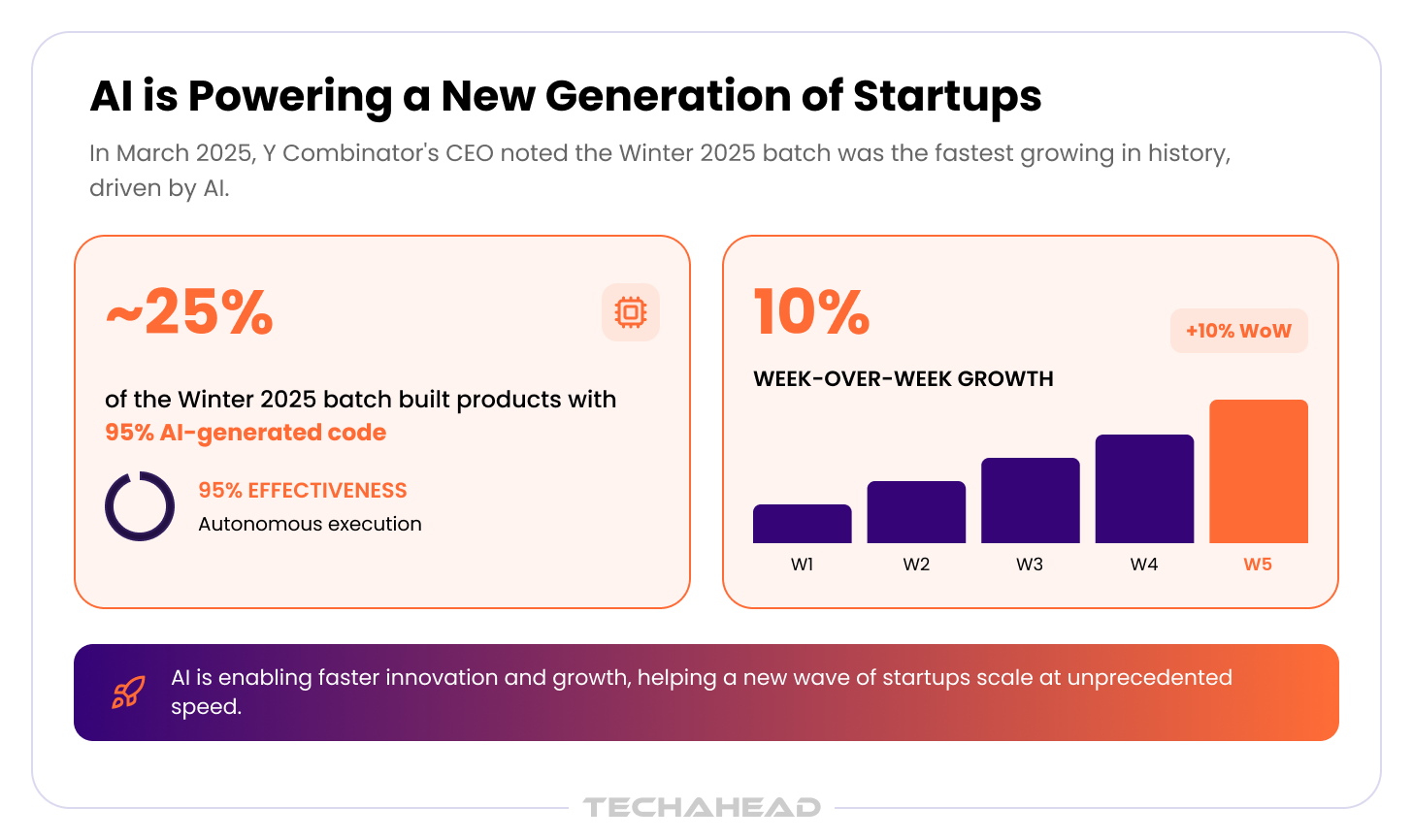
Founders who a year earlier would have hired an engineering team were shipping revenue-generating products with teams of fewer than ten people. That is the upside in a single data point.
But the same partners who celebrated it added a warning too: when one of those apps reaches a hundred million users, does it hold, or does it fall over?
That tension is why this topic matters. Vibe coding can compress weeks of early software work into hours, but AI-generated code becomes risky fast when a prototype starts handling customers, revenue, integrations, compliance, or scale.
This curated read explains how vibe coding works, where it is genuinely useful for prototyping, the limits and failure points of AI-written code, what enterprise readiness actually requires across security, scalability, maintainability, and compliance, and how to move a vibe-coded prototype toward production.
Also Read: Enterprise AI Scaling: Steps & What to Avoid
So what is vibe coding? At its simplest:
You describe the outcome you want in natural language prompts, and artificial intelligence powered by generative AI generates, refines, and often deploys the code for you with minimal human input. You stay focused on the goal, the AI handles the implementation. The vibe coding definition that has settled across the industry credits the term to AI researcher Andrej Karpathy, who coined it in early 2025:
The term vibe coding refers to an AI assisted coding workflow where you “give in to the vibes,” embrace exponentials, and stop thinking about the code line by line.
In traditional software development, a person acts as architect, implementer, and debugger, writing precise instructions in a language the machine understands. Unlike traditional coding, this reduces manual coding and shifts effort away from technical implementation toward direction and review. The model becomes the implementer, and you become the director. You prompt, you review, you correct, you prompt again. The expertise required to start drops sharply, which is exactly why adoption has been so fast. It also does not depend on specific programming languages or syntax knowledge at the starting stage.
Related: Low Code vs No Code vs Traditional Development
Looking at vibe coding vs traditional development, the trade is speed and accessibility against precision and predictability. Looking at vibe coding vs no code, the difference is that no-code tools lock you inside visual building blocks, while vibe coding produces actual source code you can, in theory, take anywhere.
The reason this is not worth ignoring: developer behavior has already moved. In Stack Overflow’s 2025 Developer Survey, 84% of developers said they use or plan to use AI tools in their workflow, up from 76% the year before.
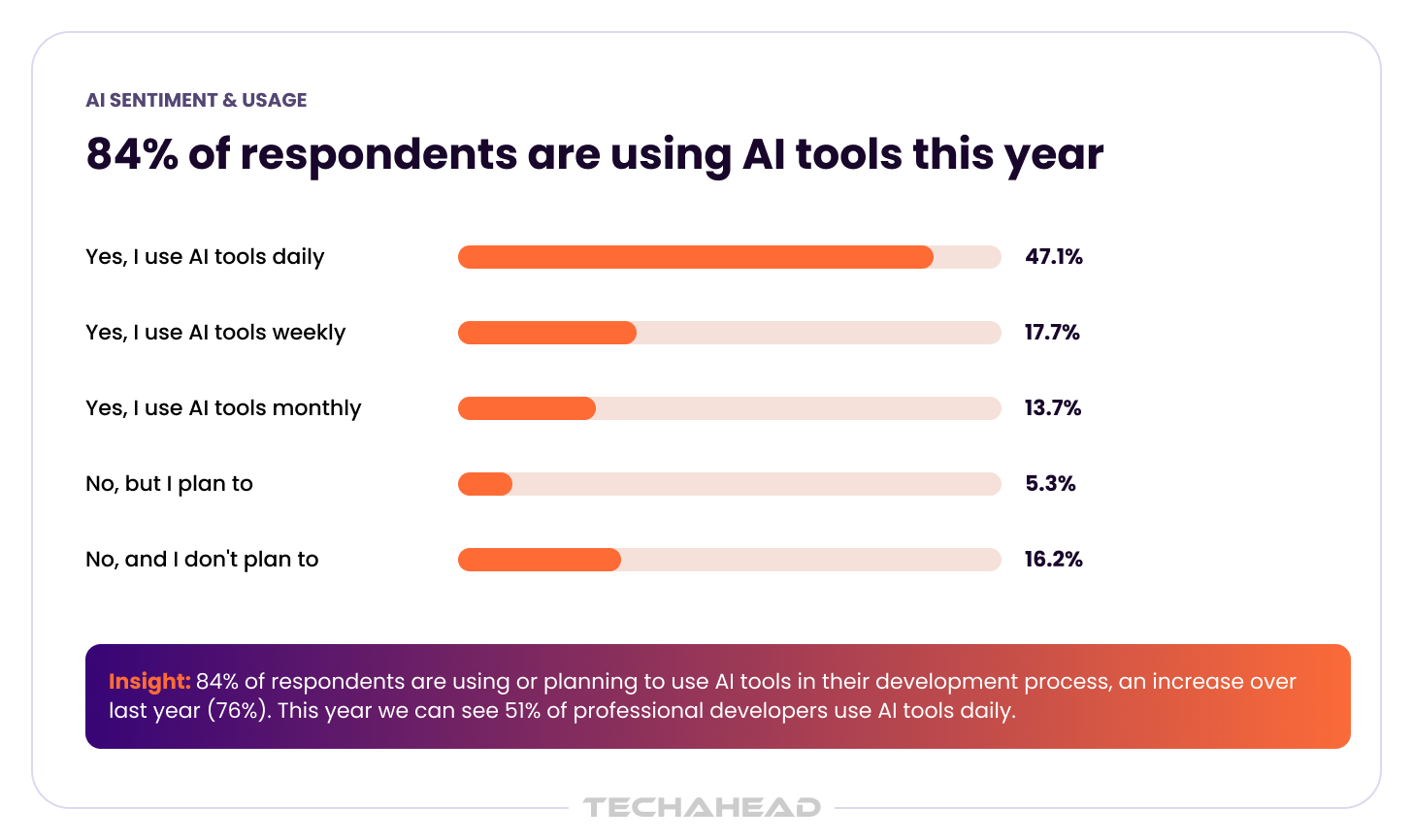
When more than eight in ten professional developers have folded AI into how they build, the practice your non-technical team just discovered is not fringe. It is the direction the whole field is walking.
The mistake is treating vibe coding as a single thing. It is a phase, and knowing which phase you are in changes every decision that follows.
Vibe coding is at its best when the cost of being wrong is low and the value of being fast is high. That describes the front end of the product lifecycle almost perfectly. You are testing whether an idea resonates, whether a workflow makes sense, whether a feature is worth building at all. It is the same job a minimum viable product has always done, only faster.
Vibe coding can accelerate rapid prototyping and application development by up to 5.8 times. That speed comes from using plain language prompts to generate working code quickly and test working code before you commit. Here, a rough app that exists today beats a polished one that arrives in six weeks.
Use small, scoped prompts for better output quality instead of broad requests.
You are in prototype territory when:
Cross that line and the question is no longer “is vibe coding safe” in the abstract. The question becomes whether what you shipped can survive contact with the real world.
Must Read: What to Look for in AI Native Partner During Software Development
A demo/prototype proves the idea can work once, for you, under conditions you control. A product proves it works every time, for anyone, under conditions you do not control. Vibe coding is exceptional at generating functional code quickly and indifferent to guaranteeing code quality for production, because the model optimizes for code that runs, not code that is secure, maintainable, or correct under load.
It is now one of the better-measured facts in software. According to Veracode’s 2025 GenAI Code Security Report, which tested code from over 100 large language models across four languages, AI-generated output can include hidden security vulnerabilities, including SQL injections, even when the code appears to work, and the failure was not evenly spread:
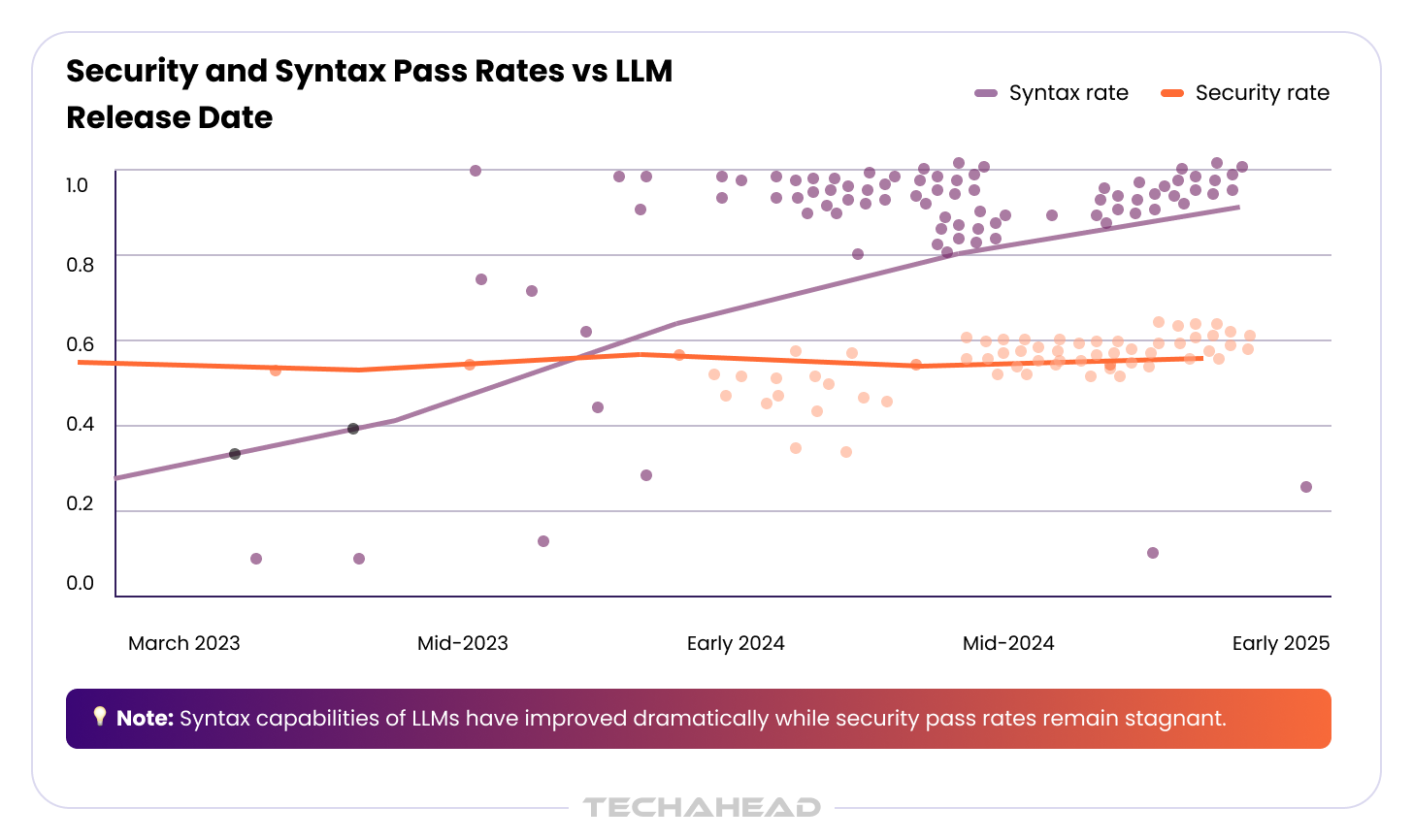
Nearly half of AI output shipping a known weakness class is not an edge case. It is the base rate.
Also Read: Prompt Injection Risks in Agentic AI Systems
Apiiro’s analysis of enterprise repositories, published in September 2025, found that developers using AI assistants shipped code three to four times faster than their peers, but generated roughly ten times more security findings.
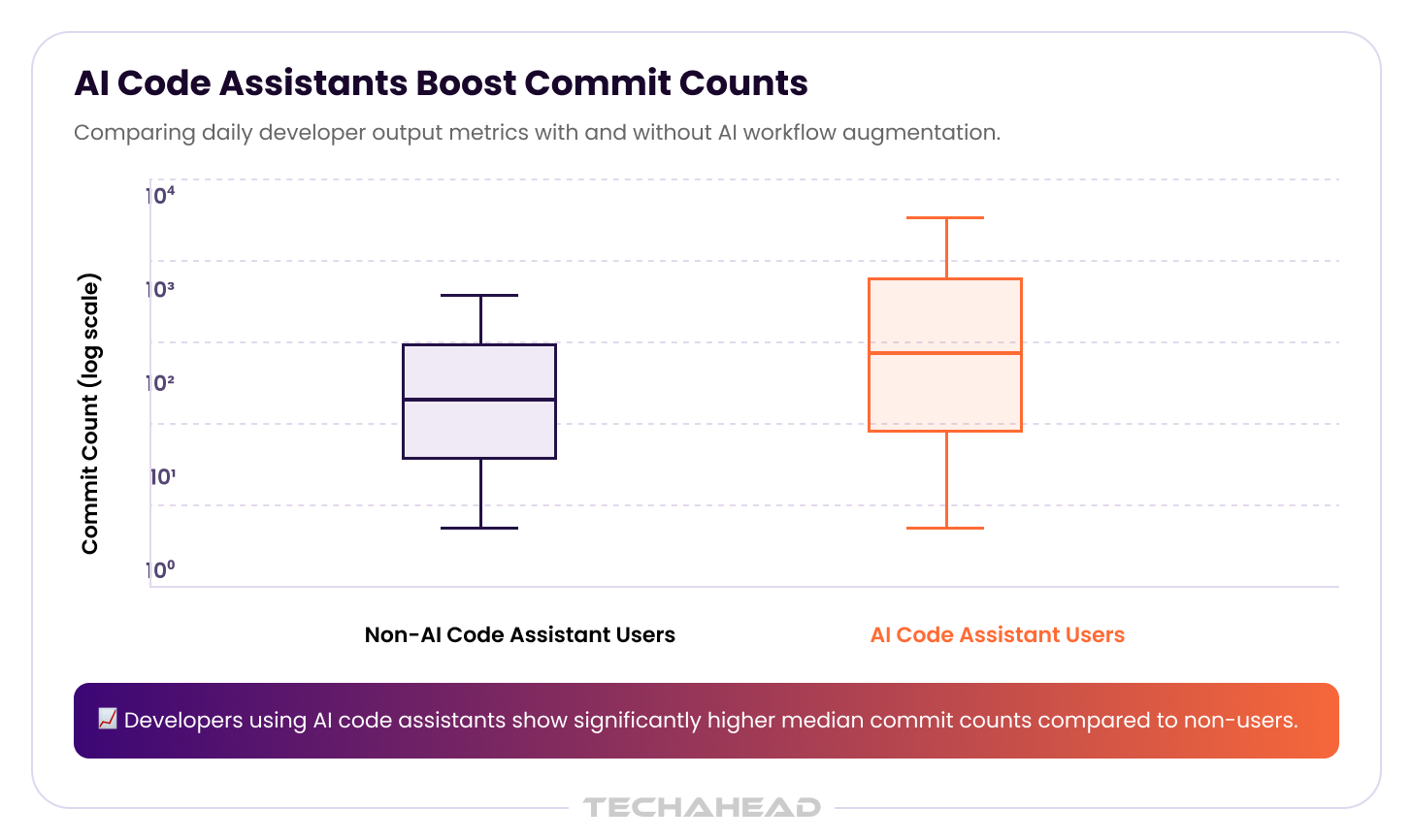
The nature of the flaws is the quiet alarm:
In other words, the AI fixes the typos and introduces the time bombs, structural problems that only disciplined QA and code review are built to surface, and teams still need a solid understanding of the underlying code to judge whether what was generated is safe and maintainable.
This is the heart of vibe coding risks. The vibe coding security risks are not loud crashes you would notice. They are silent gaps:
Layer on vibe coding technical debt, which accumulates fast when code is generated in bursts without a coherent architecture holding it together, and you get a product that is quietly fragile beneath a confident surface. Left unaddressed, that debt resurfaces later as rework that eats a large share of the build budget.
Even the people closest to these tools have grown wary, and that skepticism is the most useful signal in the data. In the same Stack Overflow survey, only 29% of developers said they trust the accuracy of AI output, down from roughly 40% a year earlier, and 66% reported spending more time fixing AI-generated code that was “almost right, but not quite.”
Vibe coding is not copy paste stuff or just paste stuff from the internet; without understanding, it creates fragile systems that are harder to fix bugs later. When the practitioners using AI most heavily are the ones losing confidence in its unreviewed output, that tells you something about the vibe coding limitations you inherit when you skip the review entirely.
If you want the honest vibe coding pros and cons in one frame:
The tool is not bad; it simply has a job, and producing executable code on demand is not the same as running a business on unreviewed output. The real problems with vibe coding begin only when you ask a prototype to do a product’s work.
“Enterprise-ready” is a vague phrase until you break it into the specific things that fail in production. When you evaluate whether a vibe-coded app can grow up, these are the dimensions that decide it. In enterprise settings, software engineering still requires business context, disciplined data handling, and controls beyond whatever the AI model can infer from a prompt. This is where enterprise vibe coding either becomes a real strategy or stays a hopeful label.
Security
Given the numbers above, assume AI-generated code contains vulnerabilities until proven otherwise. Enterprise-grade means authentication and authorization done correctly, inputs validated and sanitized, secrets managed properly, and dependencies checked for known issues. It means the code has passed real security testing, including checks that generated outputs do not introduce harmful patterns or hidden weaknesses in the underlying code.
Scalability
A prototype that serves ten users can collapse at ten thousand. Durable systems are designed for load: efficient data access, sensible caching, an architecture that grows without a rewrite. Vibe-coded apps rarely arrive with this thinking baked in, because you did not ask the model to plan for scale, and it did not volunteer.
Maintainability
Software is read far more often than it is written. Enterprise code is structured, documented, and consistent enough that a new engineer can extend it safely. Durable systems also require a solid understanding of the underlying codebase, not just confidence that the app currently works. Code generated in loose bursts often reads like several different authors argued their way through it, which is precisely how vibe coding technical debt compounds.
Reliability
Real products handle failure gracefully. They log, they monitor, they recover, they degrade in ways that do not lose data. Demos succeed on the happy path. Production lives on the unhappy ones.
Compliance and Data Governance
The moment you touch regulated or personal data, you inherit obligations around how it is stored, accessed, and protected. Standards like SOC 2 and ISO 27001 exist because customers and regulators require provable controls. An AI does not know your compliance context, and it will not warn you when you have crossed a line. This is why governance belongs in the build from day one.
Relevant: Software Development Guide 2026
| Dimension | Enterprise-ready requirement | Where vibe-coded apps fall short |
| Security | Strong authentication & authorization, input validation, secrets management, dependency scanning and security testing | AI-generated code can introduce vulnerabilities, insecure patterns and hidden weaknesses that require human validation |
| Scalability | Architecture designed for load, efficient data access, caching and scalable infrastructure | Prototypes optimized for speed may fail under higher user volumes and require architectural rework |
| Maintainability | Clean, consistent, documented code that engineers can understand and safely extend | Rapid AI-generated changes can create inconsistent code, technical debt and poor codebase understanding |
| Reliability | Robust error handling, logging, monitoring, recovery and graceful degradation | Happy-path prototypes often lack the controls needed to handle failures, outages and data-loss scenarios |
| Compliance & Data Governance | Controlled data access, secure storage, auditability and alignment with requirements such as SOC 2 / ISO 27001 | AI cannot reliably infer an organization’s regulatory obligations or flag compliance risks without defined controls |
Getting to enterprise-ready is not one heroic fix. It is a set of controls across three fronts, and skipping any one of them leaves the gap open.
Related Read: Maximizing Value Per Token
People
Someone with real engineering judgment has to own the system: to read what the AI produced, understand it, and stand behind it. Accountability cannot be delegated to a model.
Process
Mandatory code review, security testing built into the pipeline, integration, performance, and compliance checks, version control, and a defined path from change to deployment. These are the habits that catch the 322% of extra architectural flaws before your customers do.
Technology
Static and dynamic security testing, dependency scanning, monitoring, and observability so you can see what the system is doing once it is live. Popular vibe coding tools include Replit, Cursor, and GitHub Copilot, but every AI coding platform still needs review and control layers in production workflows. Because machine-generated change arrives faster than any manual reviewer can track, your validation coverage has to match that volume.
It is the tooling that turns “it seemed fine” into “we can prove it is fine.”
| Control Layer | What needs to be in place | Why it matters |
| People | Experienced engineering ownership, code understanding and accountability | Someone must validate AI-generated output and take responsibility for the system |
| Process | Mandatory code reviews, security/performance/compliance testing, version control and controlled deployment | Prevents AI-generated changes from reaching production without validation |
| Technology | Static & dynamic security testing, dependency scanning, monitoring and observability | Provides continuous validation and visibility into production behavior |
| Validation | Coverage that keeps pace with the volume of AI-generated changes | AI accelerates code creation faster than manual review alone can reliably handle |
None of this asks you to abandon what vibe coding gave you. The speed still counts; you are adding the discipline that turns a fast start into something you can defend.
You do not have to pick between “keep the vibe-coded app exactly as is” and “throw it away and start over.” There is a spectrum, and picking the right point on it is the whole skill.
This is how you move from prototype to production without either shipping something dangerous or wasting the head start you earned.
Before you decide anything technical, sit with a short, uncomfortable set of questions. Your honest answers point directly to the right path. Many organizations are exploring this partly because 82% of businesses report a shortage of developer talent, which helps explain why vibe coding matters.
If the answers point toward real users, real data, and real consequences, you have a business on your hands, and a business needs engineering, not just generation. Turning those answers into a defensible business case across cost, speed, quality, and risk is what makes the decision board-ready.
Once you know where you stand, the path from vibe coding to production usually takes one of three shapes, and how does vibe coding work in practice is most effective when teams treat it as an iterative development process of prompting, reviewing, and refining.
Keep and Harden
If the app is simple, low-risk, and internal, you may only need a professional review, targeted security fixes, and a monitoring layer. The core survives. In this stage, developers describe the needed changes in conversational prompts, then review and refine the returned code instead of accepting first-pass output.
Refactor and Reinforce
The common case. The idea and much of the logic are sound, but the foundation needs shoring up: security gaps closed, the architecture restructured for scale, tests and controls added. You keep the momentum and rebuild the load-bearing parts.
Rebuild on the Proven Concept
Sometimes the prototype’s greatest value is that it proved what to build, and the fastest route to a durable product is a clean build informed by everything you learned.
The right answer depends on your specific app, and the structured way enterprises weigh rehost, refactor, and rebuild applies directly here. An experienced engineering partner can assess it in a fraction of the time it would take you to guess. That assessment is cheap. Finding out in production is not.
This is the exact seam TechAhead works in: helping organizations ship vibe coded features responsibly by reviewing AI-generated applications before they scale, taking a promising idea, sometimes a vibe-coded one, and turning it into software that holds up under real customers, data, and scrutiny.
We are an engineering and product partner, not a compliance auditor or an advisory deck. Being a reputed custom software development company, our teams take a vibe-coded codebase and do the work that makes it safe to grow on, supporting software creation beyond throwaway weekend projects and moving the focus from the creative aspects of an idea into production-grade implementation:
That work is backed by credentials that matter when your app becomes a business:
It is also backed by track record. Enterprises and global brands including AXA, American Express, Audi, International Cricket Council, alongside many others, have trusted TechAhead to build and scale software their businesses depend on, the same engineering discipline a vibe-coded app needs before it carries real users.
Wherever your app sits today, from a rough prototype to something already taking real traffic, the starting point is the same: an honest assessment of what to keep, what to harden, and what to rebuild before it scales further.
The pattern we see repeatedly is a founder who used vibe coding exactly right to validate an idea, then hit the wall where speed alone stops being enough. That is not a failure. That is the moment the app became a business. The next move is to give it the engineering a business deserves. Connect with us to take your idea to enterprise level and scale its userbase to millions and counting.
Know that it is a genuine accelerant for the early, exploratory phase of building, and a genuine liability if you run a business on its unreviewed output. It does not produce secure, scalable, maintainable software by default, and the gap between those two things is where risk lives.
It shifts the human role from writing code to directing and reviewing it, and it front-loads speed while back-loading the discipline. That is fine for prototypes. For anything customer-facing, you have to add the engineering rigor, code review, security testing, and architecture, that the generation step skips.
Yes, often. The idea and much of the logic are frequently sound. What usually needs work is the foundation: security, scalability, maintainability, and the controls around them. With a professional assessment and targeted engineering, many vibe-coded apps make the jump without starting from zero.
Before it touches real users or real data, not after something breaks. The right trigger is the transition from internal experiment to anything external: a public signup, a stored customer record, an integration with a system that matters. Review at that boundary is far cheaper than incident response past it.
No, and assuming so is a common and costly mistake. Rewrites are only one of three paths. Many apps need hardening or partial refactoring rather than a rebuild. A proper assessment tells you which, so you neither ship something fragile nor discard good work.
For prototypes, yes. For production, only after review, security testing, and hardening. Whether vibe coding is safe depends on the governance around the app, not the generated code alone, so unreviewed output should never touch real customer data.
Not by default. AI-generated code rarely ships with audit trails, access controls, or GDPR and HIPAA safeguards. TechAhead brings vibe-coded apps to enterprise-ready standards through security remediation, auditability, and compliance-aligned architecture before they reach production.
You audit the AI-generated code, close security and architecture gaps, then add tests, monitoring, and CI/CD. TechAhead handles this move from vibe coding to production without a full rewrite where possible, assessing what to keep, refactor, or rebuild.
Because demos hide vibe coding risks that only surface under real load: weak access control, missing error handling, no audit trail, and mounting vibe coding technical debt. TechAhead’s engineers surface these silent failures before they become production incidents.
Set clear boundaries. Let teams vibe code low-risk prototypes freely, but route anything touching production or sensitive data through mandatory review, security testing, and sign-off. This closes the shadow-IT gap unmanaged AI-generated code creates across an enterprise.
We use cookies to ensure our website functions properly, improve performance, and provide a personalized experience. You can choose which types of cookies to allow below.
Required for core functionality such as security, network management, and accessibility. These cannot be disabled.
Help us understand site traffic and user interactions so we can improve performance and usability.
Enable enhanced functionality and personalization such as language or region preferences.
Used to deliver relevant ads, track campaign performance, and measure advertising effectiveness.