


 Copy Link
 Share on X
 Share on Facebook
 Share on LinkedIn
Always Active
Required for core functionality such as security, network management, and accessibility. These cannot be disabled.

Uncover the transformative potential of digital and mobile solutions for your industry.



 Last Updated: Oct 23, 2026
Oct 23, 2026
 8
 19 min. Read


Key Takeaways
You have an application built using AI coding tools and a launch or enterprise customer to prepare for. Your developers may be able to complete the necessary improvements internally. A specialist partner may bring experience or capacity your company needs. Either choice affects what you spend now and what the application will cost to maintain.
That longer-term cost deserves attention before you commission the work. In a November 2025 forecast, Gartner predicted that by 2030, 50% of enterprises would experience delayed AI upgrades or increased maintenance costs because of unmanaged GenAI technical debt.
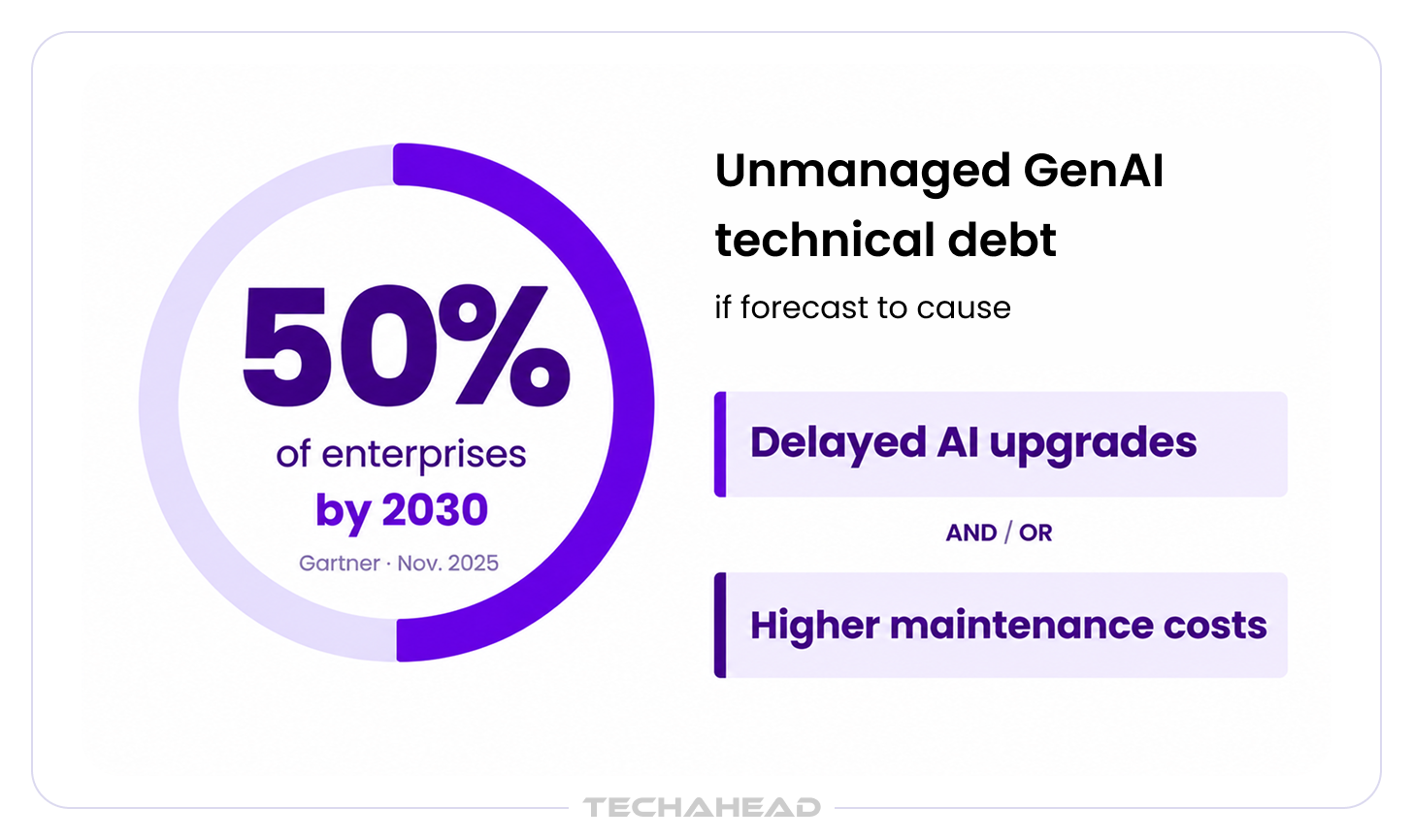
The forecast covers broader enterprise GenAI use, including generated assets. For an application built with AI coding tools, the relevant consideration is whether today’s improvements will make future changes easier to implement, test, and maintain.
The in-house vs outsourcing software development decision therefore needs to account for both immediate requirements and continuing engineering responsibilities. Application hardening can include security, reliability, performance, deployment, recovery, and code improvements. The comparison applies to vibe-coded app hardening and software developed by engineers using AI assistants; the finished application does not need AI features.
Keep the work internally when the required experience and time are available, with someone able to review the changes. Consider a specialist when important expertise is missing or the work would displace business-critical development. Divide responsibilities when your company can complete some improvements and needs outside help with others.
Must Read: Understanding Vibe Coding & When App Becomes a Business
Your developers know why the application behaves as it does and which customer requests shaped it. That knowledge helps them judge proposed changes. You also need to establish whether they have experience investigating the problems that matter before launch or enterprise use.
A developer may understand a subscription workflow while having limited experience testing whether repeated payment notifications create duplicate charges. Someone familiar with your database may still need help assessing whether every report, export, and background process respects customer access restrictions.
Ask what comparable work has been completed and how the results were checked. Useful questions include:
For an application developed with Claude Code, our guide to reviewing the code and deployed application explains the distinction between finding suspicious code and verifying actual behavior. Use that distinction when evaluating existing capability.
A generalist developer can acquire additional skills. The commercial question is whether that learning fits the required depth and available time.
Related: Best AI Models for Developers (H2 2026 Edition)
An engineering department can have relevant experience and still lack capacity. Building more internal capacity is also limited by how quickly the company can hire and onboard the right people. Customer requests, planned releases, and existing maintenance continue while hardening proceeds.
Ask for a work allocation that identifies who will investigate, implement, review, and release the changes. Include what those people would postpone. An estimate that assumes uninterrupted development time can unravel when its author also handles customer escalations.
Internal work is a reasonable choice when the application is understood, the required skills exist, and the company can protect enough time to complete and verify the improvements. A targeted external assessment can address particular uncertainty without transferring implementation.
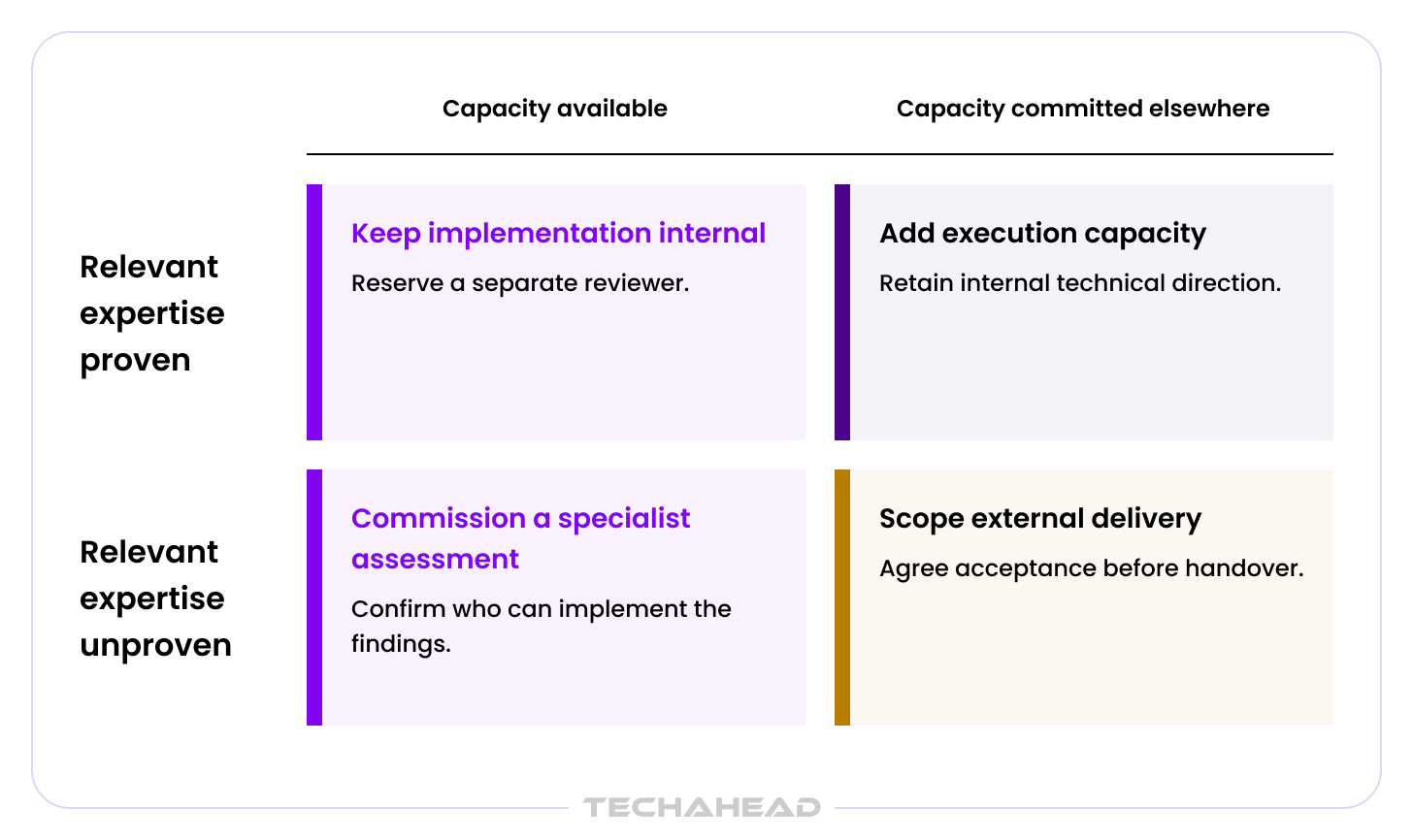
A ready outsourced team can remove delays when your own team lacks bandwidth or the right experience, but availability still matters, as does the time needed to understand your application. Compare the complete path to a usable result: preparation, investigation, implementation, testing, and release. Outsourcing can also speed delivery because established teams are already in place, though each option still has dependencies that additional developers alone may not remove.
An outsourcing partner still needs access, documentation, and timely answers before the development process can move quickly.
Specialist involvement can shorten the work when relevant experience is the missing ingredient. Someone who regularly investigates database contention may diagnose a performance problem while your developers continue planned development. Security specialists may examine access restrictions while internal engineers explain the intended business rules.
However, a new provider needs working repository access, an application it can run, and answers about expected behavior. An undocumented integration or unavailable third-party environment can delay either option. Each option has dependencies that additional developers alone may not remove. Outsourcing can also add communication overhead when time zones or language barriers slow clarification, so realistic schedules should account for coordination as well as coding. Strong project management helps, but it does not eliminate those delays upfront.
Ask for estimates that identify:
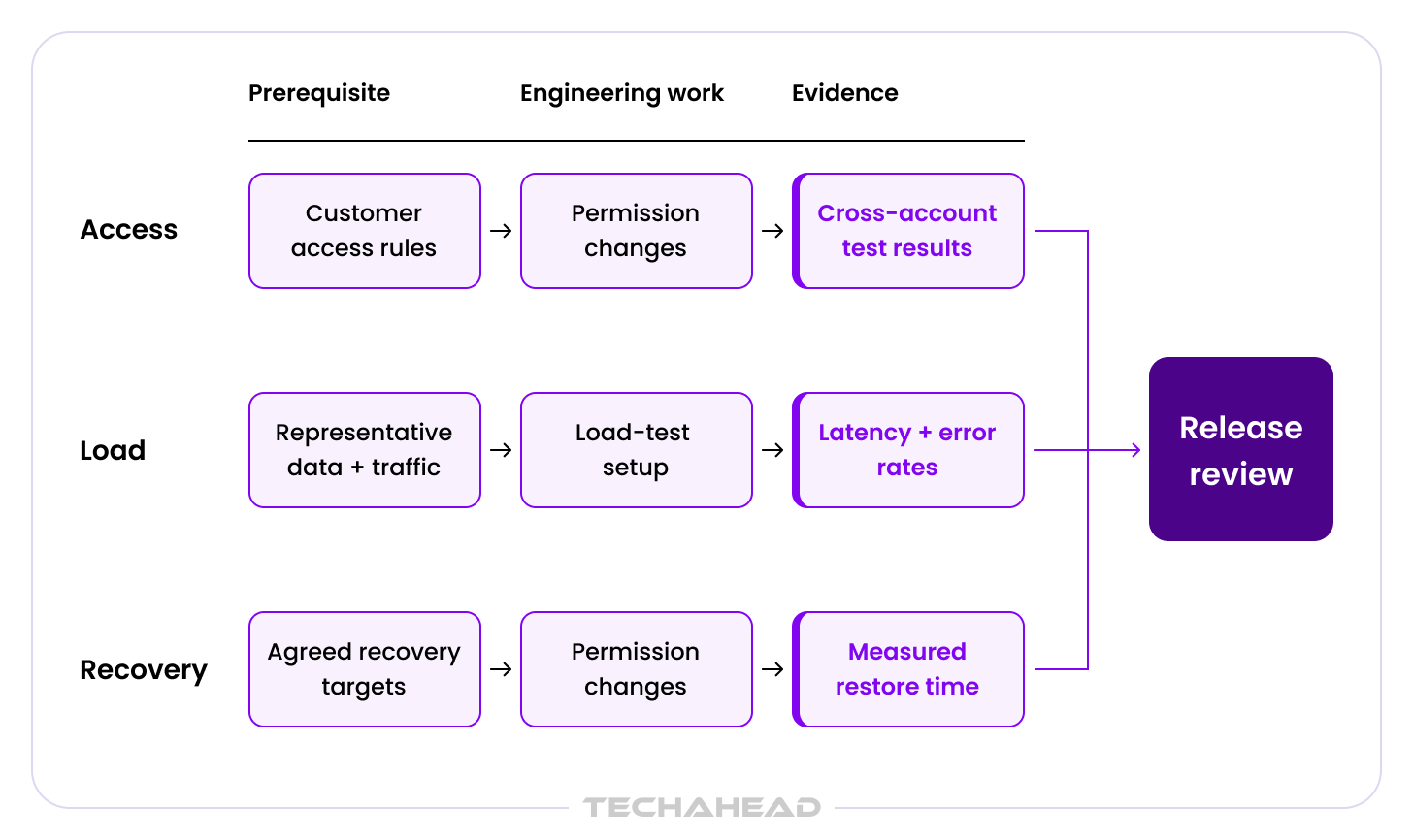
Our discussion of hardening an application built with Cursor shows why reviewing code, checking deployed configuration, and exercising recovery are separate activities. All relevant activities belong in the schedule.
Both your developers and a partner may use AI coding tools. Their involvement tells you little about the elapsed time needed to understand existing behavior, resolve conflicting requirements, and verify changes.
In its October 2025 analysis of enterprise technology returns, McKinsey reported that most organizations using generative AI coding tools at scale had achieved less than a 10% improvement in engineering productivity.
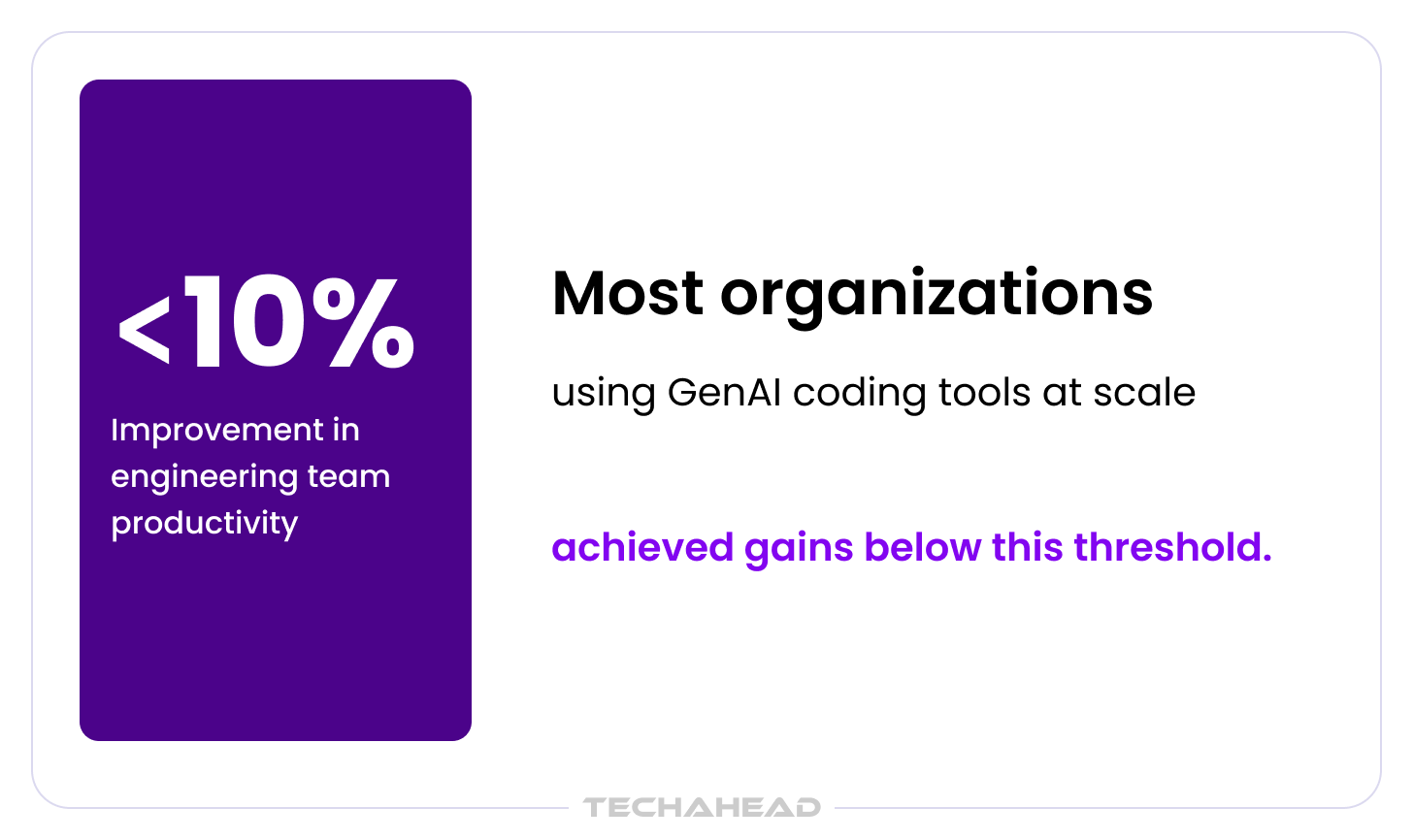
That finding concerns broader enterprise development rather than application hardening. It supports asking for demonstrated improvements across the work instead of assuming faster code generation produces an equivalent reduction in delivery time.
Compare a proposed schedule with its assumptions. A credible estimate explains what could change it and how the company will learn about new dependencies.
When comparing in-house vs outsourced software development for hardening, check what each estimate includes, since software development outsourcing can be more cost effective when you need defined output instead of permanent hiring. One may cover known defects while the other includes investigation, infrastructure changes, and testing. Establish common requirements before deciding which amount represents better value.
Start with the launch or customer requirements the application must support. Our production-readiness checklist can help identify the work to include before either option is priced.
For internal work, estimate in house software development as the full development team effort, including allocated engineering and management time, additional specialist help, tools, verification, maintenance, and overhead such as office space. Existing salaries remain a real business cost even when no new supplier payment is required. Building internally also uses recruiting and onboarding time before delivery work starts, which reduces available capacity.
Also record what the business would postpone. A delayed customer integration and engineering payroll are different considerations. Keep the opportunity cost visible without counting the same working hours twice as additional cash expenditure.
Related: Team Augmentation Explained For Growth Focused Startups
For a partner, distinguish assessment fees, implementation, retesting, documentation, transition assistance, and continuing support. Review hidden costs such as management time, extra quality control, and transition work, and note that partner location and the local market can affect access to specialized skills and total cost savings.
| Cost question | Internal estimate | Partner proposal |
| What is being investigated? | Time allocated to examining uncertain areas | Assessment coverage and exclusions |
| Who makes the changes? | Named developers and any additional specialists | Agreed engineering responsibilities |
| How is completion checked? | Review and testing capacity | Included tests, retesting, and acceptance conditions |
| What happens after release? | Maintenance allocation and incident responsibility | Support coverage, exclusions, and recurring fees |
| What could change the estimate? | Competing commitments and unfamiliar problems | New findings, access limitations, and additional requirements |
A lower initial estimate can leave expensive work behind. Repeated local fixes may preserve inconsistent access rules or make future releases harder to test. A broader replacement can also introduce migration and maintenance costs that targeted improvements would avoid.
Ask either provider to explain what will become easier to change, which complexity remains, and why any proposed replacement is justified. An expensive rebuild recommendation needs a comparison with realistic alternatives.
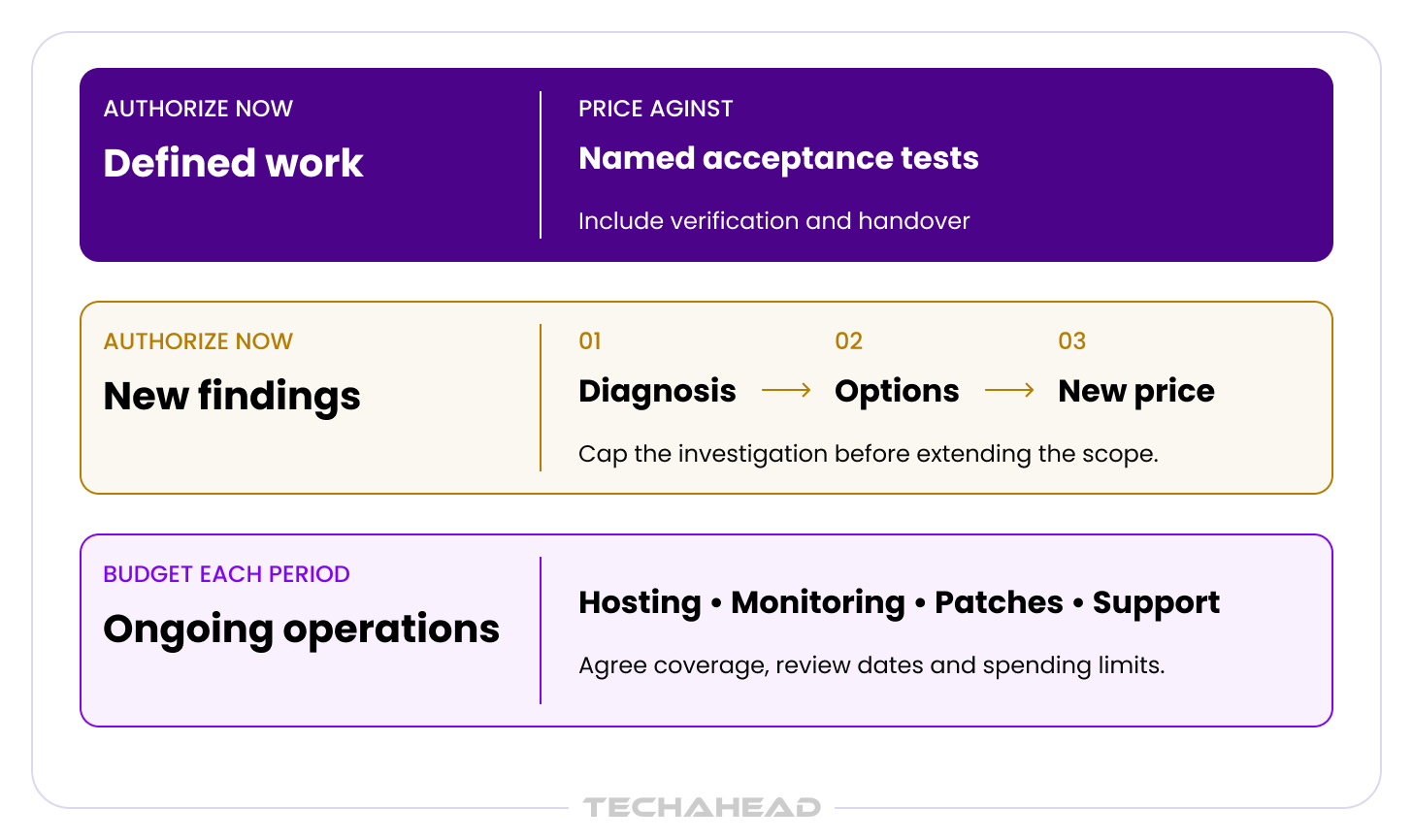
Control depends on practical access, decision rights, and how much direct control your company retains over day-to-day decisions, approvals, and system access when work is external. Your company needs to understand which systems a partner can change, who approves important decisions, and how the application can be maintained afterward. Those arrangements should be established before implementation begins. The right outsourcing partner should fit your project goals, budget, and operating requirements.
Agree where changes will be recorded and reviewed, how environments are accessed, and who authorizes production changes. Your company should retain access to the repositories, infrastructure accounts, and documentation it needs to operate the product.
Define who can approve changes to customer behavior, data handling, and release timing. Technical implementation can be commissioned externally while business priorities and acceptance decisions remain with your company. In house developers usually bring stronger cultural alignment and business context, which is why those decisions often stays in house.
Healthcare illustrates why access must follow the work being performed. An assessment may be possible using synthetic records and a representative environment; some investigations may require more carefully controlled access. Our article on hardening an existing healthcare application examines those data and operating responsibilities.
Make confidentiality, IP rights, permitted tool usage, access duration, and subcontractor arrangements explicit in the engagement. This is especially important when you keep some things in house, since deep cultural and business fit can differ across teams, so expectations on cultural alignment, access, and subcontractor terms should be clear. Resolve what is necessary rather than treating unrestricted production access as a starting requirement.
Internal development can depend heavily on one person’s memory. An external engagement can create a similar dependency if the provider leaves behind changes nobody else can explain. Preserve institutional knowledge through documentation, walkthroughs, and overlap between the provider and your own team.
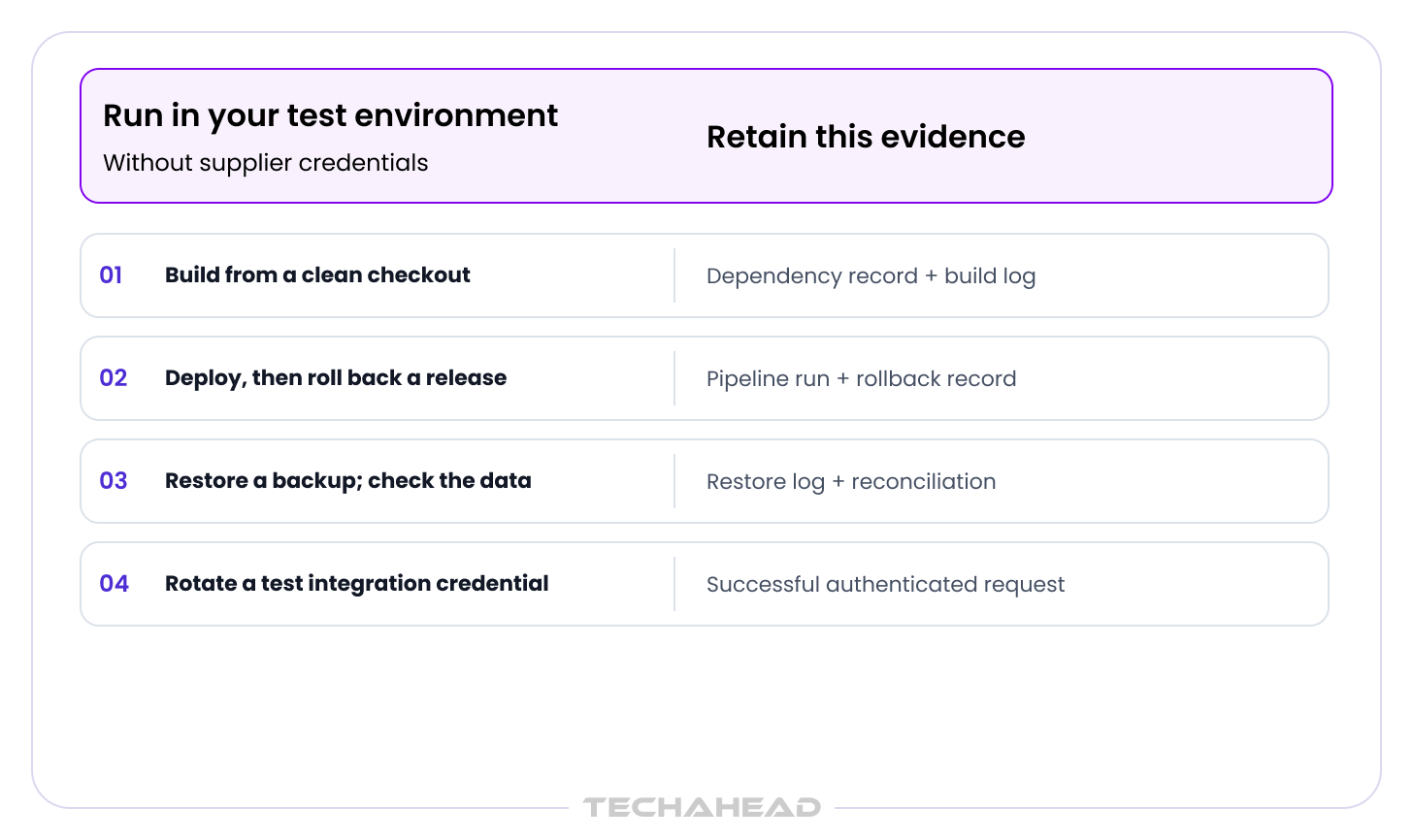
Ask what another engineer would need to deploy the application, diagnose a failed workflow, restore data, or update a dependency. Documentation should reflect the software development process, not only the changed system, and be demonstrated through practical tasks.
Before accepting implementation, confirm that:
Explain future support expectations early. Your company may want continuing assistance, a transition to its own developers, or the ability to commission another provider.
Your company does not have to make the same sourcing decision for every activity. Assessment, implementation, verification, and maintenance can have different providers. The arrangement works when each contribution is defined and the people involved can resolve questions without passing them between suppliers. A hybrid model can work well here when you keep product ownership in-house but add external execution capacity for implementation, verification, or maintenance.
An assessment can give your developers an informed starting point. Additional engineers can work within established internal management as staff support. If the project scope is clearly defined and hiring would take too long, full project outsourcing can be a practical alternative to expanding the in house team. Alternatively, a partner can take responsibility for implementing and verifying a defined set of improvements.
These are different purchases. Project outsourcing tends to work best when goals, scope, and budget are already clear, which is why it is often recommended for clearly scoped work under tight budgets. Adding specialists helps when your company can direct their work. Commissioning an agreed result also requires the provider to investigate dependencies and coordinate the relevant engineering activities.
In its April 2026 discussion of outsourcing strategies, Deloitte reported that 67% of organizations in its cited survey had adopted outcome-based outsourcing models. The survey covered more than 500 global business and technology executives and multiple business functions. Its relevance here is the purchasing distinction: specify the result you need, then establish who will do the work and how you will judge it.
The commercial model can vary. Even an engagement billed for time should define responsibilities, expected outputs, and how progress is assessed.
Use the arrangement that fits your company’s ability to direct development and review results, whether a small in house core keeps the roadmap, business context, and approvals while specialists or a dedicated outsourced team add execution capacity.
| Arrangement | Your company’s contribution | Partner’s contribution | Completion check |
| External assessment; internal fixes | Explain requirements and implement agreed changes | Investigate, document findings, and clarify recommendations | Agree who retests each correction |
| Partner implements selected improvements | Supply business rules and review proposed behavior | Make and test the specified changes | Demonstrate agreed behavior in the relevant environment |
| Specialists join existing development | Assign priorities, coordinate dependencies, and approve releases with technical leadership retained in house | Contribute expertise within existing processes | Use agreed review and testing practices |
| Continuing maintenance | Set service priorities and authorize consequential changes | Perform contracted monitoring, updates, and response work | Review coverage, records, and unresolved issues |
Our staff augmentation services fit situations where your company already manages a development team and needs additional expertise. Broader implementation work can combine engineering with QA and testing and DevSecOps where the application requires them. A dedicated outsourced team is especially useful when current staff cannot absorb the work quickly enough.
Be particularly clear about verification. If you need a separate independent assessment, commission it explicitly. Testing performed by the company implementing the fixes and an independent review serve different purposes.
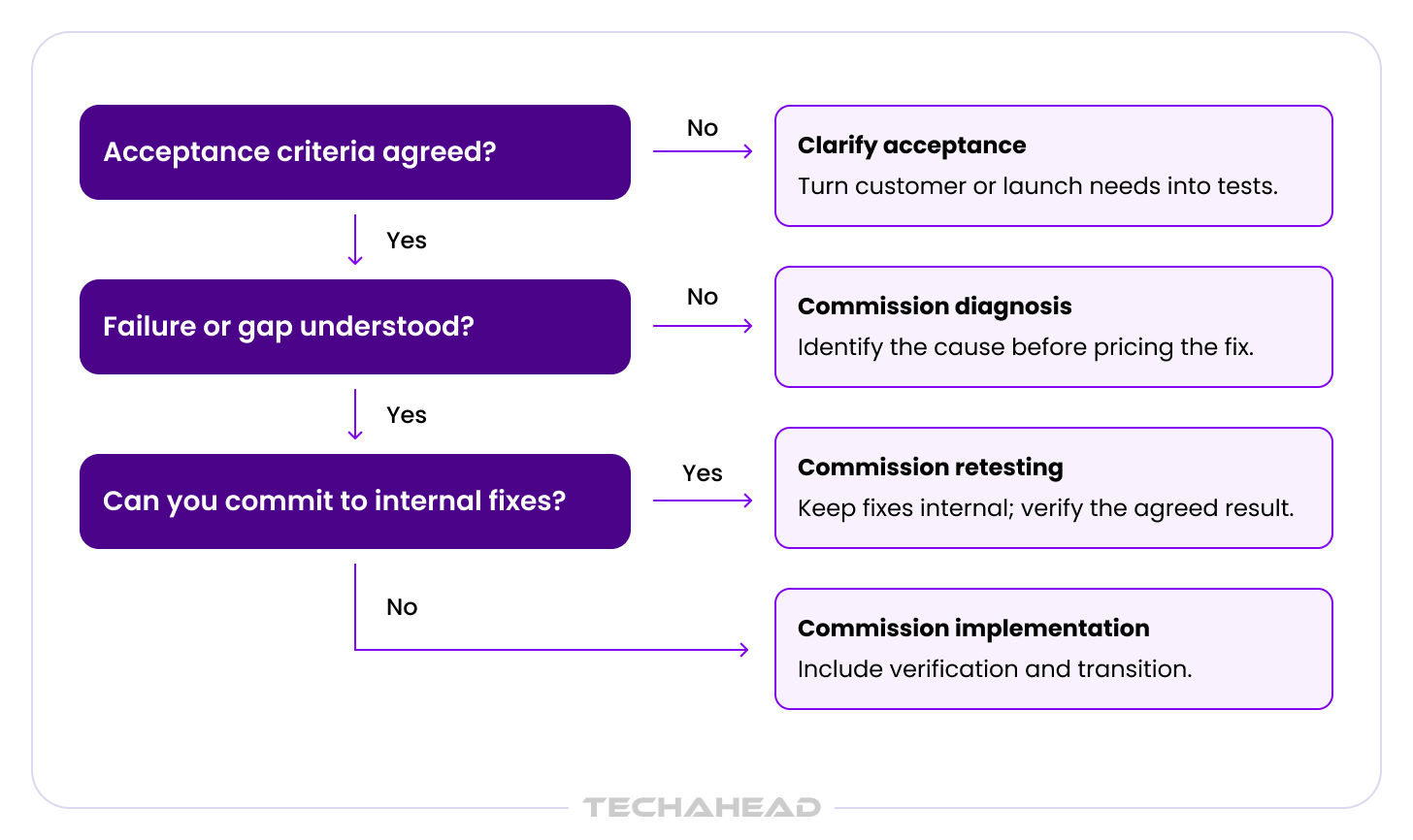
The balance changes with your application and intended use. The following situations illustrate how to apply the comparison. Neither assumes that internal development or an external provider is automatically the right answer.
Consider a payment application built through AI-assisted development. Its main transaction works, but the company has not established what happens when a provider response is delayed or a notification arrives twice.
The internal option must include someone who understands the financial rules, can investigate the integration, and can test interrupted and repeated operations. Our discussion of fintech application security hardening explains why transaction correctness belongs alongside access protection.
If your developers have that experience and available time, internal implementation may be practical. If the company lacks those capabilities, a specialist proposal should identify how they will be supplied. A code scan alone does not address the entire requirement.
Both plans must account for testing, release preparation, and responsibility for payment exceptions after launch. The useful comparison is the cost and effort required to reach that result. In this payment example, outsourcing can be the better fit when the prototype has a clear project scope, a tight deadline, and specialized expertise the company cannot hire quickly.
Now consider a SaaS application with paying customers. A prospective enterprise customer needs company-managed login, more detailed permissions, protected exports, and recovery arrangements its reviewers can examine.
Your developers understand the existing account model and customer workflows, so a small core can retain product knowledge while an external development team handles implementation-heavy work. Specialists may contribute experience investigating customer-data separation or implementing identity integrations, and that mix is often more effective than relying only on in house development. The combination becomes useful when it protects ongoing development while addressing particular requirements.
Our article on preparing a SaaS product for enterprise customers provides deeper context for those requirements. SaaS application development expertise is relevant where implementing them changes how the product operates.
A healthcare customer may introduce patient-access and data-handling questions; a financial-services customer may scrutinize privileged actions and transaction records. Confirm the customer’s actual requirements before assigning work or promising dates.
You can bring us an application with a clear list of concerns or one whose limitations are still uncertain. We help establish what needs investigation and what engineering work may follow. The proposal should make our contribution understandable alongside the work your company can undertake internally.
Through our custom software development services, we can scope application hardening services around your existing software, integrations, and deployment. Depending on your requirements, you can engage us to:
The recommended engagement model should reflect your strategic initiatives, industry constraints, and project goals.
For AI-generated code audit and remediation, we distinguish investigation from implementation so you can decide whether your developers or our engineers should make the changes.
Relevant experience matters more than a generic technology list. Our published ERIN case study describes enterprise product expansion and integrations with HR systems. That experience is relevant when your next customer needs changes across connected business workflows. We would establish your application’s hardening requirements through its own review.
We explain the proposed work, assumptions, exclusions, and your company’s required participation. Where findings support targeted changes, the proposal should reflect those changes. Where replacement is recommended, it should explain the alternatives and their implications.
Bring the application or demonstration, your intended launch or customer requirements, known problems, and any existing development estimate. Architecture notes and test results are useful when available.
We can then discuss which activities your company can perform, where outside expertise would contribute, and what must be investigated before implementation is estimated.
Contact TechAhead to discuss hardening your existing application. We will help you compare the work you can complete internally with the specialist engineering you need to commission.
Base your in-house vs outsourcing software development decision on relevant experience, protected development time, and separate review capacity. Keep work internal when all three exist; commission specialists when gaps threaten launch or enterprise commitments.
Ask prospective partners how they assess existing code, test deployed behavior, prioritize findings, and verify fixes. Relevant case studies, named specialists, clear exclusions, and practical handover arrangements matter more than broad claims about AI development expertise. Choose a partner that fits your goals, budget, required specialized skills, and communication needs.
Yes. TechAhead can assess your existing repository, architecture, and deployment before recommending changes. Vibe-coded app hardening can preserve working components while correcting verified weaknesses; broader replacement needs evidence that targeted remediation cannot meet your requirements.
Yes. TechAhead can scope an AI-generated code audit around specific concerns and provide findings your developers can implement. Agree who clarifies recommendations, approves changes, and retests corrections before treating assessment and remediation as separate responsibilities.
A specialist can shorten diagnosis or supply missing expertise, and established outsourced teams can often move faster, but project management, time zones, and language barriers still affect delivery. Compare complete schedules for application hardening services, including your company’s participation and the evidence required before launch.
Keep repositories and infrastructure accounts under company control, define IP and licensing terms, and grant only necessary, time-limited access. Specify permitted AI tools, data handling, subcontractors, approval rights, and access removal in the engagement.
Require results tied to agreed acceptance criteria: corrected findings, regression tests, relevant security and load tests, and demonstrated deployment and recovery procedures. Record remaining risks and ownership; distinguish the implementer’s testing from any separately commissioned independent assessment.
Start with the customer’s actual requirements for identity, permissions, tenant isolation, audit records, and recovery. TechAhead can scope B2B SaaS enterprise readiness work across engineering and testing, with responsibilities agreed alongside your existing development commitments.
A partner’s credentials do not establish your organization’s compliance. Application security hardening can support HIPAA safeguards and SOC 2 evidence, but you need your own controls, applicable business associate agreements, and an independent CPA examination for SOC 2.
Agree on source access, build instructions, test suites, deployment and recovery runbooks, and support responsibilities before implementation. Have another engineer demonstrate critical tasks without supplier credentials, then document unresolved work, retain institutional knowledge and core business context in house during handover, and define the process for transferring maintenance.
We use cookies to ensure our website functions properly, improve performance, and provide a personalized experience. You can choose which types of cookies to allow below.
Required for core functionality such as security, network management, and accessibility. These cannot be disabled.
Help us understand site traffic and user interactions so we can improve performance and usability.
Enable enhanced functionality and personalization such as language or region preferences.
Used to deliver relevant ads, track campaign performance, and measure advertising effectiveness.