Key Takeaways

  • Industrial manufacturers lose $50 billion annually to unplanned downtime, yet IoT predictive analytics cuts failures by 20-30%. BMW prevented 500 minutes of downtime while Shell avoided two failures worth millions.
  • Predictive analytics delivers beyond maintenance: 15-20% production increases, 25-56% energy savings, and 20-30% better demand forecasting. DHL’s $350M investment now serves 25,000 users across their supply chain.
  • Legacy equipment doesn’t need replacement. Retrofit approaches with external sensors cost $50,000-$75,000 for pilot deployments on 10-15 critical assets, proving ROI before facility-wide expansion.
  • Success requires solving five challenges upfront: system integration, data quality, skills gaps, cybersecurity, and ROI justification. Partner with experts who understand both industrial operations and advanced analytics.

With the IoT, we’re headed to a world where things aren’t liable to break catastrophically – or at least we’ll have a hell of a heads’ up.

Scott Weiss, Partner at Andreessen Horowitz 

Unplanned downtime doesn’t just slow production; it drains millions of your ROI. In modern manufacturing, an hour of downtime can easily cost you hundreds of thousands of dollars, turning small failures into major hits on your bottom line.  

IoT‑powered predictive analytics gives you a way out. By connecting your equipment with sensors and AI‑driven models, you can see failures coming, cut downtime by 30–50%, and bring maintenance costs down by up to 25%.  

According to Grand View Research, the global predictive maintenance market is already worth about USD 14.29 billion and is on track to hit USD 98.16 billion by 2033, growing at nearly 28% per year. That’s not just a trend, it’s proof that leading manufacturers are betting big on data‑driven uptime.  

Predictive Maintenance Market (2023 - 2033)

In this blog, we’ll show you how IoT predictive analytics can protect your production lines, what real cost savings you can expect, and how you can start implementing it at scale across your operations. 

The Foundation: Understanding IoT-Driven Predictive Analytics 

Let’s clear up a common misconception right away: predictive analytics in industrial settings isn’t just about predicting when a motor will fail. That’s predictive maintenance, and while it’s hugely important (we’ll get to it), it’s only one piece of a much bigger puzzle. 

Must Read: How Predictive Analytics Shapes Mobile Personalization 

Tech Stack Responsible for IoT Predictive Analytics 

Modern IoT-enabled predictive analytics systems rely on several interconnected components working together: 

  1. IoT Sensors and Devices – These are your eyes and ears on the factory floor. Vibration sensors detect mechanical issues in rotating equipment, temperature sensors monitor thermal conditions in real-time, pressure sensors track fluid and pneumatic systems, acoustic sensors identify unusual sounds that signal problems, and humidity sensors prevent corrosion and environmental damage. 
  1. Edge Computing vs. Cloud Processing – The industrial sector has rapidly adopted edge computing for a simple reason: critical decisions can’t wait for round-trip cloud communication. When a bearing starts overheating or vibration spikes dangerously, you need local processing power to respond in milliseconds, not seconds. Edge computing handles these time-sensitive analytics locally while cloud platforms manage long-term pattern analysis and cross-facility insights. 
  1. Machine Learning and AI Algorithms – These transform raw sensor data into actionable intelligence through regression models for trend forecasting, neural networks for complex pattern recognition, time-series analysis for sequential data, and anomaly detection for identifying unusual behavior. 
  1. Real-Time Data Pipelines – Protocols like MQTT, OPC UA, and LoRaWAN ensure data flows seamlessly from sensors to analytics platforms, handling millions of data points daily without bottlenecks. 

Bonus Read: How AI + IoT + Cloud Convergence is Driving the Next Wave of Digital Transformation 

Beyond Predictive Maintenance: What It is Not 

While predictive maintenance gets most of the headlines, IoT predictive analytics delivers value in other areas too: 

1. Production Optimization – Find bottlenecks before they shut down your line. You can balance workloads better across equipment and push throughput higher. 

2. Quality Control – Track process parameters in real-time and catch defects forming. Consistency across production runs improves when you’re monitoring the right variables. 

3. Energy Management – Look at your consumption patterns and you’ll find waste. Shift usage to off-peak hours where it makes sense. Your operational costs drop without changing output. 

4. Supply Chain Forecasting – Demand prediction gets 20-30% more accurate with the right data inputs. Inventory optimization follows – less excess stock gathering dust, fewer stockouts stopping production. 

5. Overall Equipment Effectiveness (OEE) – Availability, performance, and quality need tracking together, not separately. The combined view shows you where improvements actually matter. 

Strategic Read: Rescue Business From Inventory via Machine Learning 

The Business Case: Quantifiable Impact on Downtime and Performance 

Let’s talk numbers, because this is where IoT and predictive analytics move from interesting technology to business-critical investment. 

Downtime Reduction: The Primary Value Driver 

According to Deloitte’s Industry 4.0 research, manufacturers implementing predictive maintenance systems see dramatic improvements in equipment uptime while cutting maintenance planning time and operational costs significantly. 

Predictive Analytics in process

But the real story is in how this plays out across different sectors and organizations. Have a look below: 

  • BMW’s Regensburg plant in Germany kept losing production time to conveyor system faults stopping their assembly line. Each stoppage cost thousands. They brought in an AI-driven predictive maintenance system that analyzes sensor data continuously, and it prevented over 500 minutes of downtime annually. The system picks up on things humans miss – power consumption fluctuations that seem off, movements that don’t look quite right. These subtle anomalies signal failures days before they’d actually happen, giving maintenance teams time to schedule fixes during planned downtime instead of scrambling through emergency stops. 
  • Or consider Shell’s Pernis refinery in the Netherlands, one of Europe’s largest. They implemented a comprehensive predictive maintenance platform that continuously monitors over 10,000 critical assets, analyzing approximately 20 billion data points weekly. The result? They identified two imminent critical equipment failures well in advance, avoiding costly downtime and repairs that would have run into millions. 

Operational Performance Improvements 

Downtime reduction is just the starting point. IoT-driven analytics delivers measurable improvements across the operational spectrum: 

  • Equipment Uptime: Manufacturing facilities are seeing their machines run longer and more reliably than ever before. Gartner research confirms that predictive maintenance reduces unplanned downtime, transforming sporadic production interruptions into predictable, manageable schedules.  

When a critical production line that previously suffered 15 hours of unplanned stoppages per week now operates with just 10 hours, that five-hour recovery translates directly into thousands of additional units produced without capital investment in new equipment. 

  • Asset Life Extension: Machinery doesn’t have to be replaced as frequently when problems are caught early. Industry studies demonstrate 20-40% longer equipment lifespan when predictive analytics identify and address issues before they cause catastrophic damage. 

Consider a CNC machining center with a typical 15-year lifespan extending that to 20 years through intelligent maintenance represents hundreds of thousands of dollars in deferred capital expenditure. 

  • Maintenance Cost Reduction: The economics of predictive maintenance become clear when you examine the repair budget. Organizations achieve 18-25% lower maintenance expenses through optimized scheduling and preventing emergency repairs.  

This dramatic reduction comes from eliminating unnecessary preventive maintenance tasks performed “just in case,” and avoiding the premium costs of emergency repairs that require overtime labor, expedited parts shipping, and production losses. 

  • Productivity Boost: The cumulative effect of better uptime, longer asset life, and lower costs manifests as measurable productivity gains.  Toyota’s Indiana assembly plant, using IBM’s Maximo Application Suite, exemplifies this transformation with Brandon Haight, General Manager at Toyota North America, explaining: 

Maximo allows a skilled team member to see the health of the equipment and its components, monitor for any abnormal activities and use predictive solutions to change our maintenance work from reactive to truly proactive. 

How It Works: The 4-Stage Predictive Analytics Framework 

Understanding the technology is one thing, implementing it effectively is another. Here’s how IoT-driven predictive analytics actually works in practice, broken down into four critical stages: 

Stage 1: Data Collection and Ingestion 

Everything starts with data. IoT sensors deployed across equipment create continuous 24/7 data streams, capturing millions of data points daily. These aren’t just random measurements, each sensor serves a specific purpose: 

  • Vibration sensors detect mechanical imbalances, bearing wear, and misalignment in rotating machinery 
  • Temperature sensors monitor thermal conditions, preventing overheating and identifying electrical issues 
  • Pressure sensors track hydraulic and pneumatic systems for leaks and blockages 
  • Acoustic sensors capture ultrasonic signals that indicate leaks, electrical discharges, or cavitation 
  • Humidity sensors prevent corrosion and degradation in sensitive equipment 

This data flows through industrial IoT protocols like MQTT (Message Queuing Telemetry Transport) for lightweight messaging, OPC UA (Open Platform Communications Unified Architecture) for industrial automation, and LoRaWAN for long-range, low-power applications. 

Also Read: Optimizing Communication Protocols for IoT Embedded Systems 

Meanwhile, edge AI in manufacturing happens right at the source, filtering noise and performing basic analytics before data ever leaves the facility, dramatically reducing bandwidth requirements and enabling real-time responses. 

Stage 2: Data Processing and Integration 

Raw sensor data is valuable, but it’s isolated. The real power comes from integration. ETL processes (Extract, Transform, Load) cleanse incoming data, removing duplicates, filling gaps, and standardizing formats. This isn’t just IT busywork, poor data quality is one of the top reasons predictive analytics projects fail. 

Next comes integration with existing enterprise systems. Your IoT data needs to connect with: 

  • ERP systems for production schedules and inventory data 
  • MES (Manufacturing Execution Systems) for real-time production floor data 
  • CMMS platforms for maintenance history and work order management 

Cloud platforms like AWS, Azure Hub, or Google Cloud provide the scalable infrastructure needed to handle this integration. They offer pre-built connectors, data normalization services, and the computational power to process millions of events per second. 

Stage 3: Advanced Analytics and Machine Learning 

This is where predictive analytics earns its name. Machine learning models trained on historical and real-time data identify patterns invisible to human operators: 

  • Anomaly Detection – Algorithms flag deviations from normal operating parameters. A motor that suddenly draws 5% more current while maintaining the same speed? That’s an early warning sign of bearing wear. 
  • Pattern Recognition and Correlation Analysis – The system learns that when vibration increases by 15% and temperature rises by 8°C simultaneously, failure typically occurs within 72 hours. These correlations would take humans months or years to discover. 
  • Predictive Modeling – Regression models forecast equipment degradation curves, neural networks handle complex multivariate predictions, and time-series analysis captures seasonal and cyclical patterns. 
  • Digital Twin Technology – Virtual replicas of physical assets enable simulation and scenario testing without touching actual equipment. You can test “what if” scenarios, optimize maintenance schedules, and predict performance under different operating conditions. 

Recommended Read: How Digital Twins Work Across Different Industries 

Stage 4: Actionable Insights and Automation 

Analytics without action is just expensive data collection. The final stage transforms insights into operational improvements: 

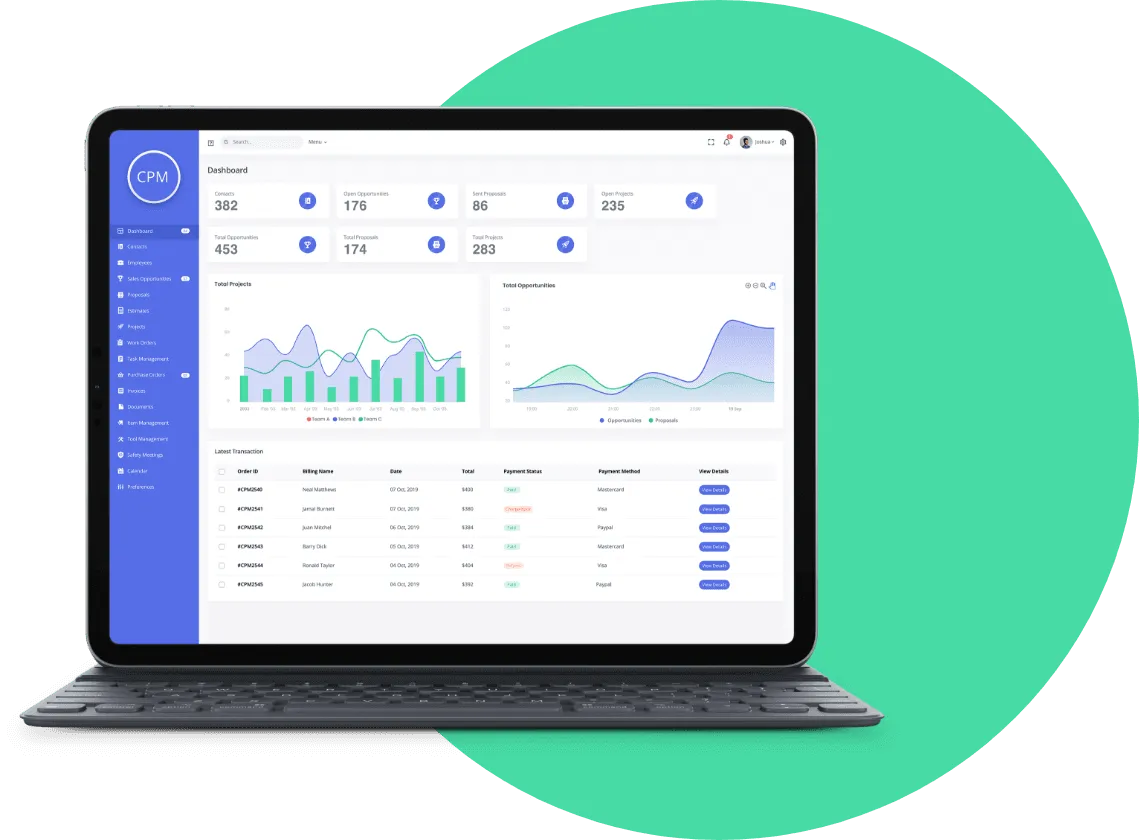
  • Real-Time Dashboards and Visualizations – Operations teams see equipment health at a glance, maintenance managers track work order priorities, and executives monitor facility-wide KPIs. 
  • Automated Alerts and Notifications – When a critical threshold is crossed, the right person gets notified immediately, whether that’s a mobile alert to a maintenance technician or an automated work order creation in the CMMS. 
  • Prescriptive Recommendations – The system doesn’t just say “pump bearing will fail,” it recommends “schedule bearing replacement during next planned downtime, order part #XYZ123, estimated 2-hour labor.” 
  • Automated Workflow Triggers – Advanced implementations can automatically adjust production schedules, order spare parts, or even modify equipment operating parameters to extend life until scheduled maintenance. 
The 4-Stage Predictive Analytics Framework Table

IoT & Predictive Analytics: Applications Across Operational Domains 

Now let’s get specific. Here’s how IoT and predictive analytics drive value across different operational areas: 

Predictive Maintenance (The Foundation) 

Yes, we’re starting here because it’s the most mature and proven application. Predictive maintenance shifts organizations from “fix it when it breaks” to “fix it before it breaks.” 

Toyota’s Indiana assembly plant provides a perfect example. Using Maximo Application Suite, maintenance teams can now see equipment health and component conditions in real-time, transforming their approach from reactive to truly proactive. More broadly, according to Rafi Ezry, Managing Partner at IBM, shop floor data powered by AI and IoT can reduce downtime by 50%, reduce breakdowns by 70%, and lower overall maintenance costs by 25%. These aren’t projections, they’re measured outcomes from actual deployments across various industries. 

Maximo Application Suite used by Toyota's Indiana Assembly Plant

Production Optimization 

Production lines are complex ecosystems where small inefficiencies cascade into major bottlenecks. IoT sensors monitoring cycle times, throughput rates, and equipment utilization reveal patterns that optimize workflow: 

  • Bottleneck identification – Analytics pinpoint which stations slow down the entire line, enabling targeted improvements 
  • Load balancing – Distributing work across multiple machines based on real-time capacity 
  • Throughput improvement – Identifying optimal operating parameters that maximize output without sacrificing quality 

Manufacturing facilities implementing real-time analytics typically see 15-20% production rate increases through bottleneck identification and process optimization, according to industry reports

Quality Control and Defect Prevention 

Finding defects after production is expensive. Preventing them before they happen is transformative. IoT-enabled quality control monitors process parameters in real-time, correlating variations with quality outcomes: 

Tetra Pak’s Connected Packaging initiative has scaled predictive analytics across 8,000 packaging lines globally, achieving a 40% reduction in downtime within the first year of deployment, according to Mordor Intelligence. By continuously monitoring critical equipment parameters across its worldwide customer base, Tetra Pak demonstrates how IoT-enabled predictive maintenance transforms packaging operations from reactive troubleshooting to proactive optimization, preventing production losses before they occur.

Energy Management and Sustainability 

Energy costs are no longer fixed overhead, they’re manageable through predictive analytics. IoT sensors track consumption patterns across equipment, enabling: 

  • Peak demand optimization – Shifting energy-intensive operations to off-peak hours 
  • Consumption forecasting – Predicting usage to negotiate better utility rates 
  • Efficiency improvements – Identifying equipment operating inefficiently and correcting before costs escalate 

A manufacturing facility implemented real-time IIoT-based energy monitoring on a legacy Turret Punch Press that was frequently idle in automatic mode due to production scheduling uncertainties. After deploying continuous monitoring sensors and instructing operators to power down the machine during non-operational periods, the facility achieved energy reductions ranging from 25.7% to 56% across different months, with the most significant improvement showing a 51.5% decrease in electricity consumption (from 6,783 kWh to 3,293 kWh between April and June 2024). 

  • The monitoring system also uncovered a hidden compressed air leak that was consuming 4-6 m³/hour even when the machine was completely powered off. By implementing an automated shut-off valve triggered by real-time power consumption data, the facility eliminated 83.34% of compressed air waste, significantly reducing the load on factory compressors and lowering overall operational costs. 

Supply Chain and Inventory Optimization 

Predictive analytics extends beyond the four walls of your facility through IoT-enabled supply chain visibility. Organizations gain enhanced demand forecasting accuracy, optimize inventory by balancing holding costs against stockout risks using real-time consumption data, improve logistics efficiency through route optimization based on real-time traffic and weather conditions, and predict supplier performance to identify delivery risks before they impact production schedules. 

DHL invested $350 million to digitize its operations and developed MySupplyChain, an end-to-end visibility platform powered by predictive analytics and IoT automation. The platform now serves 25,000 active users across major enterprises, significantly reducing costs, paperwork, and delivery inefficiencies while improving supply chain visibility and real-time decision-making capabilities throughout its global operations. 

Industry-Specific Impact 

Different industries face unique challenges, and IoT predictive analytics adapts to address them: 

Industry Critical Equipment Primary Challenge Key Outcomes 
Manufacturing & Industrial Assembly lines, CNC machines, robotics Cascading production failures creating revenue-impacting bottlenecks 20% downtime reduction (General Motors) • Extended asset lifespan • Eliminated emergency repair costs 
Oil & Gas / Petrochemical Rotating equipment, pressure vessels, process control Safety hazards and environmental incidents under extreme operating conditions Prevented 2 critical failures (Shell Pernis – 10,000+ assets) • Avoided million-dollar shutdowns • Maintained safety compliance 
Energy & Utilities Wind turbines, solar farms, power grids Remote locations with weather exposure impacting grid stability Optimized energy production (Timspark ML system) • Low-wind maintenance scheduling • Remote asset monitoring 
Telecommunications Base stations, fiber networks, data centers Zero-tolerance interruptions affecting millions of subscribers Maximized network uptime • Prevented customer-facing degradation • Reduced churn through reliability 
Healthcare MRI, ventilators, dialysis equipment, surgical robots Equipment failures directly impacting patient outcomes Enhanced availability (Siemens AI maintenance) • Prevented procedure failures • FDA compliance automation 

Manufacturing and Industrial 

Assembly lines, CNC machines, and robotics demand continuous uptime to maintain production schedules and meet delivery commitments. Unplanned equipment failures cascade through the entire manufacturing process, creating bottlenecks that impact throughput and revenue. Predictive maintenance transforms reactive repair strategies into proactive asset management. 

  • Downtime reduction: General Motors reduced unplanned downtime by up to 20% through IoT sensor data analysis across assembly line equipment 
  • Asset lifespan extension: Continuous monitoring enables optimal maintenance timing, extending critical machinery operational life 
  • Production continuity: Early fault detection prevents cascading failures that would otherwise halt entire production lines 
  • Cost avoidance: Scheduled maintenance during planned shutdowns eliminates expensive emergency repairs and overtime labor costs 

Oil & Gas / Petrochemical

Equipment failures in refineries and petrochemical plants create cascading safety hazards, environmental incidents, and massive financial losses. Critical rotating equipment, pressure vessels, and process control systems operate under extreme conditions that accelerate wear and increase failure risk. Real-time monitoring has become essential for operational safety and business continuity. 

  • Critical failure prevention: Shell’s Pernis refinery monitors 10,000+ assets with predictive analytics, preventing two failures that would have cost millions in repairs 
  • Production loss avoidance: Early detection systems identified and resolved issues before they could trigger costly production shutdowns 
  • Safety enhancement: Continuous equipment health monitoring reduces catastrophic failure risks that could endanger personnel and surrounding communities 
  • Regulatory compliance: Automated monitoring systems provide audit trails and documentation required for environmental and safety regulations 

Energy and Utilities 

Wind turbines, solar farms, and power distribution networks face unique challenges from remote locations, weather exposure, and variable demand patterns. Equipment failures in these systems directly impact grid stability and revenue generation. IoT-enabled monitoring optimizes both energy production and asset availability. 

  • Energy harvesting optimization: Renewable energy provider partnered with Timspark to build ML-based management system for better production planning 
  • Maintenance scheduling: Predictive analytics enabled turbine servicing during low-wind periods, minimizing production losses during maintenance windows 
  • System reliability: Continuous monitoring significantly reduced equipment malfunctions through early detection of bearing wear, blade damage, and electrical faults 
  • Remote asset management: IoT sensors enable condition monitoring across geographically dispersed installations without requiring physical site visits 

Telecommunications 

Network infrastructure operates under constant demand with zero tolerance for service interruptions that impact millions of subscribers simultaneously. Base stations, fiber optic networks, and data centers require continuous monitoring to maintain service quality and prevent revenue-impacting outages. Predictive analytics ensures network availability meets customer expectations. 

  • Network uptime maximization: IoT sensors monitor base station performance, power systems, and environmental conditions to prevent service disruptions 
  • Service quality optimization: Real-time analytics identify degrading equipment before customers experience dropped calls or slow data speeds 
  • Capacity planning: Historical performance data enables proactive infrastructure upgrades in high-traffic areas before congestion impacts service 
  • Customer satisfaction: Predictive maintenance reduces service interruptions, improving Net Promoter Scores and reducing customer churn rates 

Healthcare 

Medical equipment failures directly impact patient outcomes, making reliability non-negotiable in clinical settings. MRI machines, ventilators, dialysis equipment, and surgical robots must be available precisely when needed. IoT-enabled predictive maintenance in healthcare ensures critical medical devices remain operational for patient care. 

  • Equipment availability: Siemens Healthineers developed generative AI-powered predictive maintenance for medical imaging equipment reliability 
  • Patient care continuity: Early fault detection prevents equipment failures during critical procedures, ensuring uninterrupted patient treatment 
  • Regulatory compliance: Automated monitoring systems maintain required service logs and calibration records for FDA and accreditation requirements 
  • Cost efficiency: Scheduled maintenance during off-peak hours maximizes equipment utilization while minimizing revenue loss from unavailable diagnostic capabilities 

IoT & Predictive Analytics Implementation: Core Challenges and its Solutions 

If you’re planning an IoT-enabled predictive analytics deployment, you’re likely wrestling with questions about legacy equipment compatibility, data management, and how to justify the investment. Manufacturing facilities often face infrastructure constraints, skills gaps, and organizational resistance that can derail even well-funded initiatives. Understanding these challenges upfront determines whether your implementation delivers promised ROI or becomes another abandoned digital transformation project. 

Challenge 1: Legacy System Integration and Data Silos 

Your facility operates equipment from multiple manufacturers spanning decades of technology evolution. Older machines lack native connectivity, creating data gaps that undermine predictive accuracy. Different departments maintain separate systems – production, maintenance, quality control – that don’t communicate, fragmenting the operational visibility you need for effective analytics. 

TechAhead’s Solutions: 

  • Custom IoT gateway development that retrofits legacy equipment with external sensors and edge computing while preserving your capital investments in functional machinery 
  • Middleware integration platforms we build translate between your proprietary protocols (Modbus, OPC-UA, PROFINET) and modern cloud architectures without replacing control systems 
  • Phased implementation strategy starting with your high-value equipment to demonstrate ROI before expanding across the facility 

Challenge 2: Data Quality and Volume Management 

Your sensor-equipped production lines generate terabytes monthly, overwhelming traditional storage infrastructure. But quantity doesn’t equal quality when sensors drift out of calibration, network disruptions create gaps, or equipment generates spurious readings during maintenance. Poor data quality produces unreliable predictions that erode stakeholder trust in the entire system. 

TechAhead’s Solutions: 

  • Edge analytics architecture we design processes data locally at equipment level, filtering noise and transmitting only meaningful insights while reducing your bandwidth requirements by up to 90% 
  • Automated data validation pipelines that identify anomalous readings, missing data points, and sensor drift before corrupted data enters analytics systems 
  • Intelligent data lifecycle management with retention policies and tiering strategies that reduce storage costs while preserving analytical capabilities 

Challenge 3: Skills Gap and Change Management 

Your maintenance technicians excel at mechanical troubleshooting but struggle to interpret statistical models and probabilistic failure predictions. You lack data scientists who understand both industrial processes and advanced analytics. Plant managers resist condition-based approaches that challenge decades of operational practice, creating organizational friction that slows adoption. 

TechAhead’s Solutions: 

  • Intuitive dashboard interfaces we develop translate complex ML predictions into actionable maintenance recommendations your existing teams understand immediately 
  • Comprehensive training programs and knowledge transfer that bridge the gap between your maintenance expertise and data-driven decision-making 
  • Pilot project approach demonstrating value on limited equipment sets to build organizational confidence and overcome skepticism before facility-wide rollout 

Challenge 4: Cybersecurity and Data Privacy 

Connecting industrial equipment to networks creates attack surfaces that didn’t exist in your air-gapped operational technology environment. You’re now an attractive target for ransomware attacks that can halt production for weeks. Sensitive operational data moving between edge devices and cloud platforms needs protection, and regulatory requirements in healthcare, energy, and critical infrastructure add compliance complexity. 

TechAhead’s Solutions: 

  • Security-first architecture design with network segmentation isolating your operational technology from enterprise IT systems using properly configured firewalls and DMZs 
  • End-to-end encryption implementation protecting data in transit with TLS and at rest with AES-256 standards throughout your entire data pipeline 
  • Compliance-ready frameworks including role-based access controls, multi-factor authentication, and audit logging that meet industry-specific regulatory requirements 

Challenge 5: ROI Justification and Budget Constraints 

You need significant upfront investment in sensors, connectivity infrastructure, and analytics platforms before seeing measurable returns. Your finance team struggles to approve projects when benefits materialize over multi-year horizons while costs hit immediately. Quantifying avoided downtime proves difficult when you’re essentially proving what didn’t happen – failures that were prevented. 

TechAhead’s Solutions: 

  • Business case development calculating your total cost of ownership and comparing predictive costs against current reactive spending including emergency repairs and production losses 
  • Baseline metrics establishment documenting your current failure rates, maintenance costs, and downtime before implementation to enable definitive ROI measurement 
  • MVP-first delivery model with phased funding starting on critical equipment, using documented savings to justify expanded deployments across additional assets 

Conclusion

Here’s the truth: your equipment is already telling you when it’s going to fail. Every temperature spike, every unusual vibration, every power consumption anomaly is a warning signal. The difference between companies running smooth operations and those dealing with catastrophic breakdowns isn’t luck – it’s whether they’re listening to what their machines are saying.

You need a partner who understands both industrial operations and advanced analytics – not just one or the other. TechAhead has spent 16+ years building that exact expertise, delivering 2,500+ IoT solutions for 1,200+ global clients including Fortune 500 leaders like ESPNAudiAmerican Express, and AXA.

We build custom ML models trained on your equipment’s specific failure patterns. Our edge analytics work even when your network doesn’t. Integration with your existing SCADA, ERP, and maintenance systems happens without disrupting operations. You won’t get generic dashboards or pilots that go nowhere. What you get is production-ready predictive analytics that actually prevent downtime. 

Ready to stop reacting to failures and start preventing them? Let’s talk about your specific operational challenges.

What’s the difference between predictive maintenance and predictive analytics in industrial settings?

Predictive maintenance is one slice of predictive analytics. It zeroes in on stopping equipment failures before they happen. Predictive analytics casts a wider net. You get production optimization, quality control, energy management, supply chain forecasting, and OEE tracking all rolled in. Predictive maintenance asks “when will this machine fail?” Predictive analytics tackles the bigger question: “how do we optimize everything?” Both use the same IoT setup and data science tools. 

How long does it realistically take to see measurable ROI from an IoT predictive analytics implementation? 

Most companies hit initial ROI somewhere between 12-18 months on pilot deployments. Critical equipment comes first. You’ll spend 3-6 months getting systems deployed and collecting data. Model training and validation eat up another 6-9 months. Real savings start showing around month 9-12 when the system catches failures and tunes operations. Facility-wide returns take longer, around 24-36 months, as you scale past the pilot phase. Companies working with high-value assets that break down frequently can see payback inside 12 months.

Can we implement IoT predictive analytics on our legacy equipment without replacing everything?

Yes. Most plants run equipment from different decades. Ripping it all out and starting fresh isn’t realistic money-wise. Modern IoT uses retrofit strategies. External sensors, edge computing boxes, and middleware platforms grab performance data without touching your existing machines. Your capital investments stay intact. You add the analytics layer on top. Pick equipment where predictions matter most. High-cost assets with serious downtime consequences work well. Safety-critical systems belong on that list too. 

What’s a realistic budget for implementing predictive analytics in a mid-sized manufacturing facility?

A facility with 50-100 critical assets runs about $150,000-$300,000 in first-year costs. That covers hardware like sensors, gateways, and edge devices. Software licenses for analytics platforms and cloud infrastructure add up. Integration services and training round it out. The split looks like this: hardware and connectivity take 40%, software and cloud services grab 35%, implementation and training get 25%. Start smaller if you want. Pick 10-15 critical assets for $50,000-$75,000. Prove ROI first, then expand. Integration complexity drives your costs more than the sensors themselves. 

Do we need to hire data scientists, or can our existing maintenance team manage predictive analytics?

You need both working together. But a full data science team isn’t mandatory. Modern platforms come with interfaces that make sense to regular people. They convert complex ML predictions into maintenance actions your teams already know how to handle. Successful setups pair maintenance know-how with analytics muscle. Hire one or two engineers who get data. Partner with vendors who tune your analytics over time. Or go with managed services. Your maintenance crew brings equipment knowledge you can’t buy. Analytics backs them up without taking over. 

How much historical data do we need before the system can make accurate predictions?

You need 6-12 months of normal operating data at minimum. This sets your baseline performance patterns. Historical failure data helps if you’ve got it. Systems start paying off before they hit perfect accuracy though. Anomaly detection kicks in around 3 months. It flags weird behavior without nailing exact failure timing. Pattern recognition fires up by month 6, connecting conditions to outcomes. Full predictive power builds as the system watches complete failure cycles and seasonal shifts. Equipment that breaks down regularly trains models faster than super-reliable assets. 

What happens if our network goes down? Do we lose all predictive capabilities?

Not if your system runs edge computing properly. Edge devices crunch data right there on the floor. They keep watching equipment health during outages. Anomaly detection keeps running. Local alerts still fire. Network comes back, and accumulated data pushes to central systems for deeper analysis. This edge-cloud mix protects your urgent decisions. Emergency shutdowns and immediate maintenance alerts work offline. You still get cloud horsepower for facility-wide analytics when connectivity’s available. 

How do we prove ROI when we’re measuring failures that didn’t happen?

Set baseline metrics before you flip the switch. Document current failure rates, mean time between failures (MTBF), maintenance costs, unplanned downtime hours, and emergency repair bills. Track the same numbers after go-live. Changes become obvious. Log each predicted failure too: what alert went out, what condition inspectors found, what it would’ve cost if things broke, what you actually spent on repairs. Give it 12-24 months. You’ll stack up proof of prevented catastrophic failures, better emergency-to-planned maintenance ratios, and lower total maintenance spend. Finance teams can’t argue with that.