


 Copy Link
 Share on X
 Share on Facebook
 Share on LinkedIn


Always Active
Required for core functionality such as security, network management, and accessibility. These cannot be disabled.

Uncover the transformative potential of digital and mobile solutions for your industry.





 Last Updated: Sep 18, 2026
Jul 9, 2026
Last Updated: Sep 18, 2026
Jul 9, 2026  599
599  15 min. Read


Key Takeaways
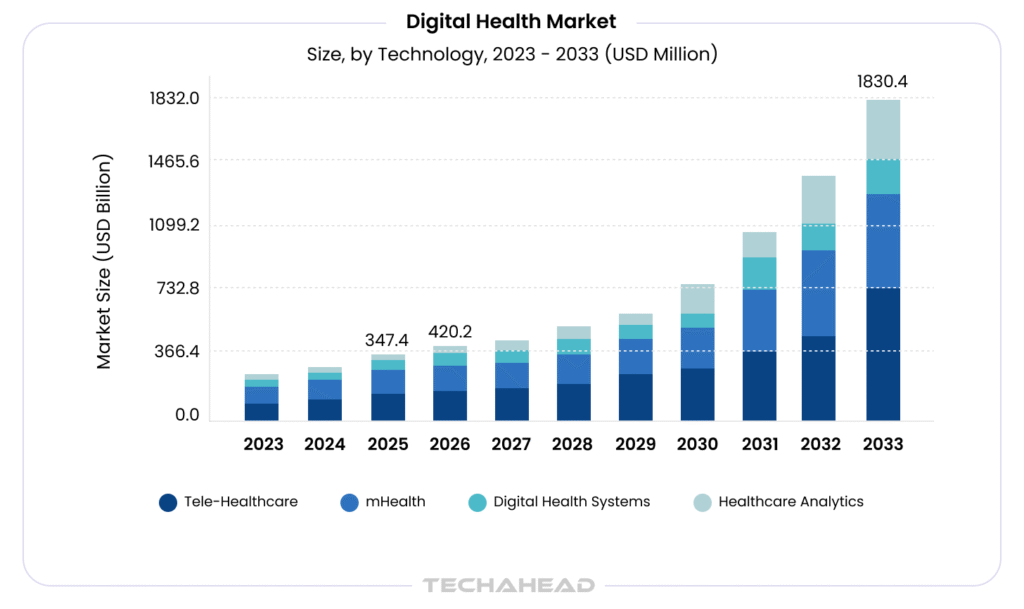
The fitness industry has moved well beyond gym memberships and step-counting. Today, consumers expect fitness experiences that blend into their daily lives, whether it’s tracking a morning run on a smartwatch, following an AI-generated workout plan, joining a live virtual class, monitoring sleep and recovery, or syncing with connected wellness devices such as smart scales, heart rate monitors, recovery wearables, and even app-enabled cold plunge tubs. The shift has silently raised the bar from what “building a fitness app” even means. The market shows this momentum; the global virtual fitness market is projected to surpass USD 106.4 billion by 2030, growing at a CAGR of over 26%.
However, growing demand also means rising expectations. Users no longer compare a new fitness app solely against other workout apps; they compare it against the seamless, personalized experiences offered by leading consumer apps. Delivering that level of quality requires expertise in mobile engineering, cloud infrastructure, AI wearable integrations, and secure health data management. For businesses planning to build or modernize a fitness platform, understanding the technologies shaping the industry is the first step toward choosing the right development partner.
The days of an individual workout plan for every user are over. AI now looks at someone’s training history, recovery data, and goals to build a plan that actually fits them, adjusting on the go, suggesting a rest day when the numbers say push, and increasingly talking users through it like a coach would. It’s become one of the clearest ways apps separate themselves from the pack. Wearables have followed the same arc, from nice-to-have to non-negotiable. Users expect their app to be highly personalized, starting with what’s already on their wrist—Apple Watch, Fitbit, Garmin, WHOOP, or Oura—and to track heart rate, sleep, oxygen levels, and recovery scores without friction. Increasingly, that same connectivity extends beyond wearables into recovery hardware: smart cold plunges, saunas, and massage tools that sync with a phone rather than a wall dial.
Personalization has gotten more granular too. It’s no longer just “beginner,” “intermediate,” or “advanced” apps; now factor in age, medical history, training style, and even nutrition goals to shape a genuinely individual journey rather than a generic library of workouts. Computer vision is opening up a newer frontier: a phone camera alone can now catch bad form, count reps, and give real-time corrections, no extra sensors required. It’s showing up fastest in strength training, yoga, and rehab apps, where form matters as much as effort. The strongest platforms are also ending the treatment of fitness as an isolated feature; nutrition, sleep, hydration, mental wellness, and habit tracking, backed by generative AI, are converging into a single, connected experience because users would rather manage their health in one place with AI automation than juggle five apps. Gamification streaks, badges, leaderboards, and community challenges are what keep them coming back to that one place daily.
None of this matters, though, if the data behind it isn’t handled properly. As apps collect more sensitive health information, HIPAA compliance, encryption, and secure cloud-native architecture have moved from a checkbox to a core requirement, especially for any platform that works with healthcare service providers or insurers. And because usage tends to spike hard around live classes or viral campaigns, the infrastructure behind all of this needs to scale without buckling, which is where cloud-native architecture earns its keep.
Must Read: Cloud-native applications: The future of software development
Examining portfolios and comparing hourly rates are not the only factors to consider when selecting fitness app development services. AI, wearable integration, cloud infrastructure, healthcare compliance, and user-friendly mobile experiences are just a few of the many technologies that modern fitness applications require knowledge of. The firms on this list were chosen for their ability to provide user-focused, scalable fitness solutions that meet current market expectations. We evaluated each fitness app development business based on the following standards to provide a fair comparison:
| Evaluation Criteria | Why It Matters |
| Fitness App Portfolio | Proven experience building workout, wellness, nutrition, or activity-tracking applications. |
| Wearable Device Integration | Ability to integrate with Apple Health, Google Fit, Apple Watch, Fitbit, Garmin, Samsung Health, and other connected devices. |
| AI & Personalization | Experience developing AI-powered coaching, workout recommendations, predictive analytics, and personalized fitness journeys. |
| Healthcare & Data Security | Knowledge of HIPAA-compliant architecture, secure handling of health data, and privacy best practices. |
| Mobile Engineering Expertise | Strong capabilities in native and cross-platform iOS and Android app development. |
| Scalable Cloud Infrastructure | Ability to build cloud-native fitness platforms that support thousands of concurrent users. |
| UI/UX Design | Creating engaging user experiences that improve retention and long-term engagement. |
| Client Reviews & Industry Reputation | Verified client feedback, successful project delivery, and overall credibility within the software development industry. |
Instead of evaluating firms solely by revenue or size, this list prioritized firms with demonstrable expertise in fitness app development services, wearable technology, AI-driven wellness solutions, and scalable mobile engineering. Whether you’re building a workout app, a gym management platform, a nutrition tracker, or a connected health ecosystem, these companies have the technical expertise to deliver modern digital fitness experiences.
TechAhead earns the top spot for a simple reason: it treats fitness apps as health products first, not just workout trackers with a nice interface. The team builds custom training apps, activity-tracking platforms, nutrition tools, and full wellness ecosystems that connect natively with Apple Health, Google Fit, Apple Watch, Fitbit, and the broader wearable app development landscape. Where TechAhead pulls ahead is in what lies beneath the app: AI-driven personalization, cloud-native architecture, and health data handling built to withstand scrutiny. That combination of polished UX and serious backend engineering is why both startups and larger enterprises keep coming back for long-term platform growth, not just a one-off build.
Best for: AI-powered fitness apps · startup and enterprise platforms · wearable integration · digital health and wellness products · HIPAA-compliant apps
Key features: AI workout recommendations · Apple Health and Google Fit integration · Apple Watch, Fitbit, and Garmin connectivity · custom iOS and Android development · cloud-native architecture · secure health data management · cross-platform builds · end-to-end product strategy
MindInventory has carved out a solid name in wellness, nutrition, and health-tracking apps, with a development team that clearly enjoys the design side of the work as much as the engineering. Expect feature-rich apps with personalized workout plans, progress tracking, wearable syncing, and built-in subscription models from the start, all backed by AI and modern mobile frameworks. For businesses that want a fitness app that looks as good as it functions, MindInventory is a dependable pick.
Best for: Workout and nutrition apps · health tracking platforms · fitness startup MVPs · cross-platform apps
Key features: Wearable integrations · personalized workout modules · nutrition and wellness tracking · Flutter and React Native development · cloud deployment · UI/UX-focused builds
ScienceSoft’s strength is in healthcare software, and that expertise carries directly over to fitness. If your app is going to handle sensitive health data, this is a team that already knows the compliance landscape, HIPAA, secure cloud infrastructure, and connected healthcare systems, so you don’t have to learn them on your project. That makes ScienceSoft a natural fit for organizations building activity trackers, wellness platforms, or digital health tools where security isn’t optional.
Best for: HIPAA-compliant fitness apps · digital health platforms · wellness ecosystems · healthcare integrations
Key features: Secure cloud infrastructure · regulatory compliance · activity tracking · AI-powered analytics · custom software engineering
Simform is built for scale. The company leans heavily on cloud-native architecture and full-stack engineering, which shows up in how well its fitness platforms handle growth; think large user bases, wearable connectivity, and infrastructure that doesn’t buckle under a usage spike. Clients also point to a genuinely collaborative process and consistent delivery timelines, which matter as much as the tech stack when a launch date is on the line.
Best for: Scalable fitness platforms · connected mobile ecosystems · cloud-native applications · enterprise products
Key features: AWS and Azure expertise · wearable integrations · agile development · AI implementation · scalable backend architecture
Accenture plays a different game than most on this list, less “build my app” and more “modernize our entire wellness strategy.” As a global consulting firm, it’s best suited to enterprises, insurers, and healthcare providers looking to overhaul digital fitness and wellness services at scale, using AI, analytics, and cloud infrastructure as the backbone. It’s less focused on standalone consumer apps, but for large-scale digital transformation, few can match its reach.
Best for: Enterprise wellness platforms · corporate fitness solutions · digital transformation · healthcare ecosystems
Key features: AI and analytics · cloud modernization · enterprise architecture · digital consulting · global delivery capabilities
Daffodil Software sits at the intersection of healthcare tech, AI, and mobile engineering, and that combination translates well into fitness. The company builds secure apps for activity tracking, health monitoring, and personalized fitness experiences, with an agile process that keeps pace with how fast this space moves. It’s a strong option for teams that want fitness technology with a healthcare-grade foundation underneath it.
Best for: AI-enabled wellness apps · healthcare fitness solutions · remote patient wellness · mobile health applications
Key features: AI integration · cloud architecture · mobile app development · data security · custom software engineering
Algoworks has built its reputation on solid mobile engineering rather than any single specialty, which makes it a flexible partner for fitness and wellness apps. The team works across cross-platform frameworks, wearable integrations, and cloud-connected features, with UI/UX design woven in rather than bolted on. Good fit for businesses that want a modern tech stack without needing an enterprise-scale engagement.
Best for: Cross-platform fitness apps · startup products · mobile modernization · wearable-enabled applications
Key features: Flutter and React Native · cloud services · API integrations · agile development · UI/UX expertise
Hidden Brains brings AI, IoT, and mobile engineering together for connected fitness and healthcare apps, with particular strength in smartwatch and device integrations. Clients consistently mention responsive communication and solid project management alongside the technical work. Its fitness-specific portfolio is smaller than the companies ranked above it, but for businesses chasing IoT-driven features, it’s a capable option.
Best for: AI-powered wellness apps · IoT-enabled fitness solutions · smartwatch integrations · connected health products
Key features: IoT development · AI implementation · wearable connectivity · cloud deployment · custom mobile development
QBurst’s background is in broader product engineering rather than fitness specifically, but its cloud infrastructure and enterprise software chops carry over well. It’s a solid choice for businesses that care more about long-term engineering support and secure architecture than a deep fitness portfolio; the fundamentals are strong even if the fitness-specific showcase is lighter.
Best for: Enterprise fitness platforms · healthcare software · product engineering · cloud-native applications
Key features: Product engineering · cloud infrastructure · mobile development · API integration · secure application architecture
10. OpenXcell
OpenXcell rounds out the list with general mobile and custom software strength rather than a fitness-first focus. It has delivered wellness-adjacent apps, activity tracking, and appointment management and covers the core technical bases (Android, iOS, cross-platform, and cloud) well enough for startups that need a reliable build without requiring deep fitness-industry specialization.
Best for: Startup fitness apps · wellness mobile applications · custom software development · MVP builds
Key features: Android and iOS development · cross-platform frameworks · cloud deployment · activity tracking · third-party integrations
With so many capable firms in the market, picking the right one usually comes down to fit, not just capability on paper. Start with the portfolio; you need to ask questions like, “Has this team actually shipped fitness or wellness products before, or is this their first attempt outside general mobile work?” A firm that’s already dealt with the retention curve of a workout app or the specific headaches of syncing wearable data brings a shortcut you’d otherwise pay for in delays.
Users expect their app to sync cleanly with an Apple Watch, Fitbit, or Garmin and increasingly with smart recovery gear, too. That kind of connectivity is hard to bolt on after launch, so it’s worth asking early how a team handles it architecturally, not just whether they’ve done it before, making wearable and IoT support an important consideration. If the app touches health data in any real way, HIPAA isn’t optional, and it’s a lot easier to build it in from the first sprint than to patch it in after a security audit turns up gaps. This is where compliance becomes important.
Scale is a big deal, and many teams underestimate it early on. An app might run perfectly for a thousand users but fall apart at a hundred thousand. Fitness apps especially see huge spikes during challenges or live workouts, so the system needs extra space built in from day one. You also want a team that pushes back when something doesn’t make sense. The strongest partners don’t just follow a checklist. They will tell you if a shortcut risks breaking compliance rules or driving users away.
A firm that holds up well across all five of these is usually one that can carry fitness app development from platform to launch through years of growth, not just get version one out the door.
The apps people want in 2026 are the ones that feel personal from the first workout, sync smoothly with wrist wearables, take health data seriously without making the experience clunky, and are ready to partner with healthcare development service providers. They also don’t fall over the moment a challenge goes viral, or a new class fills up overnight. Getting all of that right takes more than a skilled mobile app development team. It takes a partner who is proficient in navigating AI personalization, healthcare compliance, and cloud infrastructure, holding everything together behind the scenes. Miss any one of those pieces, and the fallout will show up faster than you can imagine, whether that’s a bulky wearable sync, a compliance gap, or an app that slows to a crawl right when it matters most.
That’s really what separates TechAhead from the rest of this list. It’s not just fitness experience or healthcare experience; it’s both, backed by AI engineering and AI infrastructure management built to hold up as usage grows rather than buckle under it. For a business building a fitness product meant to last, not just launch, that combination is hard to find and even harder to fake.
When choosing a fitness app development company, evaluate its experience in building fitness and wellness applications, expertise in AI-powered features, wearable integrations, healthcare compliance, cloud architecture, and user-centric mobile design. Reviewing case studies, client feedback, and industry experience can also help you identify the right development partner.
A successful fitness app should offer personalized workout plans, activity tracking, wearable device integration, nutrition tracking, progress analytics, push notifications, community features, AI-powered coaching, and secure user data management. The right feature set depends on your business goals and target audience.
Yes. Most modern fitness applications support integrations with wearable platforms such as Apple Health, Google Fit, Apple Watch, Fitbit, Garmin, Samsung Health, and other connected devices. These integrations enable real-time tracking of workouts, heart rate, sleep, calories burned, and other health metrics.
AI helps deliver personalized fitness experiences by analyzing user behavior, workout history, and health data. It can generate customized workout plans, provide virtual coaching, recommend recovery strategies, track progress, and improve user engagement through intelligent insights.
If a fitness app stores or processes sensitive health information, compliance with regulations such as HIPAA may be necessary. Working with a fitness app development company that understands secure data management and healthcare standards helps protect user information and ensures regulatory compliance where applicable.
Fitness app development is no longer limited to gyms and personal trainers. Healthcare providers, wellness brands, sports organizations, insurance companies, corporate wellness programs, rehabilitation centers, and digital health startups are all investing in fitness applications to improve user engagement and deliver personalized health experiences.
Leading fitness app development companies improve engagement by integrating AI-powered coaching, gamification, wearable connectivity, personalized recommendations, achievement tracking, social challenges, and real-time progress monitoring. These features encourage users to stay active and return to the app regularly.
Fitness applications require expertise beyond standard mobile app development. A specialized fitness app development company understands wearable integrations, health data security, AI-driven personalization, cloud scalability, and user behavior, enabling businesses to build engaging and future-ready digital fitness solutions.
We use cookies to ensure our website functions properly, improve performance, and provide a personalized experience. You can choose which types of cookies to allow below.
Required for core functionality such as security, network management, and accessibility. These cannot be disabled.
Help us understand site traffic and user interactions so we can improve performance and usability.
Enable enhanced functionality and personalization such as language or region preferences.
Used to deliver relevant ads, track campaign performance, and measure advertising effectiveness.