


 Copy Link
 Share on X
 Share on Facebook
 Share on LinkedIn


Always Active
Required for core functionality such as security, network management, and accessibility. These cannot be disabled.

Uncover the transformative potential of digital and mobile solutions for your industry.





 Last Updated: Sep 22, 2026
Jan 10, 2025
Last Updated: Sep 22, 2026
Jan 10, 2025  4075
4075  20 min. Read


Key Takeaways
Ever heard the phrase, “There’s an app for everything”? This saying perfectly captures today’s reality, where web, mobile, and desktop apps dominate like never before. With the Play Store and App Store recently celebrating their 16th anniversary, the growth of mobile applications shows no signs of slowing down.
Despite a staggering 35-36 billion combined downloads from these platforms, the demand for innovative apps continues to grow. This surge encourages businesses to create standout applications that connect seamlessly with users across generations—Boomers, Millennials, and Gen Z alike.
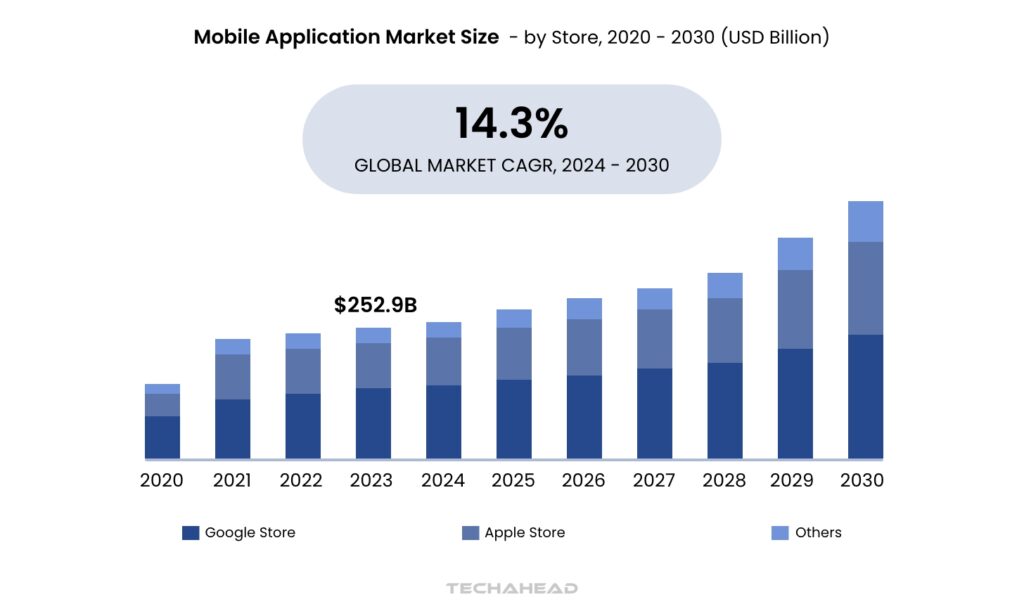
The global mobile application market was valued at USD 252.89 billion in 2023 and is expected to grow at a compound annual growth rate (CAGR) of 14.3% from 2024 to 2030. Applications span diverse sectors like gaming, health and fitness, entertainment, social networking, and retail. The widespread adoption of smartphones, increasing internet usage, and the rise of technologies such as artificial intelligence and machine learning are fueling this growth. Most of these apps are accessed through platforms like Google Play Store and App Store for iOS, highlighting their universal accessibility.
However, this growing demand raises a critical question for business leaders: What is the mobile app development cost? Accurately understanding and budgeting for this cost is essential for developing a successful app in today’s competitive market.
In this blog, we’ll break down the key factors that influence mobile app development costs and offer strategies to optimize your budget. From practical tips to reducing expenses to understanding cost-defining elements, this guide will help you create a high-performing app that succeeds in the market—efficiently and affordably.

Many factors influence the mobile app development cost. All this is important to plan your budget effectively for what you need for your project.
Building a mobile app involves skilled professionals, advanced technologies, and multiple resources, which all together contribute to the overall expenses. Every application has its unique features and objectives. Here are some common factors that significantly impact development costs
Selecting the right development partner is a critical decision that greatly affects the mobile app development cost. You typically have two options:
Partnering with a development company offers more technological expertise and resources than freelancers, ensuring a higher quality product. While freelancers may reduce costs, they often result in compromises such as delayed timelines, limited support, and lack of comprehensive source code ownership. For long-term success, collaborating with a professional app development company is a wiser investment despite the higher cost.
The features and functionalities of your app are central to determining its cost. During the discovery phase, developers identify your business needs, the app’s purpose, and how it will improve operations. Complex or innovative features add significantly to the mobile app development cost. For example, outsourcing to an app development company in the USA may increase costs due to premium charges for cutting-edge functionality. However, these features often enhance user experience, making them worth the investment.

The complexity of your app directly impacts the cost. Factors such as the business logic, target audience, and type of application play pivotal roles. For instance, a wedding planning app will cost more if it includes advanced features like AI-powered recommendations. The more intricate the app’s functionality, the higher the mobile app development cost.
Developing a mobile app with fundamental features like user log in, customizable profiles, and a service management dashboard typically costs between $5,000 and $50,000. These apps are designed with basic security measures and user-friendly interfaces to enable quick access to services. This cost-effective solution is ideal for businesses looking to offer straightforward functionality with minimal complexities. Additionally, such apps ensure seamless interaction, catering to essential user needs efficiently.
Creating a mobile app with extended functionalities, including features like multiple monetization models, payment gateway integration, and social media connectivity, costs around \$45,000 to \$100,000. These apps are tailored to enhance user engagement, making it easier for customers to connect with businesses and access their full range of services. By focusing on intuitive navigation and smooth interaction, these applications ensure an engaging experience. Furthermore, they empower businesses to offer versatile solutions while maintaining accessibility.
For advanced applications with intricate features, the development cost ranges from $100,000 to $350,000 or higher. These apps leverage cutting-edge technologies like Artificial Intelligence, Machine Learning, Augmented Reality, and Virtual Reality. They are equipped with robust functionalities, such as encrypted messaging, secure transactions, and sophisticated data processing. These high-end solutions provide exceptional transparency and cater to users with advanced service expectations. Additionally, they combine innovation with reliability, offering unparalleled performance and scalability for businesses aiming to lead in their domain.
| Type | Cost́ |
| Basic App | $5,000 to $50,000 |
| Medium App | $45,000 to $100,000 |
| Complex App | $100,000 to $350,000 |
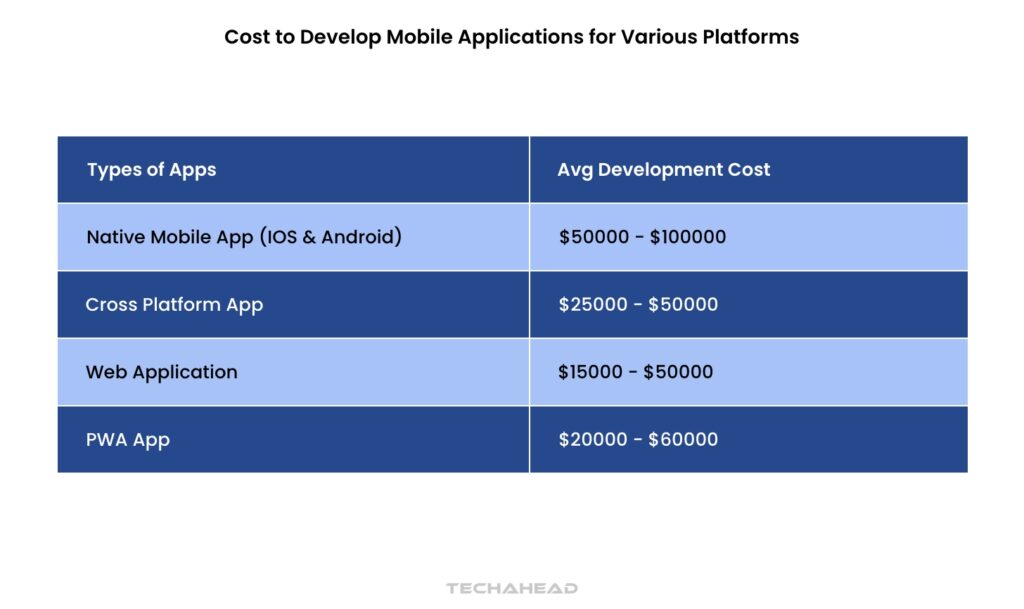
Deciding between native and hybrid platforms is another factor influencing cost. Native apps are developed for specific operating systems, making them more expensive but highly optimized. Hybrid apps, on the other hand, work across multiple platforms, reducing costs but sometimes sacrificing performance. Evaluating your app’s goals will help you choose the best option for balancing cost and functionality.
Native app development focuses on building platform-specific apps for Android or iOS, which offer superior performance and seamless functionality. While the initial mobile app development cost may seem reasonable, scaling the application for larger user bases could significantly increase expenses. However, if your target audience uses either Android or iOS exclusively, hiring skilled native developers ensures high-quality applications with unmatched user experiences.
Cross-platform development delivers applications that run efficiently on multiple operating systems, including Android and iOS. This approach significantly reduces development time by reusing the same codebase with minimal adjustments. Consequently, businesses save on the overall mobile app development cost. Moreover, cross-platform apps enable faster market entry while providing consistent functionality across devices. This makes it a smart choice for businesses aiming to maximize their reach without escalating budgets.
Hybrid app development combines web and mobile technologies, allowing users to access your app via smartphones or web browsers. This flexibility lets businesses expand their audience reach effortlessly, as users don’t need to rely solely on mobile devices. Hybrid apps offer a budget-friendly solution, balancing mobile app development cost and user accessibility. Additionally, they ensure consistent performance across platforms, making them ideal for businesses targeting diverse users.
Read more about choosing the right tech stack for your project.
The choice between Android and iOS development also affects the mobile app development cost. iOS apps are often cheaper to build due to a smaller range of devices, but Android apps have a broader reach due to their larger user base. If your goal is maximum market penetration, Android is the preferred choice. However, developing for both platforms increases costs but ensures a wider audience.
Designing is a critical phase that contributes to app success and cost. Wireframing helps visualize the app’s structure and functionality, while prototyping provides a basic version for testing with users. These stages refine your app concept, reducing the risk of costly changes later. Finally, professional app design ensures seamless navigation and user engagement, which can justify the additional expense.
Integrating third-party APIs is essential for enhancing app functionality. APIs allow apps to connect with external services, like enabling quick registration through Facebook or facilitating payments via PayPal. Custom API development increases costs due to additional development time. Using pre-existing third-party APIs can lower expenses but may incur integration charges.
Apps requiring extensive connectivity or hardware integration tend to cost more. Features like Bluetooth connectivity, USB support, and device interaction demand additional development efforts. The greater the hardware dependency, the higher the mobile app development cost.
Adding animations and visual elements enriches the user experience but also increases costs. Features like leaderboards, badges, and progress indicators make the app interactive and engaging. While these elements elevate the app’s appeal, they require more resources, impacting development costs.
Backend infrastructure supports app functionality by managing data, servers, and networking. A robust backend is essential for complex apps that handle large user bases. While simple apps require minimal infrastructure, advanced setups significantly influence the overall mobile app development cost.
Server configuration depends on the app’s complexity and user base. Basic apps can use a single server with content delivery networks (CDN). However, apps like food delivery or video streaming need dedicated servers with advanced scaling capabilities. These configurations add to the development costs.
Using the right tools and software development kits (SDKs) is crucial for efficient app creation. SDKs streamline development for Android and iOS platforms but come at a cost. Selecting tools based on your business requirements ensures better outcomes but adds to the budget.
Testing is vital to delivering a high-quality app free of bugs and technical issues. Quality assurance (QA) and beta testing ensure the app meets app store standards and user expectations. Comprehensive mobile app testing minimizes the risk of app failures, making it a necessary expense in the mobile app development cost.
By understanding these factors, you can plan your mobile app development project with realistic expectations, ensuring a balance between cost and quality.

If you’ve used online calculators or researched the average app creation cost, you might still be left guessing. While such figures can provide a rough idea, they rarely reflect the true mobile app development cost.
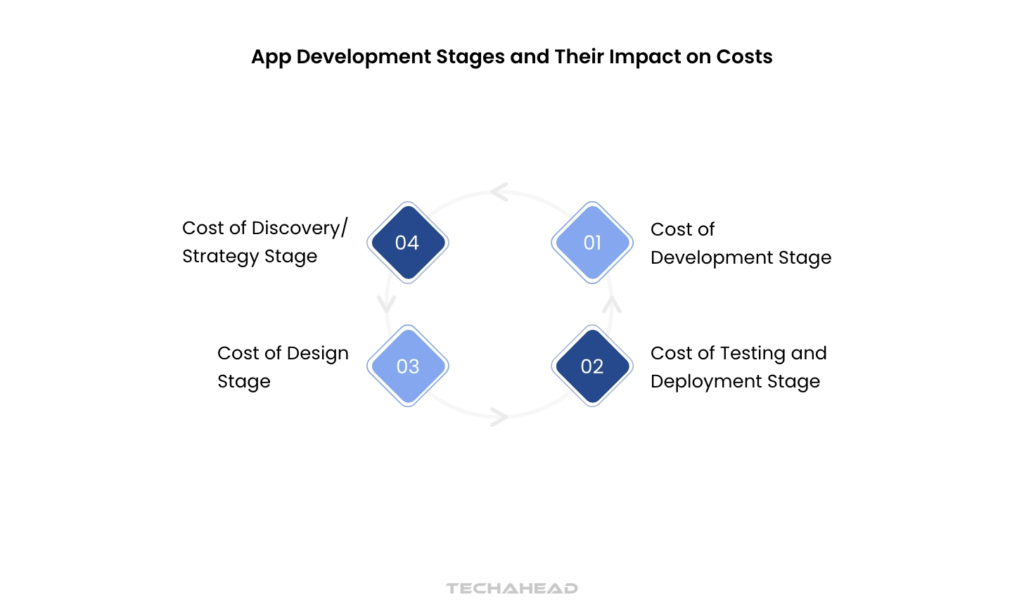
These estimates often overlook critical factors like features, technology stacks, design complexity, and even the location of the development team. To help you understand, here’s a breakdown of the mobile app development cost at each stage, ensuring transparency and clarity about what impacts your budget.
This stage lays the foundation of your app idea through market analysis, strategy building, and business documentation. It includes everything from competitive analysis and defining objectives to creating a clear project roadmap.
During this phase, development firms will dive deep into understanding your business goals. This includes conducting market research, understanding your target audience, and defining your app’s MVP (Minimum Viable Product). If a development partner skips this crucial step, it’s a red flag.
On average, 10-15% of the total mobile app development cost is spent on the discovery stage. Completing this phase typically takes 20-200 hours, depending on the project’s scope.
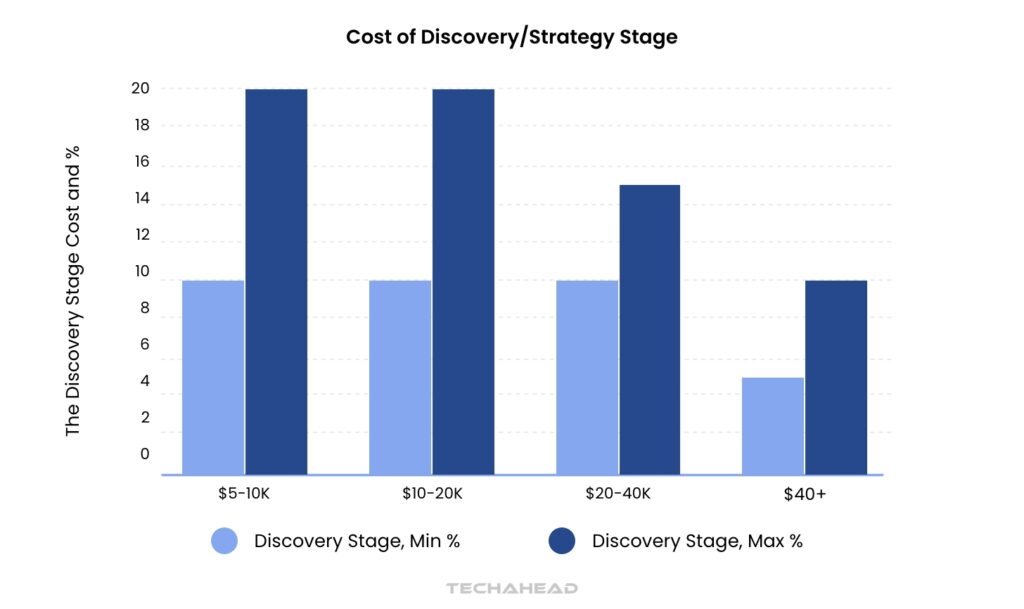
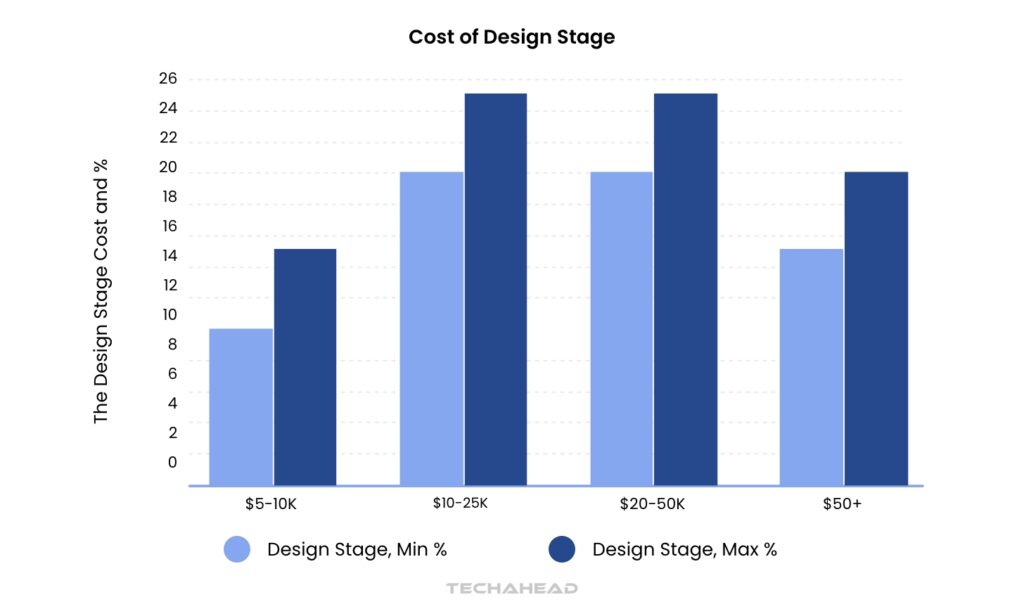
This phase focuses on wireframing, prototyping, and designing the app’s UI/UX. First impressions matter, and your app’s design can make or break user retention.
A beautifully designed app enhances user engagement and ensures a seamless experience. Investing in this phase is critical for achieving a visually appealing and user-friendly product. Complex features, custom components, and detailed visual elements can extend the time and cost required.
The design phase usually accounts for 20-25% of the mobile app development cost. The number of hours depends on the intricacy of the app’s design.
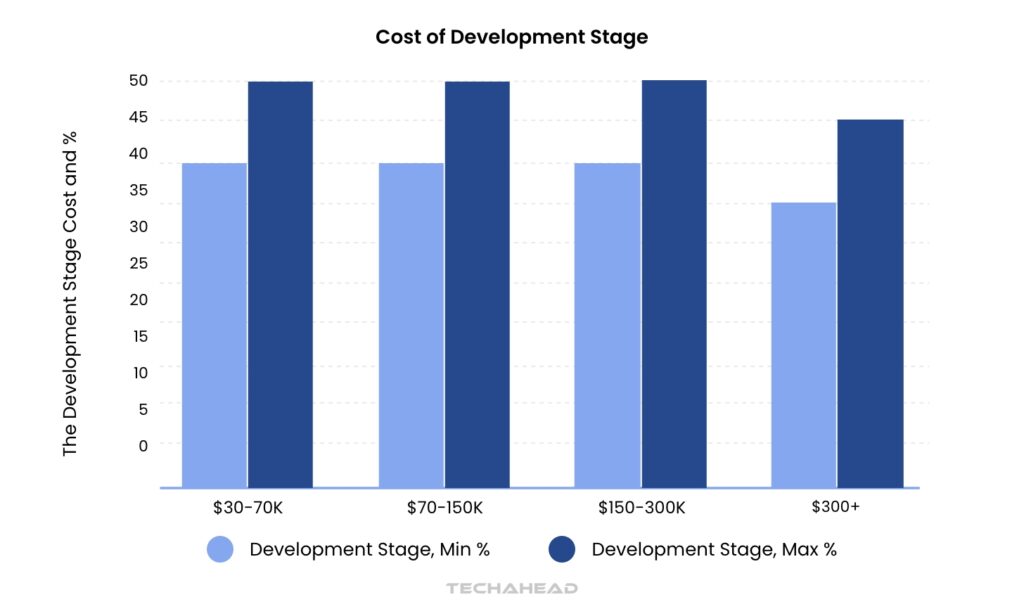
This is the most resource-intensive and critical stage of app creation. Here, the complexity of features directly impacts development costs.
More intricate features demand more time and skilled developers, which increases costs. Other factors, such as app architecture, data encryption, user base size, and third-party integrations, also contribute to the final expense.
We recommend using cross-platform development frameworks to reduce costs and timelines, instead of creating separate apps for each platform. This stage typically consumes 40-55% of the total mobile app development cost.
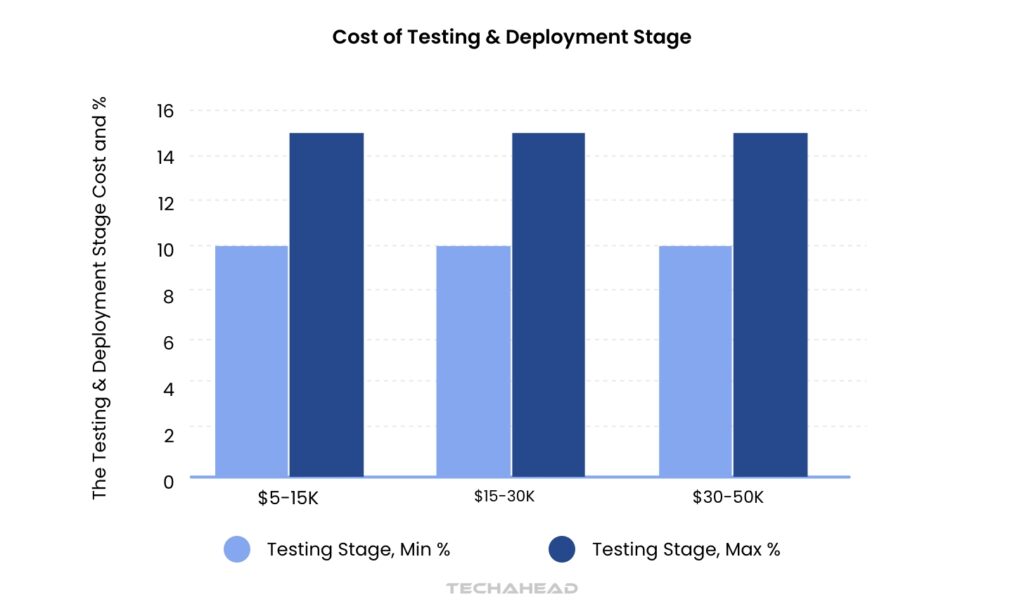
This final stage validates the app’s quality, ensuring minimal issues before its launch. Comprehensive testing is vital to avoid post-launch glitches and ensure user satisfaction.
This phase involves rigorous testing for crashes, bugs, and lags. A well-tested app enhances user trust and reduces the need for expensive fixes later. The complexity and features of the app will dictate the testing duration and cost. Approximately 15-20% of the budget is allocated for this stage.
Breaking down costs by stages provides a clearer understanding of where your mobile app development cost is allocated. From strategy and design to development and testing, each phase plays a vital role in shaping the final product and budget. This approach helps you make informed decisions and plan your budget effectively for a successful app launch.
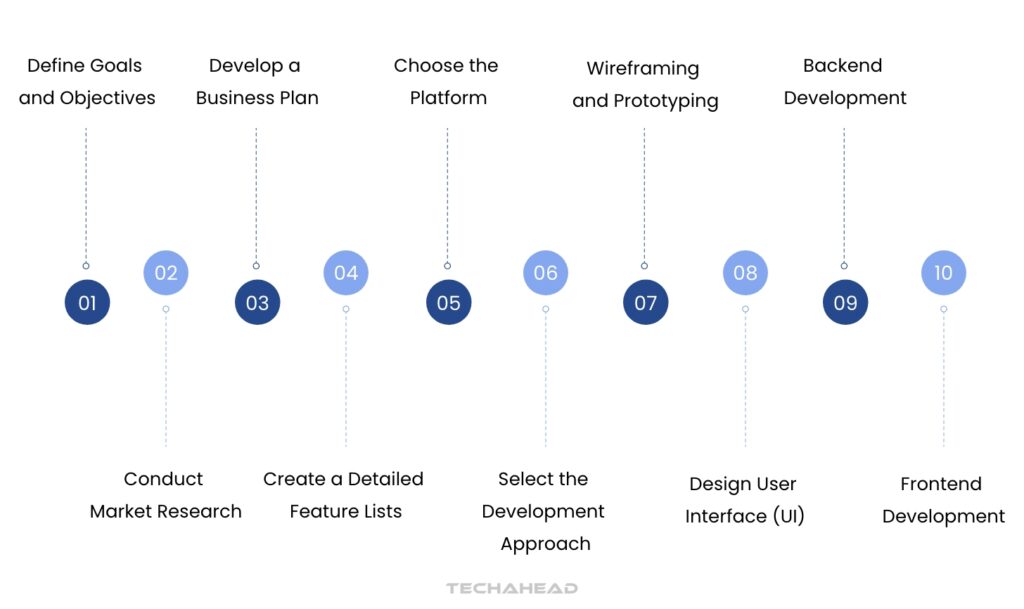
Begin by outlining the purpose of your app, identifying your target audience, and detailing the expected outcomes. This step ensures clarity and direction, laying the foundation for your app’s success.
Investigate competitors and existing apps in the market. Analyze user preferences, trends, and industry demands to identify opportunities and ensure your app addresses a unique need.
Create a robust plan that includes your app’s revenue model, such as freemium or subscription-based options. Allocate budgets for development, marketing, and ongoing support.
Draft a comprehensive list of features, categorizing them by priority. Decide which features are essential for the Minimum Viable Product (MVP) and which can be added later.
Determine whether your app will target iOS, Android, or both. This decision should align with your audience’s preferences and behavior.
Decide between native, hybrid, or web app development. This choice depends on your budget, timeline, and app requirements.
Design the app’s layout and structure with wireframes. Develop prototypes to test user experience and gather feedback before proceeding.
Focus on creating visually appealing and intuitive designs. Adhere to platform-specific guidelines like Material Design for Android or Human Interface Guidelines for iOS. A user-friendly interface is the most important element of any successful mobile application.
Build the backend infrastructure, including databases, servers, and APIs. Ensure scalability and security to handle future growth.
Develop the app’s interface and integrate it with backend systems. This phase focuses on user interactions, ensuring a seamless experience.
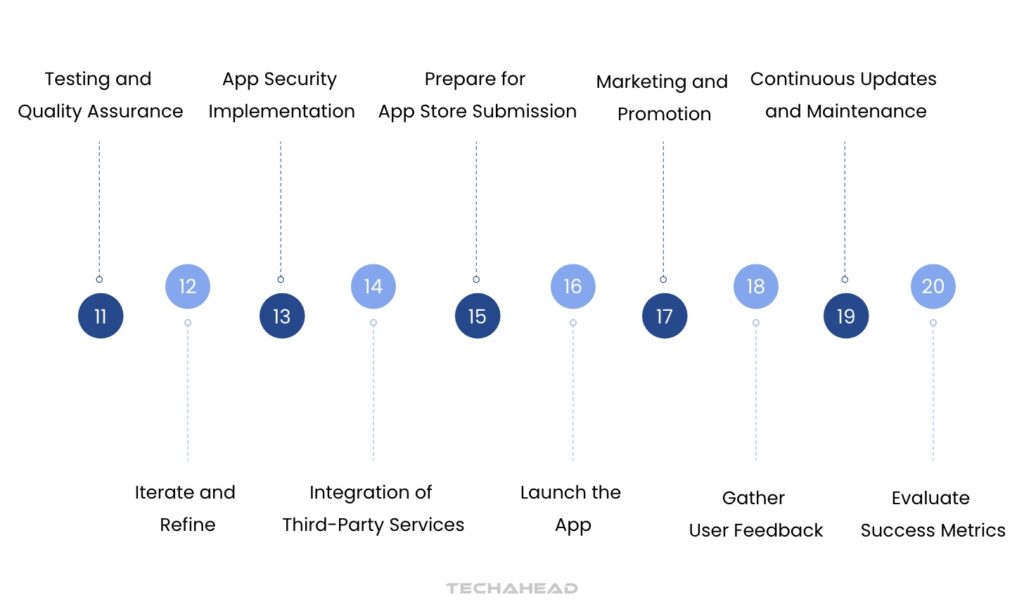
Conduct rigorous testing to identify and resolve functional, usability, and performance issues. Use both automated and manual testing techniques.
Address issues found during testing. Incorporate feedback from beta testers to enhance the app’s functionality and user experience.
Secure sensitive data with encryption and ensure compliance with privacy regulations such as GDPR and CCPA. This step safeguards user trust. Mobile app security is a big feature of any project.
Add external services like payment gateways and social media logins. Ensure these integrations work seamlessly within your app.
Optimize your app’s metadata, descriptions, and screenshots. Follow the guidelines of app stores like Apple’s App Store and Google Play.
Deploy the app on chosen platforms. Closely monitor the launch to address any immediate technical issues.
Use strategies like social media campaigns, email marketing, and influencer collaborations to maximize reach and visibility. Implement App Store Optimization (ASO) for better discoverability.
Encourage users to leave reviews and ratings. Use this feedback to identify improvement areas and align future updates with user needs.
Regularly update the app to fix bugs, add features, and ensure compatibility with new operating systems. Maintenance keeps your app relevant and functional.
Analyze key performance indicators (KPIs) like downloads, user retention, and revenue. Use these insights to refine your strategies and improve future app iterations.
This comprehensive process ensures a methodical approach to mobile app development, balancing technical and business considerations for maximum impact.
| Cost Factor | Description | How It Impacts Cost |
| App Functionalities | Defines what the app does and the customer problems it solves. | More features = more development hours → higher cost. |
| Complexity of Features | Level of technical depth required (e.g., basic to-do app vs. telemedicine with video calls). | Higher complexity requires more resources, advanced tech, and longer timelines. |
| Target Devices & Platforms | Whether the app is built for Android, iOS, or both; native vs. cross-platform approach. | Multi-platform apps or native development increase total development cost. |
| Maintenance Plan | Post-launch updates, bug fixes, feature upgrades, and technical support. | Recurring costs needed to keep the app secure, updated, and high-performing. |
| Third-Party Integrations | External systems like payment gateways, GPS, chat, social login, and analytics. | Each integration adds technical complexity and increases development time and cost. |
When clients approach an application development company like ours to discuss their app idea, they often lack clarity on the process and expenses involved. While most clients outline their requirements and desired features, that alone isn’t enough to provide a fair mobile app development cost estimation.
An upfront quote from an agency only scratches the surface. App development involves a detailed process requiring in-depth research and a thorough understanding of app dynamics. To estimate costs accurately, it’s essential to evaluate multiple factors.
Here’s a simplified breakdown of the five key elements that influence the mobile app development cost:
The app’s functionalities define what it will do and the customer needs it will address. A feature-rich app tailored to solve specific problems increases development time and, consequently, the cost. Identifying these functions helps create a more accurate cost estimate.
The complexity of app features significantly impacts both the development process and the budget. For instance, a telemedicine app with secure video consultations requires more resources compared to a simple to-do list app. The more complex the features, the higher the cost.
The platforms your app supports—whether Android, iOS, or both—play a crucial role in determining costs. Native app development focuses on a single platform, while cross-platform development ensures compatibility with multiple devices. Each choice influences the mobile app development cost.
Post-launch, maintaining and upgrading the app is vital for consistent performance and user satisfaction. Technical support is necessary to fix bugs, enhance features, and keep the app relevant. Factoring in ongoing maintenance ensures no unexpected expenses arise later.
Adding third-party services like payment gateways, location tracking, or social media integrations enhances functionality but increases costs. Each integration adds layers of complexity, which is reflected in the overall mobile app development cost.
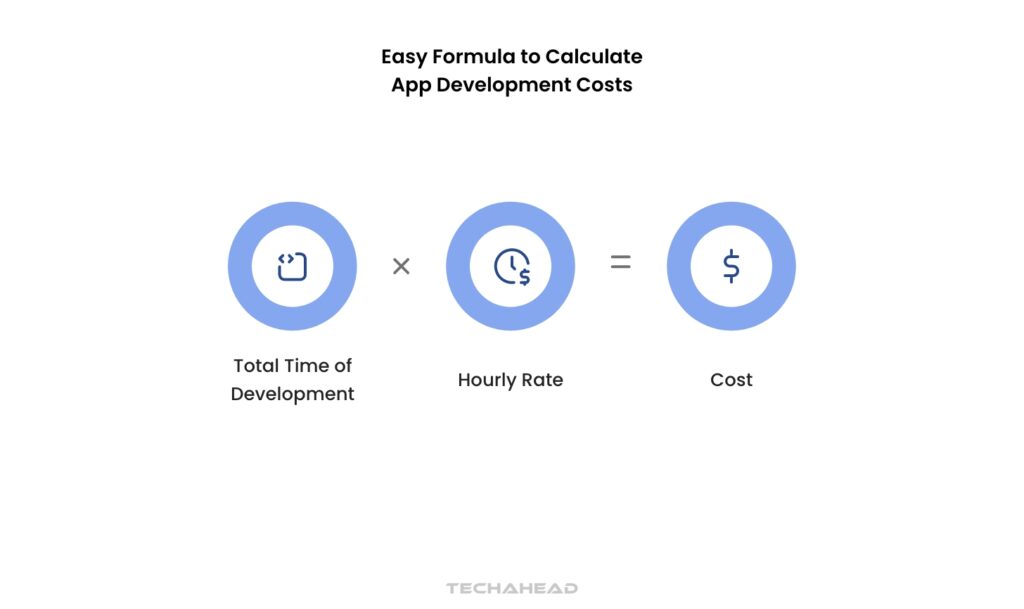
By assessing these factors, businesses can set a fixed budget aligned with their goals and needs. Alternatively, you can use a simple cost estimation formula as an app-making calculator to get a clearer idea of potential expenses.
Mobile app development may seem like a common aspect of today’s technology-driven world, but it is far from simple. It is an intricate and innovative process that demands a significant financial investment, the right tools, and expert partners who follow a strategic approach.
If you are wondering about the mobile app development cost in 2026, the range can vary significantly. For a basic mobile application, the cost can start at $10,000 and go up to $50,000. This estimate, however, depends on the app’s complexity, features, and the technologies involved.
Each year, advancements in technology and fluctuating service costs impact development budgets. Consequently, the app development cost in 2026 will likely reflect these evolving trends. Therefore, before diving into development, it’s crucial to consult with an experienced mobile app development company. They can guide you in aligning your project’s requirements with current trends and available resources, ensuring a cost-effective and innovative solution.
Investing in expertise early on ensures a smoother development process, fewer surprises, and an app that stands out in a competitive market. Transitioning with the right strategy and partners can turn your app vision into a valuable reality.

The cost of building an app ranges based on its complexity and requirements. Simple apps with basic features may cost between $5,000 and $10,000.
However, apps with advanced functionalities, custom designs, and integrations can exceed $350,000. Factors influencing mobile app development costs include the app’s complexity, the development team’s geographical location, features, technology stack, and user interface requirements. It’s crucial to collaborate with an experienced development team to get a precise estimate tailored to your needs.
The timeline for developing an app varies depending on its complexity and scope. A basic app with standard features can take approximately six months to complete. Meanwhile, developing a feature-rich or enterprise-level app may require at least eight months or more. The time required depends on several factors, such as the complexity of the functionalities, the operating systems being targeted (iOS, Android, or both), testing cycles, and project scope. Collaborating closely with developers and ensuring clear communication can help streamline the development process.
Maintaining an app involves regular updates, bug fixes, performance optimizations, and adapting to evolving technologies. On average, mobile app maintenance costs are approximately $21,000 annually. Many development companies offer free maintenance for the first year as part of their package.
Afterward, they may charge a nominal annual fee depending on the scope of maintenance services. Factors like the app’s complexity, server needs, third-party API costs, and compatibility updates (for OS changes) also influence maintenance costs. Regular maintenance is essential to ensure the app remains functional and competitive in the market.
The future of mobile app development is exciting and highly innovative. Mobile apps are evolving to incorporate advanced features, such as artificial intelligence (AI) for smarter interactions, and conversational interfaces, similar to how IoT devices communicate. Apps will need to be highly adaptive, enabling seamless integration with cloud-based APIs and other technologies. The rising demand for immersive experiences, such as augmented reality (AR) and virtual reality (VR), will also shape app development trends. As businesses strive to provide personalized and interconnected user experiences, mobile apps will continue to play a pivotal role in bridging technology and convenience.
We use cookies to ensure our website functions properly, improve performance, and provide a personalized experience. You can choose which types of cookies to allow below.
Required for core functionality such as security, network management, and accessibility. These cannot be disabled.
Help us understand site traffic and user interactions so we can improve performance and usability.
Enable enhanced functionality and personalization such as language or region preferences.
Used to deliver relevant ads, track campaign performance, and measure advertising effectiveness.