


 Copy Link
 Share on X
 Share on Facebook
 Share on LinkedIn
Always Active
Required for core functionality such as security, network management, and accessibility. These cannot be disabled.

Uncover the transformative potential of digital and mobile solutions for your industry.





 Last Updated: Sep 21, 2026
Sep 21, 2026
Last Updated: Sep 21, 2026
Sep 21, 2026  101
101  18 min. Read


Key Takeaways
AI-generated code can compile cleanly, pass its intended functional test, and still be unsafe. A generated API handler may accept values that should never cross a trust boundary. A database call may work correctly while exposing an injection path. A refund workflow may produce the expected result without enforcing who is allowed to initiate it or how often it can run.
These are familiar software-security problems. AI did not invent them. What changes is the speed and consistency problem: teams can now introduce or revise more code than their established review processes were designed to validate. A plausible-looking implementation can move from a prompt to a pull request before anyone has examined the assumptions behind it.
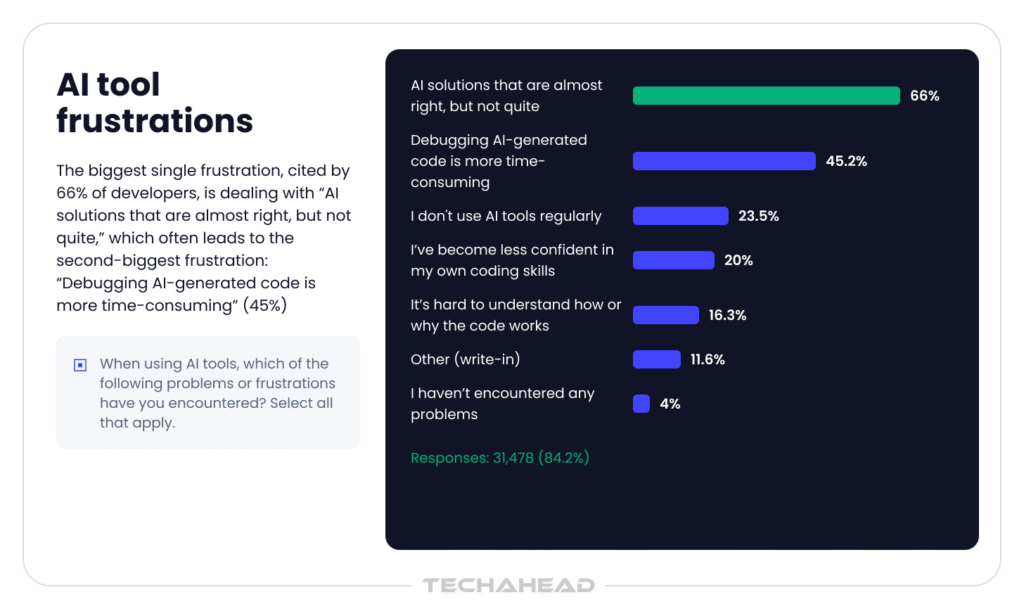
That gap between plausible and dependable is already familiar to developers. In the 2025 Stack Overflow Developer Survey, 66% of respondents to its AI-frustrations question selected “AI solutions that are almost right, but not quite” as a problem they had encountered. The result reflects developer experience rather than measured vulnerability prevalence, but it captures why generated code still requires rigorous verification.
For engineering and security leaders, the practical question is whether the application validates untrusted data, separates data from instructions, enforces business rules at trusted boundaries, and produces evidence that those controls work.
This guide explains how input-validation, injection, and business-logic risks appear in AI-built applications, how to test for them, what to remediate first, and how to maintain assurance after launch.
Recommended: Vibe Coding Explained & When App Becomes A Business
AI-assisted development has moved beyond isolated experiments. Google’s 2025 DORA research, based on nearly 5,000 technology professionals, found that 90% of respondents used AI at work. In 2024, 70% of organizations’ code was AI-generated. Yet 30% reported little or no trust in AI-generated code. The same research found that AI adoption remained negatively associated with software-delivery stability, even while showing benefits elsewhere.
That combination – high adoption, faster change, and incomplete confidence – creates an operating risk in AI-driven development. Code generation can scale almost instantly, but contextual review cannot keep pace. An assistant may produce a valid function without knowing your tenant model, privileged roles, approved libraries, or fraud rules.
A 2026 Sonar survey of more than 1,100 professional developers illustrates the gap. Respondents estimated that AI generated or assisted 42% of the code they committed, while only 48% said they always verified AI-generated code before committing it.
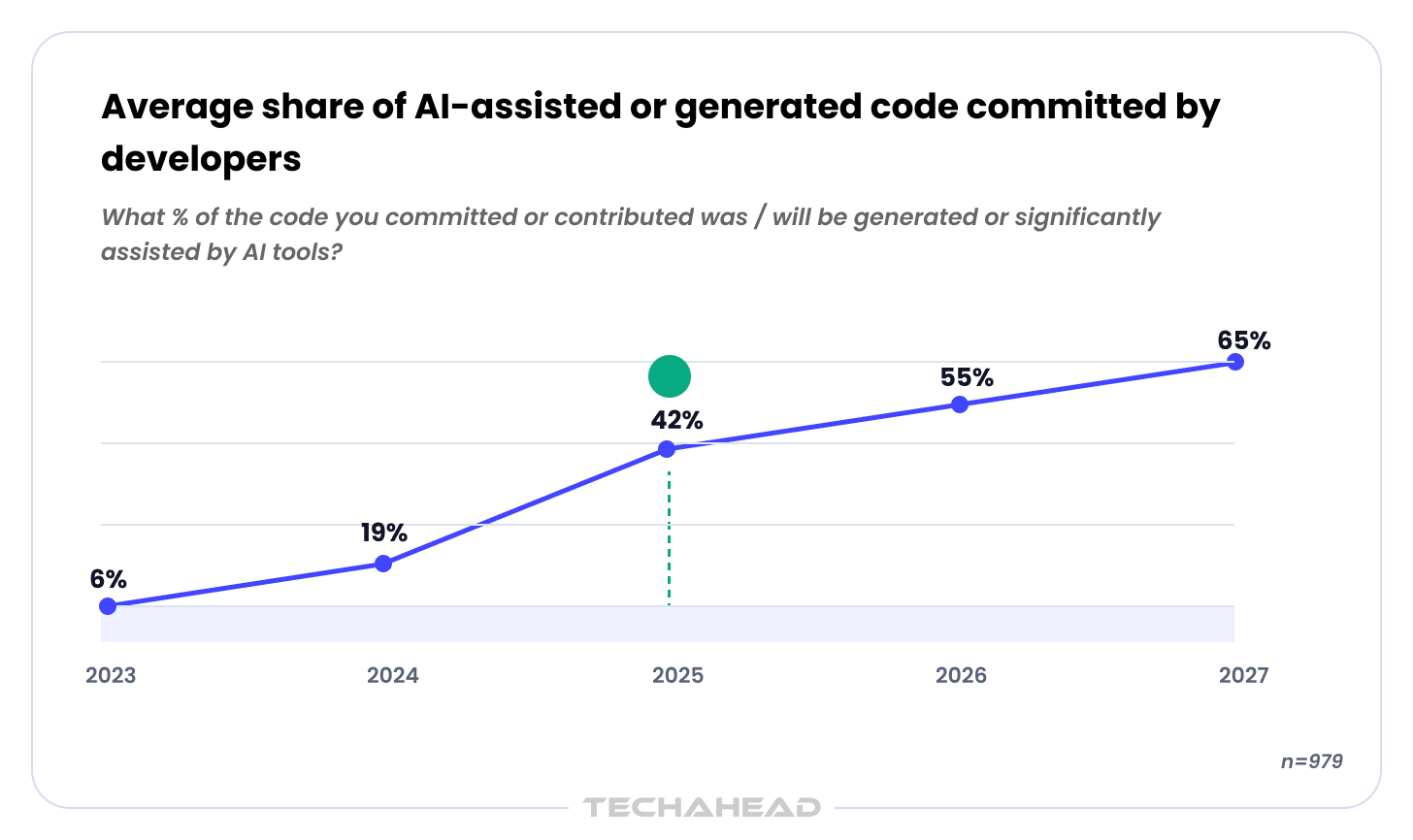
These figures are self-reported and vendor-sponsored, so they should not be treated as a measured vulnerability rate. They do, however, reveal why verification capacity deserves leadership attention.
The concern is not that every generated component is insecure. It is that unevenly reviewed changes can distribute a weak pattern across APIs, services, and tests. One reused unsafe helper or authorization assumption can become a system-level exposure.
Must Read: AI-Built Product Maturity Model: From Prototype to Enterprise Scale
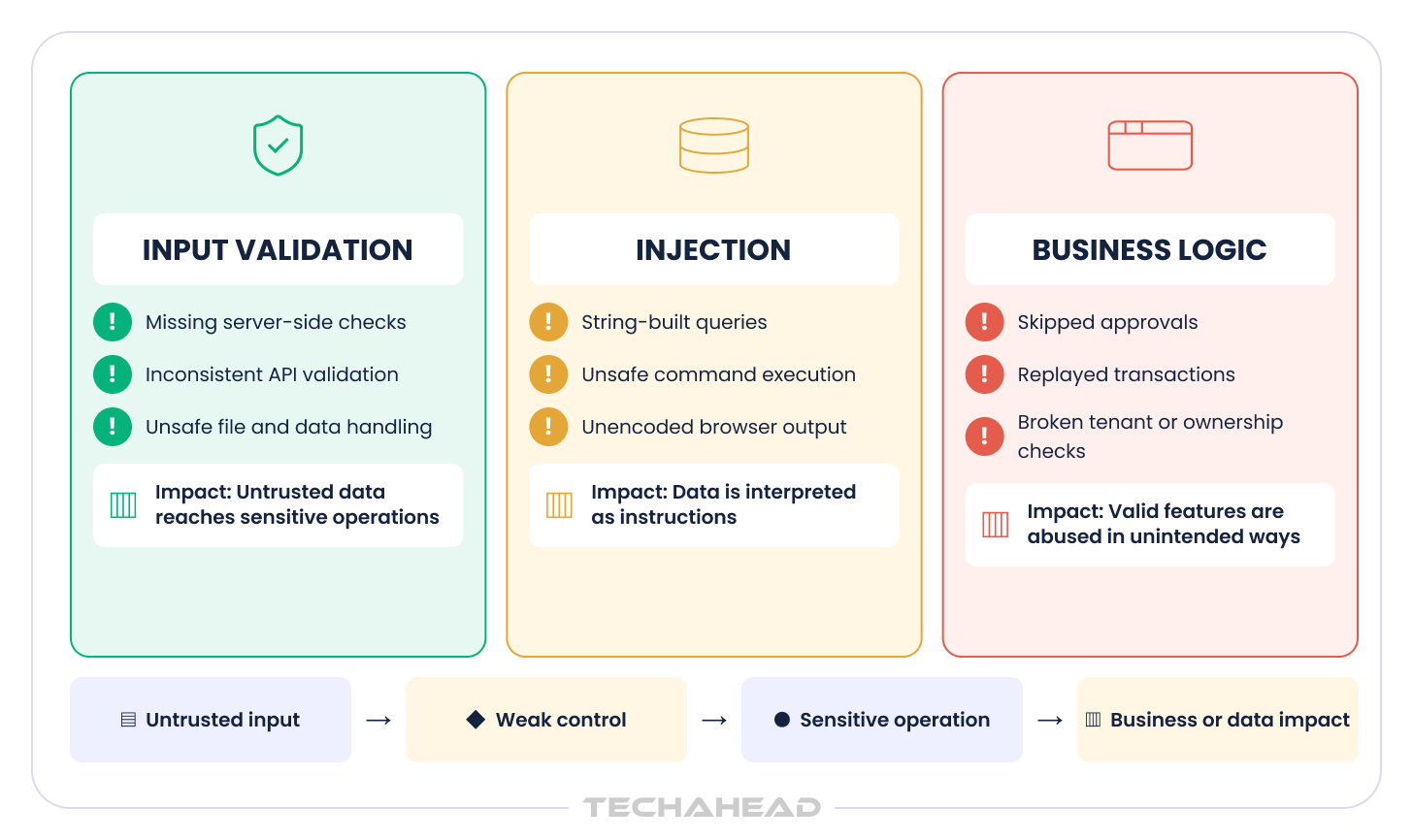
The technical weakness matters because of the operation behind it, and weak review of AI-assisted changes can create new risks. A missing length check may only cause a rejected request in one component; elsewhere, weak validation may reach a query, file parser, or shell command. A missing ownership check may expose another customer’s records. A workflow that permits replay may enable duplicate refunds, credits, reservations, or benefit claims.
Business consequences include:
The response is not to ban generated code or trust it by default. Make provenance visible where possible, support that with governance controls, align teams on security practices, apply consistent controls, and require stronger evidence for sensitive or high-impact components.
Input validation determines whether data is structurally and semantically acceptable. Code assistants can also invent plausible-sounding package names that do not exist, especially in validation or parsing code. Generated code may include a basic presence or type check, but developers still need to review AI suggestions because they can leave behind insecure code when business and architectural context is missing.
AI-generated code also frequently points to outdated or insecure libraries and can introduce outdated cryptography or unsafe defaults into input-handling paths. Typical failures include:
Validation must happen at a trusted boundary, normally on the server. A well-formed account identifier is not necessarily one the current user may access; that decision belongs to authorization and business logic.
Injection occurs when untrusted data is interpreted as part of a command, query, expression, or document rather than remaining data, creating a potential security flaw in generated implementations. The visible feature may still work perfectly on the intended path.
Common paths include:
Input validation reduces the acceptable data space, but it is not the primary defense against every injection class. Parameterized queries separate instructions from values. Safe process APIs avoid a command shell. Contextual output encoding protects the browser. Structural controls are more durable than filtering known attack strings. AI-generated code has been reported to contain 2.74x more cross-site scripting vulnerabilities.
Related: Prompt Injection Risks in Agentic AI Systems
Business-logic vulnerabilities, sometimes called logic flaws, arise when an application performs a technically valid operation that the business should not allow. These rules are often dispersed across tickets, policies, existing services, and institutional knowledge, not present in the prompt.
Examples include:
These actions may return [ 200 OK ] while the business suffers the loss. Business-logic testing therefore cannot be reduced to conventional vulnerability scanning, especially in complex applications where rules are distributed across services and workflows.
Trace exposure through four questions across the full development process, from generation to deployment:
A 2025 study examined 7,703 public files explicitly attributed to four AI tools. CodeQL identified 4,241 CWE instances across 77 weakness types, while 87.9% of the files had no identifiable CWE-mapped vulnerability.
The balanced interpretation is useful because these AI-attributed weaknesses create unique challenges for analysis: detectable issues were diverse, but the research does not show that all – or even most – AI-attributed files were vulnerable. The dataset was also heavily weighted toward ChatGPT-attributed files, and static analysis cannot establish real-world exploitability or fully evaluate business logic.
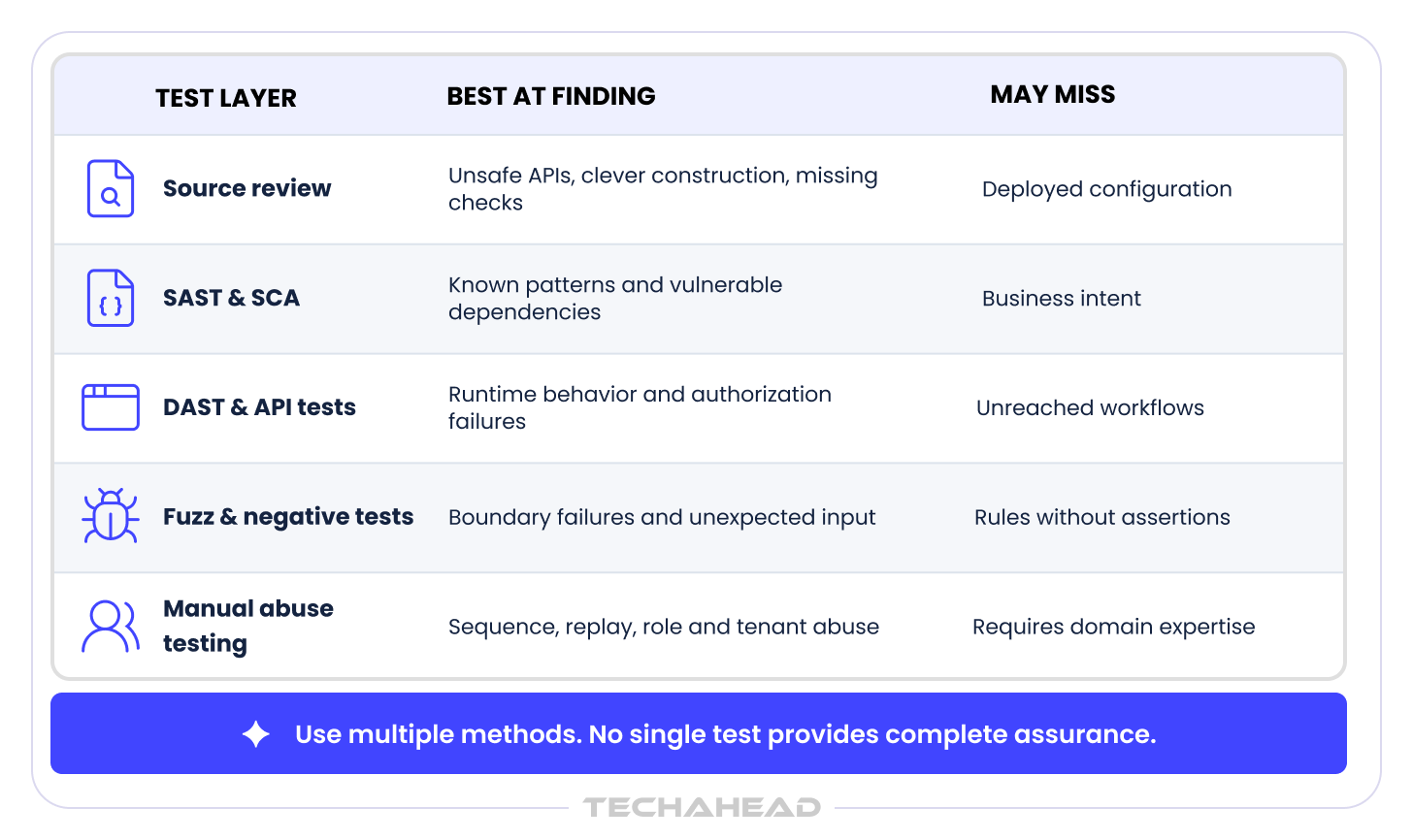
An AI-generated code security review should establish reachability and consequence, not merely collect alerts, because AI code security and securing AI-generated code both depend on separating real risk from noise. Start with trust boundaries and high-impact operations in their security context, then combine source review with runtime testing.
Reviewers should trace data from entry to use and ask:
Provenance can help prioritize unfamiliar modules, but human-written, copied, generated, AI code, and AI-modified code need the same outcome-based checks. Even when large language models produce syntactically correct code, they can still miss authorization, trust-boundary, or compliance requirements. Reviewers should also remember that AI models learn from training data, which can reproduce insecure patterns in otherwise reviewed modules.
Source review shows what code appears to do, while runtime testing shows actual runtime behavior once the deployed system runs with its identities, permissions, and integrations.
Traditional SAST tools miss 76% of AI-generated vulnerabilities, which is why runtime and deployed-system testing remain necessary.
Automated tools are necessary, but their coverage differs, and security teams still have to interpret what each scanner can and cannot see. Static application security testing can identify certain tainted data flows, risky functions, and insecure patterns. Dynamic testing can expose behavior through reachable interfaces. Software composition analysis identifies vulnerable third-party components and insecure dependencies, while supply chain tools can verify third-party libraries to help prevent attacks from hallucinated packages. None of these, on its own, knows whether a customer should receive three refunds, whether two roles must approve a payment, or whether a reservation may be transferred after check-in.
The same Sonar survey found that 38% of developers believed reviewing AI-generated code required more effort than reviewing colleagues’ code. This self-reported result is not a universal productivity penalty, but it reinforces the need for verification capacity and ownership.
Scanner findings are leads. Teams still need to confirm reachability, exploitability, affected data, permissions, business consequence, and deployed compensating controls so results are validated instead of creating alert fatigue by treating every finding as an equal-priority defect.
At the code and architecture level, prioritize security guardrails that remove ambiguity:
These controls belong in coding standards and reusable platform components. They should be embedded during code creation and wherever teams write code as part of normal developer workflows, not applied only later. Prompt instructions can reinforce them, but a prompt is not enforcement.
A mature DevSecOps approach places feedback close to the change to maintain velocity while preserving independent checks for high-risk code. The pipeline may include SAST, dependency analysis, secret detection, infrastructure scanning, tests, and risk-based approvals, allowing teams to keep integrated review checks inside normal delivery flow.
AI coding tools and coding assistants such as GitHub Copilot, Amazon Q, and Gemini Code Assist can speed code generation and review, but their output still needs the same pipeline controls.
AI-generated tests also require review. A model can reproduce the implementation’s mistaken assumption. Security tests should be derived from threat scenarios and invariants, not solely from the code being tested.
Protected branches, review ownership, exception records, and release criteria make controls visible. Identity, payment, tenant isolation, administration, file processing, and command execution deserve deeper scrutiny than presentation changes.
The 2026 Veracode GenAI Code Security Report found that purpose-built coding models averaged a 51% security pass rate on its benchmark tasks, compared with 52% for general-purpose models. This vendor benchmark does not measure vulnerability prevalence in production systems. Its narrower lesson is still valuable: choosing a model designed for coding does not eliminate the need for security controls.
Also Read: Best AI Models for Developers: H2 2026 Edition
Runtime measures should limit impact, provide complete visibility, and make suspicious behavior visible:
Monitoring must reflect business meaning. A normal API sequence may be abnormal when one account performs it at unusual frequency or value.
Enterprise buyers typically want more than a claim that the application was scanned, and buyers increasingly expect evidence suited to the new landscape of AI-assisted software delivery. Useful evidence includes:
This is operational evidence. It shows that the organization understands exposure, applies repeatable controls, and can demonstrate how findings were handled.
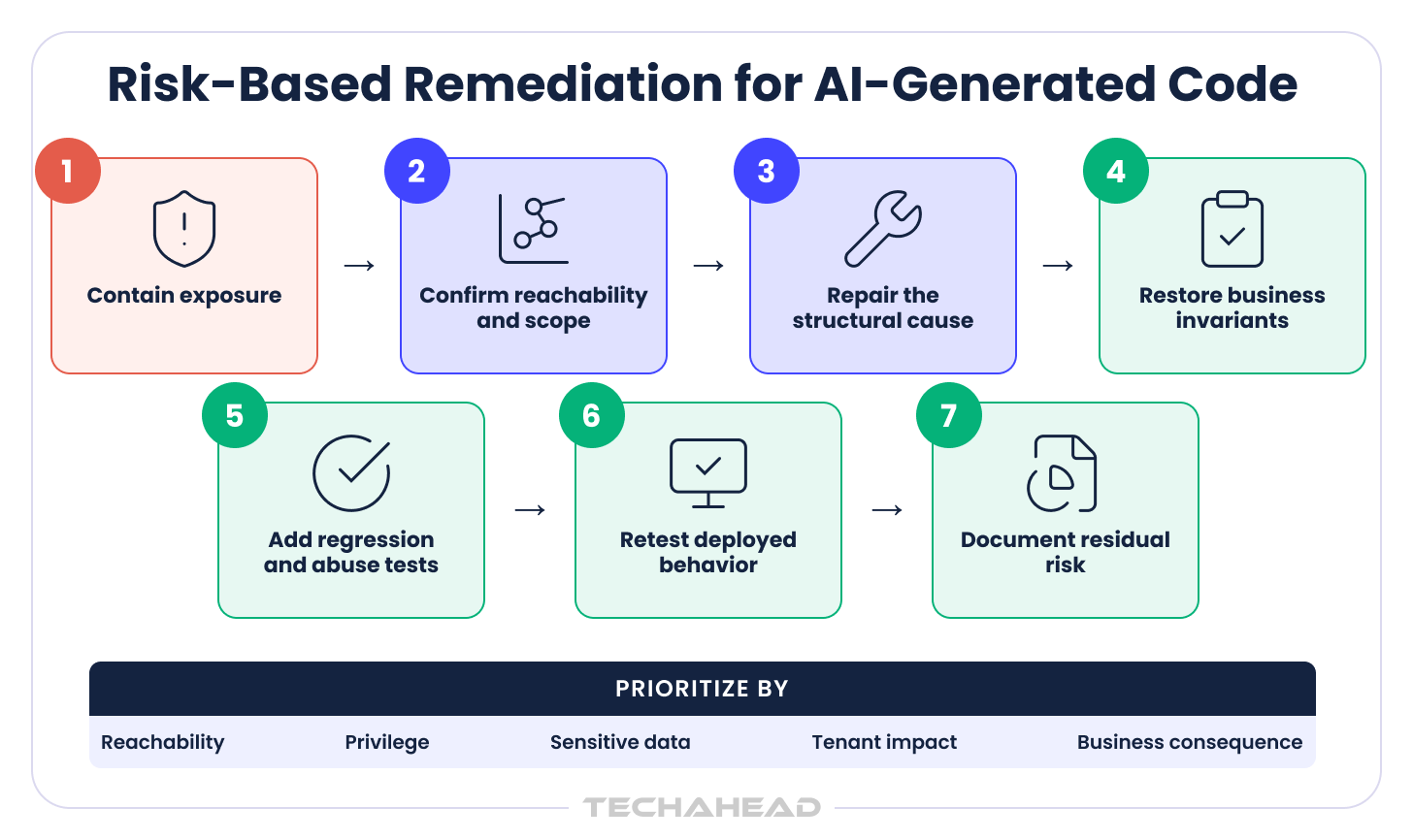
Prioritize reachable paths, then weigh privilege, sensitive data, tenant reach, financial consequence, exploit complexity, detection, and containment. A workflow flaw affecting every customer may outrank a technically critical issue that is unreachable in production.
Remediation does not necessarily require a rewrite. Targeted digital product engineering can strengthen risky boundaries, replace duplicated patterns, expand tests, and introduce delivery controls.
Assurance decays as generative AI, artificial intelligence, code, configurations, dependencies, models, and workflows change. A pre-launch test proves only how the tested version behaved under those conditions.
One controlled 2025 experiment involving 400 code samples across 40 rounds of AI-assisted “improvements” reported a 37.6% increase in critical vulnerabilities after five iterations. The study is a preprint and its laboratory result should not be generalized into a production failure rate.
It does support a narrower practice: revalidate security after iterative generated changes instead of assuming later revisions are safer. Modern assurance also has to account for autonomous agents and AI assistants that continue to influence shipped systems after initial delivery.
Sustained assurance should include:
QA automation and testing can make repeatable checks part of every release, but automation should be complemented by manual review of high-consequence workflows. The assurance model belongs to the application and its operating environment, not to a one-time scan, a developer’s confidence, or the model that generated part of the code.
TechAhead can support this work as a secure product-engineering and remediation partner through architecture assessment, targeted code remediation, AI development, test automation, and delivery-pipeline hardening. The scope should be defined around the application’s actual exposure and engineering needs.
Connect with TechAhead to assess security risks across your AI-generated codebase. Our product engineering experts can help strengthen validation, remediate injection and business-logic vulnerabilities, and embed sustainable controls. Contact us to move toward secure, enterprise-ready software.
AI-generated code can reproduce insecure patterns without understanding an application’s trust boundaries, authorization model, or business rules. Risk increases when teams accept plausible output quickly, because it can introduce vulnerabilities even when it appears reasonable at first review, reuse it across services, or perform only functional testing.
Start with high-impact data flows and workflows, then combine source review, SAST, dependency analysis, API testing, fuzzing, configuration review, and manual abuse testing to assess affected AI code. TechAhead can support this risk-based AI-generated code vulnerability assessment.
Automated scanners can identify known injection paths, unsafe APIs, vulnerable dependencies, some configuration problems, and certain security issues, but they often miss systemic risks and cannot reliably understand authorization intent, transaction sequencing, tenant boundaries, or whether a technically valid workflow violates business rules.
Remediation time depends on exploitability, code reuse, architectural coupling, test coverage, and production exposure. A TechAhead remediation engagement can separate immediate containment from structural fixes, regression testing, and staged deployment so critical risk is reduced first.
Retain threat models, affected-component inventories, test results, finding dispositions, remediation commits, peer approvals, retest evidence, release records, exceptions, and accountable owners. The evidence should show what was tested, in which environment, and how closure was verified.
Before production, enterprises should apply security guardrails and adapt security practices by enforcing server-side validation, parameterized queries, contextual output encoding, authorization at sensitive operations, dependency checks, security review, negative-path tests, least-privilege identities, and risk-based approval gates within the secure SDLC.
Business-logic vulnerabilities depend on intended behavior: who may act, in what sequence, under which limits, and how often. Those rules are rarely visible to scanners, making domain-informed abuse cases and state-based testing essential.
To prevent injection vulnerabilities in AI-generated code, keep data separate from instructions through parameterized queries, safe process APIs, contextual output encoding, and by validating and sanitizing user input. Apply allowlist validation as an additional boundary control, not as the only defense.
AI-generated code should enter the same secure SDLC as code developed by people, with the same documented review, testing, approvals, dependency governance, and remediation evidence expected of human-written code. Frameworks such as NIST SSDF help organize practices but do not certify the application.
Maintain AI generated code security after launch through regression tests, recurring authorization and tenant-isolation checks, dependency and configuration reviews, runtime monitoring in production environments, and reassessment when coding tools change, all integrated into developer workflows. TechAhead can help integrate these controls into existing engineering workflows.
We use cookies to ensure our website functions properly, improve performance, and provide a personalized experience. You can choose which types of cookies to allow below.
Required for core functionality such as security, network management, and accessibility. These cannot be disabled.
Help us understand site traffic and user interactions so we can improve performance and usability.
Enable enhanced functionality and personalization such as language or region preferences.
Used to deliver relevant ads, track campaign performance, and measure advertising effectiveness.