


 Copy Link
 Share on X
 Share on Facebook
 Share on LinkedIn
Always Active
Required for core functionality such as security, network management, and accessibility. These cannot be disabled.

Uncover the transformative potential of digital and mobile solutions for your industry.





 Last Updated: Sep 29, 2026
Oct 24, 2025
Last Updated: Sep 29, 2026
Oct 24, 2025  2885
2885  23 min. Read


Key Takeaways
“The coming era of AI will not be about man versus machine, but man with machine — collaboration, not competition.” – Satya Nadella, CEO of Microsoft
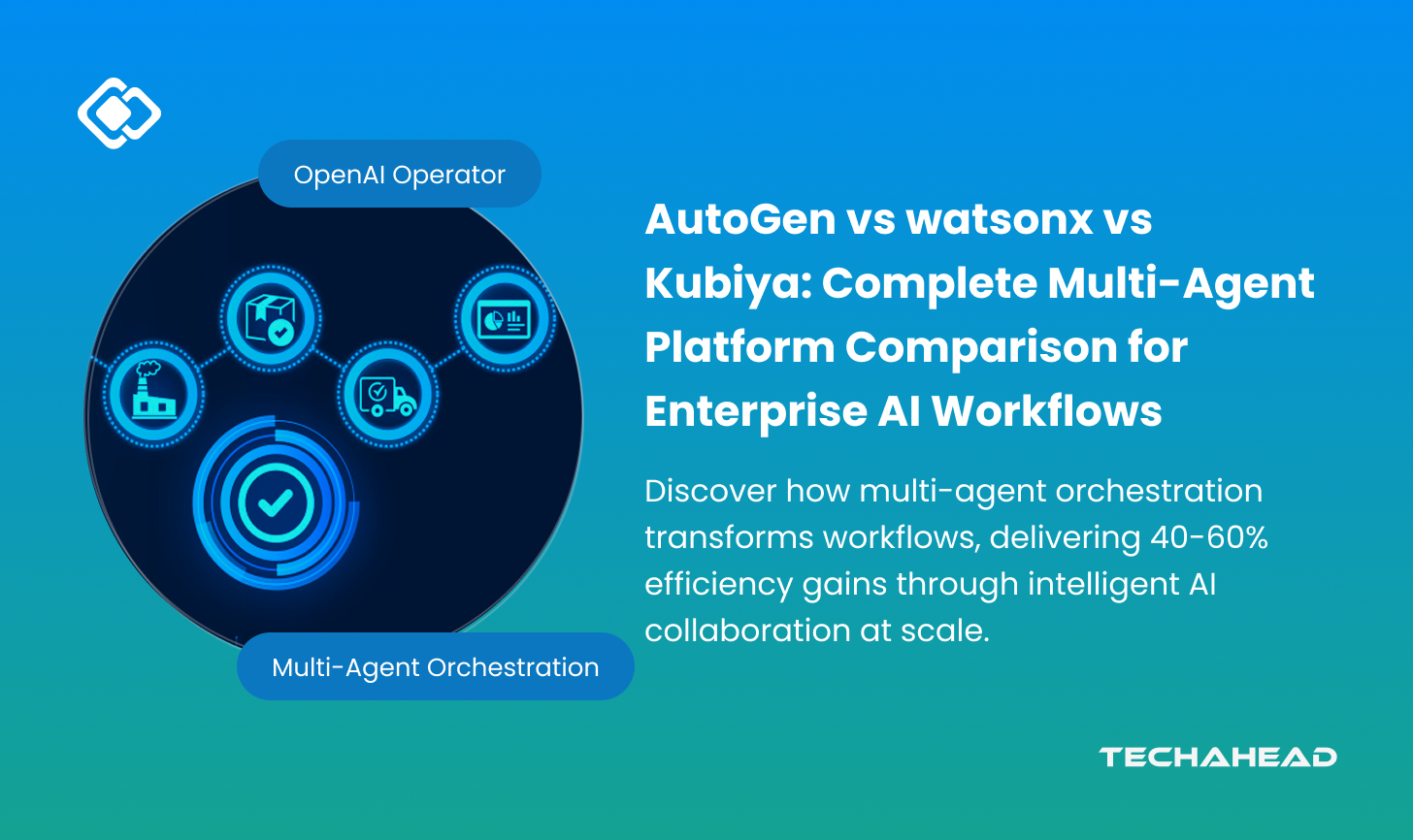
The ecosystem of enterprise AI is witnessing a massive transformation. And you are invited to join this revolution by choosing the best multi-agent orchestration platforms.
But how did this happen?
In reality, traditional AI systems are built around a single large language model, having limited automation capabilities.
This ancient AI system is now evolving into sophisticated, collaborative AI agent ecosystems that ensure unprecedented levels of efficiency and intelligence for enterprises.
This shift represents more than just technological evolution: It marks the beginning of a new era in enterprise automation powered by AI.
In layman’s terms, multi-agent orchestration is the coordination of multiple specialized AI agents working in concert to accomplish complex business workflows.
Thus, rather than relying on a single monolithic AI system, this approach deploys purpose-built agents, each optimized for specific tasks. For example, coding, data analysis, security monitoring, or decision-making.. In each of these tasks, these special AI agents communicate and collaborate to solve complex enterprise challenges.
Now, let’s focus on the aspect for which you have arrived on this blog: business processes and workflows.
If we visualize the business case for multi-agent systems, then the outcome is enormous and compelling. The transformation unleashed by multi-agent orchestration is already happening.
According to Gartner’s latest research, by 2026, over 45% of enterprise AI workflows will employ agentic orchestration frameworks, up from less than 10% in 2023.
This dramatic acceleration showcases that collaborative, intelligent AI agents can handle complexity far beyond the capabilities of single-model systems.
For example, let’s observe the breakthroughs showcased by OpenAI’s Operator and Microsoft’s AutoGen frameworks.
The workflows and process automation showcased by these platforms, powered by orchestrated agent teams, have consistently outperformed single-model systems. Across different enterprise automation scenarios: Be it customer service orchestration or autonomous DevOps pipelines.
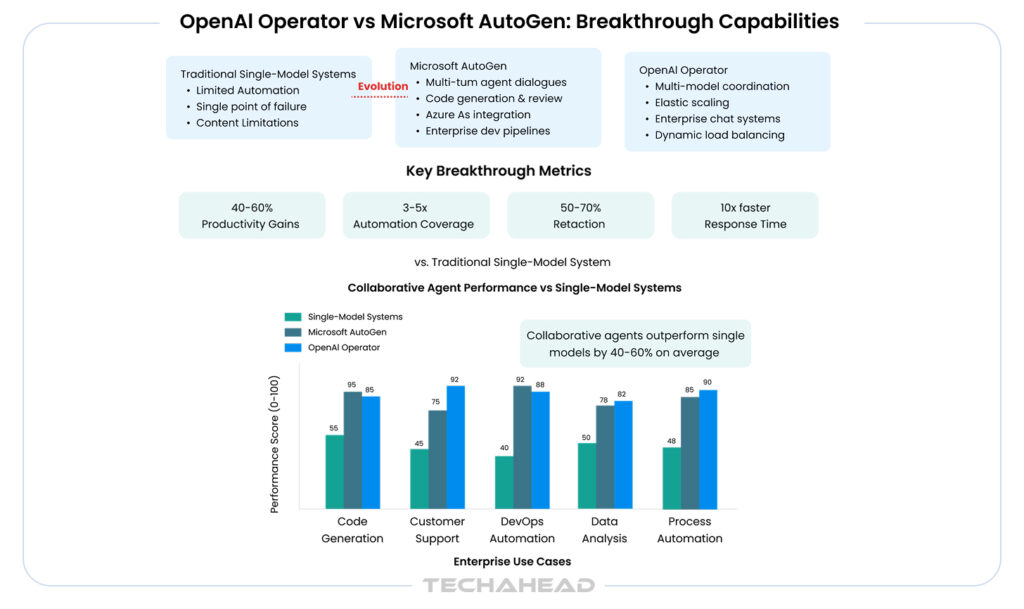
In fact, early adopters have confessed a productivity boost of up upto 60% in workflows involving multiple decision points and cross-functional coordination
If you are an enterprise that is building scalable, context-aware solutions such as customer care bots, autonomous DevOps systems, or intelligent process automation, then this blog is for you!
With multi-agent frameworks, enterprises can lay the architectural foundation, which is needed for orchestrating complex workflows at scale.
Here comes the expertise of TechAhead: We empower organizations to navigate this transformation unleashed by multi-agent framework, by designing and deploying solid architectures that deliver measurable business outcomes while maintaining enterprise-grade security and governance.
What is Multi-Agent Orchestration?
We will have to dig a bit into how AI and large-scale language models work to understand the magic of multi-agent orchestration.
By drawing the benefits of a distributed system and modern LLM capabilities, software engineers have created a multi-agent framework, which represents networks of specialized AI agents, trained to accomplish a common task.
Unlike traditional single-agent systems, where one AI model is programmed to handle all tasks, multi-agent orchestration divides complex workflows into individual, simple tasks.
The foundation of such a framework is the agent: Each and every agent has specialized capabilities, domain knowledge, and decision-making authority within its sphere of expertise.
These agents communicate through structured protocols, share context, and coordinate their actions to accomplish goals that would overwhelm any individual system.
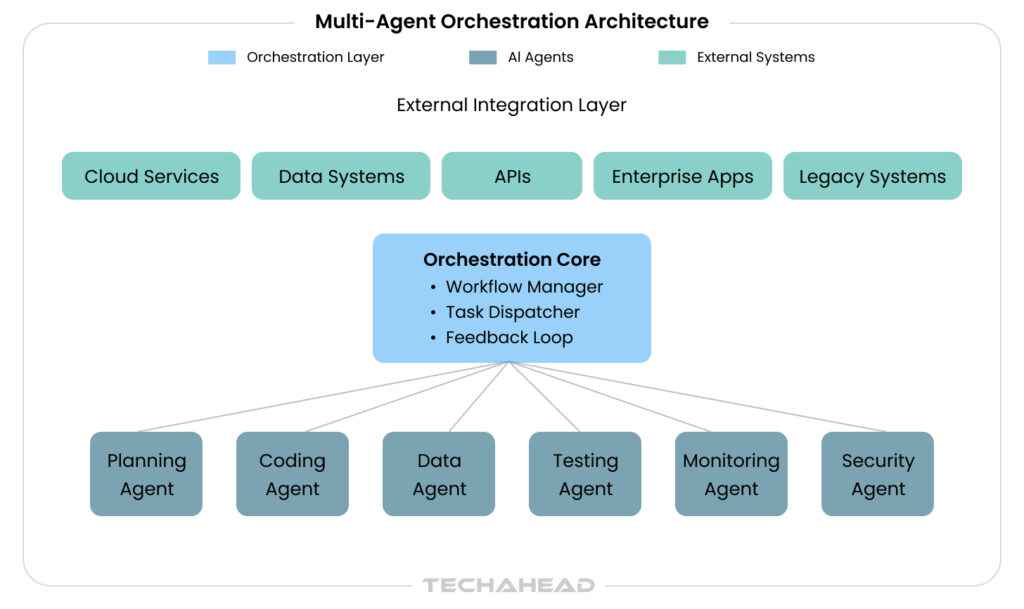
Now, let’s explore the technicalities of the orchestration frameworks to better understand how it helps businesses to solve and automate complex problems, seamlessly.
Every multi-agent orchestration platform has 4 essential components:
• Workflow Manager: It’s the central intelligence hub, which divides complex tasks into simple, manageable tasks, and assigns these tasks to the most appropriate AI agents. The workflow manager also ensures the correct sequencing of operations for generating the best possible outcome.
• Task Dispatcher: This critical element of multi-agent orchestration routes the specific tasks to the right agent, based on their knowledge, capabilities, and current workload. It also monitors the historical performance of these agents and ensures that the resources are optimally utilized.
• Feedback Loop: Once the appropriate agents are assigned the tasks, the feedback loop element monitors the agent’s output, validates the results as per the expected outcomes, and empowers the agents to learn, re-learn, and understand what is success and what is a failure, to expand their worldview. A form of reinforcement mechanism is deployed here.
• Security Layer: This is the element that ensures data security at every level. It enforces authentication, ensures authorization is optimal, and audits the tasks performed by the agents. The overall objective of the security layer is to protect the data and ensure compliance with enterprise governance policies.
Microsoft AutoGen has emerged as a leading platform for multi-agent collaboration in complex software development workflows. Built on Microsoft’s extensive AI research and integrated deeply with the Azure ecosystem, AutoGen excels at orchestrating agents for code generation, testing, and deployment coordination.
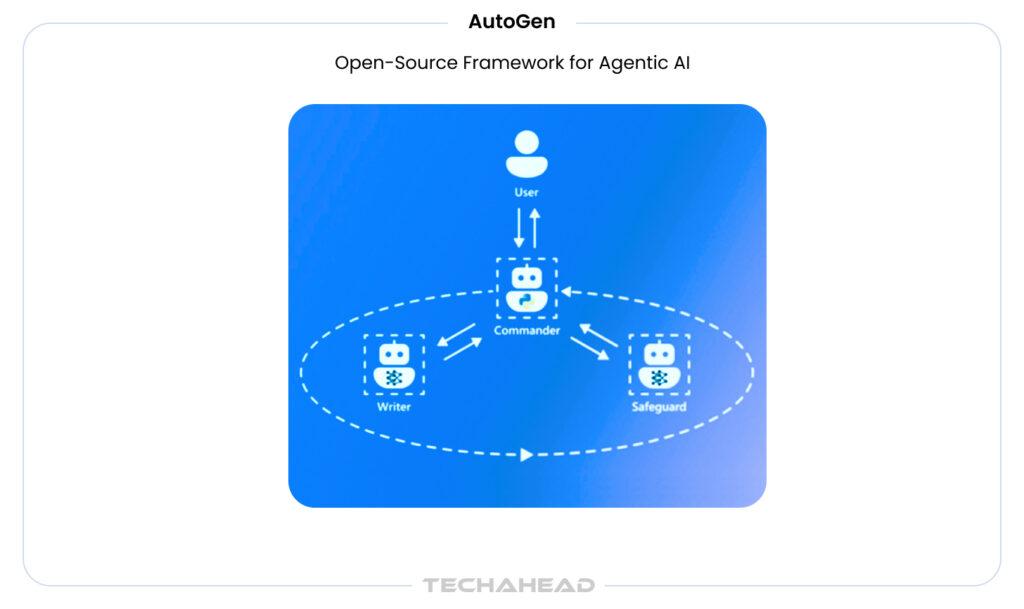
The platform’s architecture enables developers to create conversational agents that can engage in multi-turn dialogues, make autonomous decisions, and coordinate with other agents to solve complex programming challenges. AutoGen agents can write code, review implementations, suggest improvements, and even execute tests, all while maintaining context across lengthy development cycles.
Enterprise development teams leverage AutoGen to automate significant portions of their software delivery pipelines. The platform integrates seamlessly with Azure DevOps, GitHub, and Visual Studio toolchains, making it a natural choice for organizations already invested in Microsoft’s technology stack. Use cases span automated code reviews, intelligent debugging assistance, and autonomous feature implementation based on natural language specifications.
IBM watsonx Orchestrate targets enterprise-grade orchestration for mission-critical business functions, including HR, finance, and operations. Built on IBM’s decades of enterprise software experience, this platform prioritizes governance, auditability, and regulatory compliance, making it ideal for organizations in heavily regulated industries.
The platform’s strength lies in its ability to orchestrate natural language agents across complex business processes.
Financial institutions use watsonx Orchestrate to automate loan processing workflows, where multiple agents handle credit checks, document verification, risk assessment, and approval routing. Each agent operates within defined policies and maintains complete audit trails for regulatory compliance.
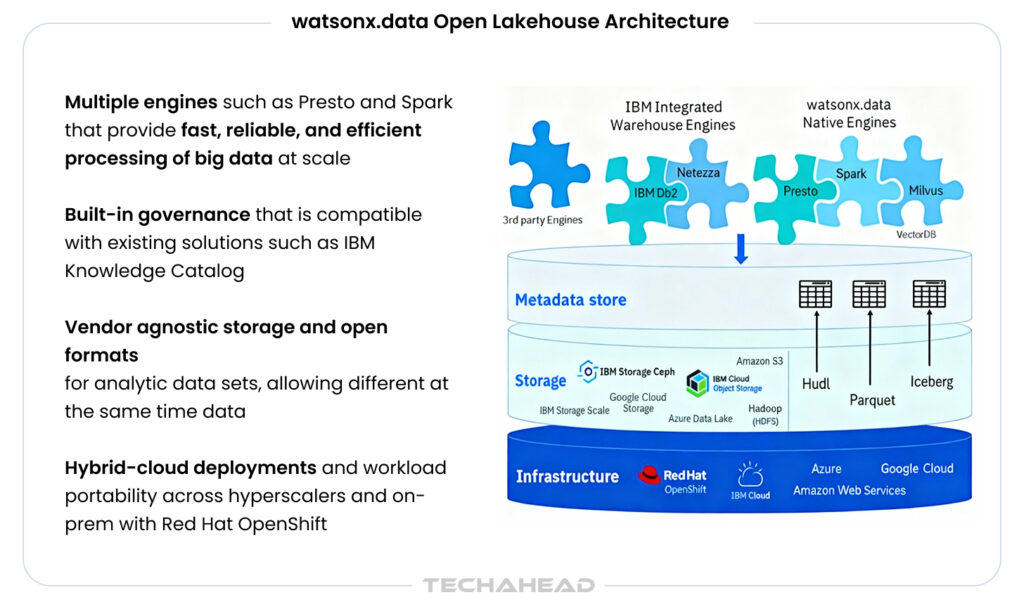
Watsonx Orchestrate integrates with enterprise systems like SAP, Salesforce, and Workday through pre-built connectors, reducing implementation time.
The platform’s governance framework enables fine-grained control over agent permissions and actions, ensuring operations remain within corporate and regulatory boundaries. Organizations report 50-70% reductions in processing time for document-heavy workflows after implementing watsonx agent orchestration.
Kubiya AI specializes in DevOps-centered orchestration with a focus on contextual memory and zero-trust security. The platform addresses the unique challenges of infrastructure automation, where agents must navigate complex cloud environments, manage state across distributed systems, and enforce security policies at every step.
Kubiya’s agent architecture excels at automating CI/CD pipelines, Terraform provisioning, and incident response workflows. Agents maintain deep contextual understanding of infrastructure state, allowing them to make intelligent decisions about deployments, rollbacks, and scaling operations. The platform’s memory system ensures agents learn from past incidents and apply that knowledge to prevent future issues.
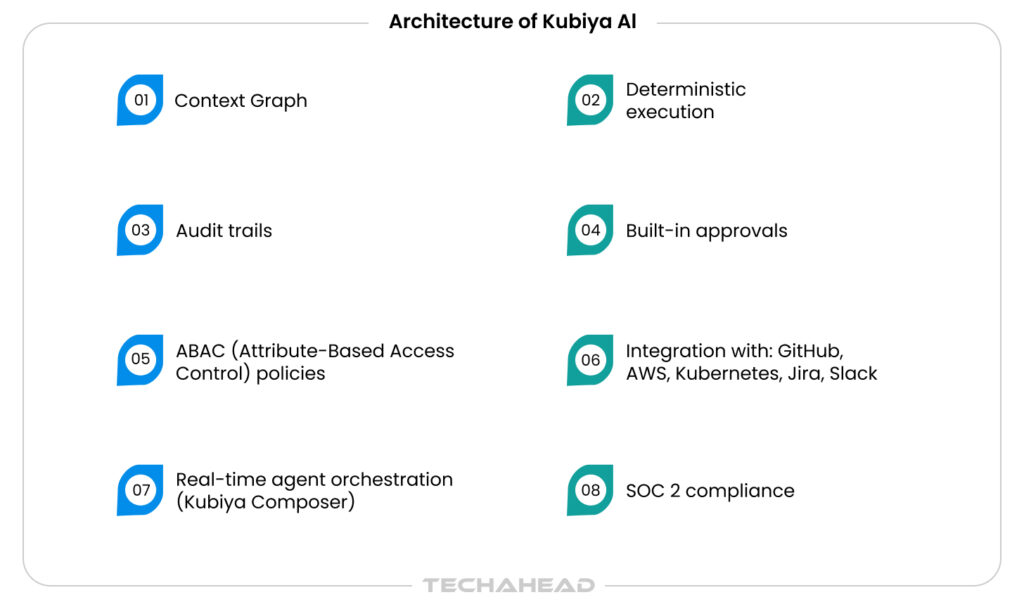
Security teams appreciate Kubiya’s zero-trust approach, where every agent action requires explicit authorization and gets logged for forensic analysis.
Use cases include autonomous incident remediation (where agents detect, diagnose, and fix production issues without human intervention), intelligent cost optimization (agents continuously analyze usage patterns and recommend infrastructure changes), and compliance automation (agents ensure configurations match security policies across all environments).
SuperAGI brings open-source flexibility to multi-agent orchestration, enabling organizations to build autonomous systems tailored to their specific needs. The platform’s architecture supports self-learning workflows where agents continuously improve their performance based on outcomes and feedback.
The open-source model has fostered a vibrant ecosystem of community-contributed agents and tools. Organizations can leverage pre-built agents for common tasks while developing custom agents for proprietary workflows. SuperAGI’s plugin architecture makes it straightforward to extend capabilities and integrate with virtually any API or data source.
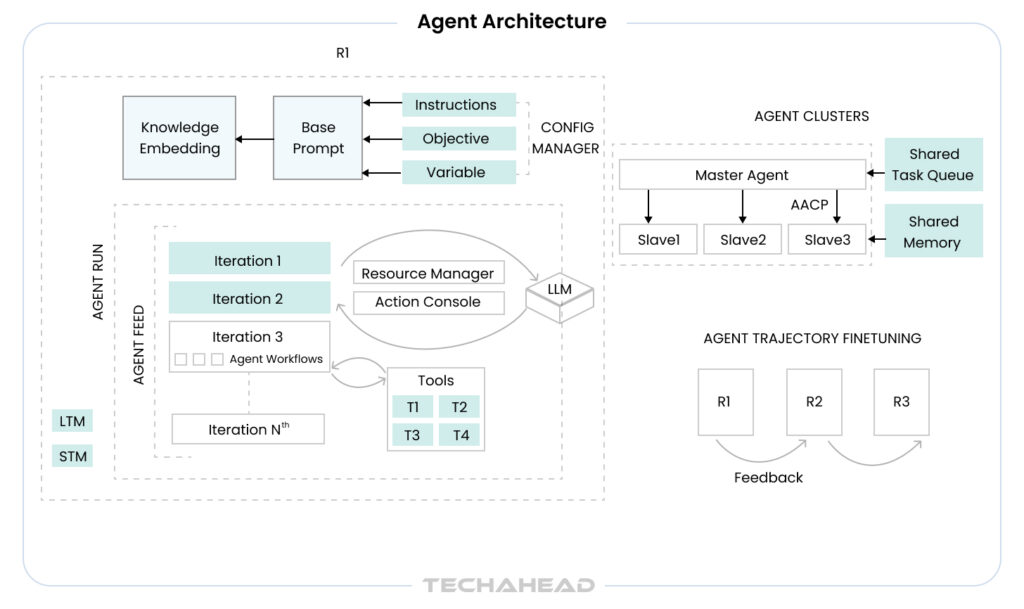
Enterprise adoption focuses on dynamic customer engagement and sales pipeline optimization. Marketing teams deploy SuperAGI agents to personalize outreach at scale, with agents analyzing prospect behavior, generating tailored content, and optimizing engagement timing. Sales organizations use agent teams to qualify leads, schedule meetings, and provide intelligent follow-up based on conversation context. The platform’s learning capabilities mean agent performance improves continuously as they process more interactions.
Kore.ai has carved out a specialized niche in large enterprise conversational AI, particularly for contact center operations. The platform orchestrates complex multi-channel customer interactions, coordinating agents that handle voice, chat, email, and social media channels seamlessly.
The platform’s strength lies in its sophisticated natural language understanding and dialogue management capabilities. Agent teams can maintain context across channel switches (a customer starting on chat and moving to phone), handle multi-intent requests, and escalate complex issues to human agents with full context transfer. Integration with existing contact center systems (Genesys, Five9, Nice) enables unified agent deployment across traditional and AI-powered channels.
Large enterprises use Kore.ai to transform customer service operations, with some organizations handling 60-80% of customer inquiries through orchestrated AI agents. The platform supports specialized agents for different customer segments, product lines, or interaction types, all coordinated through centralized orchestration that ensures consistent brand experience and policy compliance.
Nected democratizes multi-agent orchestration through its low-code platform designed for complex decision-driven workflows. Business users can design and deploy agent orchestrations without extensive programming knowledge, though the platform also supports advanced customization for technical teams.
The platform excels at rule-based decision automation in finance and retail environments. Organizations use Nected to orchestrate agents handling credit decisioning, fraud detection, inventory optimization, and pricing strategies. The visual workflow designer enables business analysts to define decision logic, configure agent collaboration patterns, and establish escalation rules without writing code.
Financial services leverage Nected for loan origination, where agent teams evaluate applications through multiple risk lenses simultaneously. Retail organizations deploy Nected agents for dynamic pricing, with agents monitoring competitor prices, inventory levels, and demand signals to optimize pricing in real-time. The platform’s audit capabilities ensure all agent decisions can be explained and traced, which is critical for compliance in regulated industries.
OpenAI Operator represents the cutting edge of multi-agent AI orchestration, designed to handle diverse AI models at enterprise scale. The platform’s flexible architecture allows organizations to coordinate agents powered by different foundation models, optimizing cost and performance by matching model capabilities to task requirements.
Operator’s elastic orchestration capabilities enable dynamic scaling based on workload demands. During peak periods, the platform automatically provisions additional agent capacity and distributes work optimally. Organizations use Operator for enterprise chat systems and support pipelines where conversation volume varies dramatically throughout the day.
The platform’s model-agnostic design proves valuable for organizations that want flexibility in their AI strategy. Teams can experiment with new models, compare performance across providers, and gradually migrate workloads without rebuilding orchestration logic. Early adopters report that Operator’s sophisticated load balancing and failover mechanisms deliver 99.9% uptime for customer-facing agent deployments.
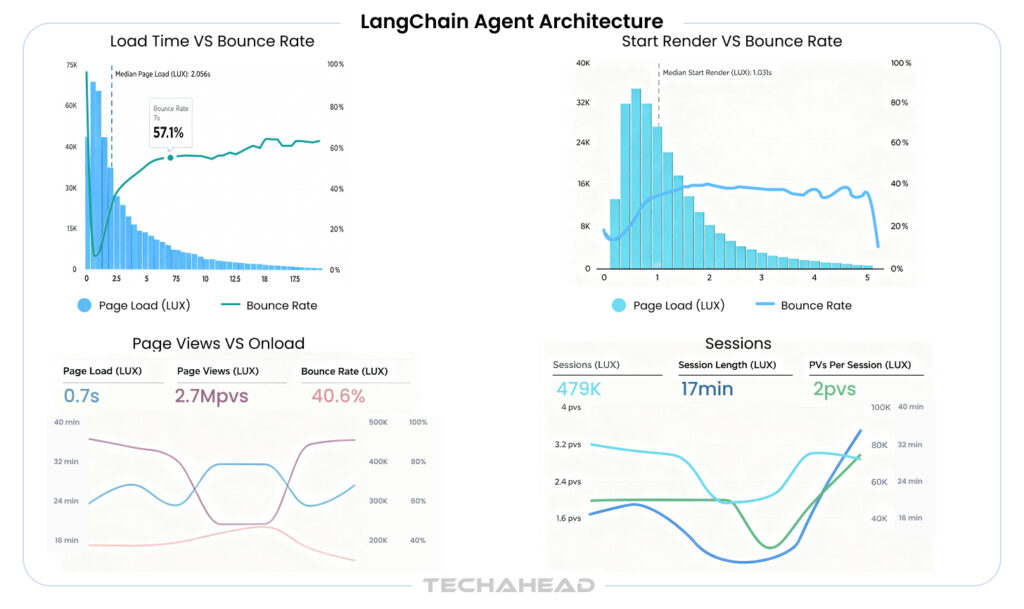
LangGraph and CrewAI represent emerging orchestration layers that prioritize developer experience and rapid prototyping. These frameworks provide lightweight abstractions for multi-agent collaboration, making it straightforward to experiment with different agent architectures and interaction patterns.
LangGraph focuses on graph-based workflow definition, where developers model agent interactions as nodes and edges in a directed graph. This approach makes complex orchestration patterns visually intuitive and easier to debug. CrewAI emphasizes role-based agent teams with clear hierarchies and communication protocols, drawing inspiration from how human teams organize around shared objectives.
Organizations use these frameworks for cross-agent dialogue automation in scenarios like technical documentation generation, where multiple agents contribute specialized knowledge. Research teams appreciate the frameworks’ flexibility for experimenting with novel agent coordination strategies. While less enterprise-hardened than platforms like watsonx or AutoGen, these emerging tools often serve as innovation platforms where organizations prototype new orchestration patterns before moving to production-grade implementations.
Multi-agent orchestration has moved beyond theory to deliver measurable business outcomes across diverse industries. Organizations implementing these systems report dramatic improvements in efficiency, accuracy, and operational agility.
Financial institutions have been early adopters of multi-agent orchestration, applying the technology to core processes like procure-to-pay, order-to-cash, and account reconciliation. A multinational bank deployed agent teams to handle month-end close processes that previously required armies of accountants working overtime. The orchestrated system coordinates agents specializing in different accounting domains, one team handles receivables, another manages payables, while a third focuses on inter-company eliminations.
The results transformed financial operations. Close cycles that traditionally consumed three weeks now complete in four days, with accuracy rates exceeding 99.8%. The agent system handles exception processing autonomously in most cases, escalating only truly ambiguous situations to human experts. Finance teams redirect their energy from data gathering and reconciliation toward strategic analysis and business partnership.
Manufacturing industry leaders like Siemens have deployed smart robotic agents that coordinate inspection, production planning, and resource allocation across complex factories. These agent systems continuously optimize production schedules based on equipment status, material availability, quality metrics, and order priorities.
Siemens’ implementation coordinates specialized agents for quality control, predictive maintenance, and supply chain management. Quality agents analyze sensor data and visual inspection results in real-time, flagging potential defects before products leave production stations. Maintenance agents predict equipment failures and schedule preventive service during planned downtime windows. Supply chain agents adjust material orders based on production forecasts and supplier performance.
The coordinated agent system has improved overall equipment effectiveness by 18% while reducing unplanned downtime by 35%. More impressively, the system learns continuously, and agent teams identify subtle patterns in production data that human operators miss, driving ongoing process improvements.
Technology organizations use Microsoft AutoGen and similar platforms to automate QA processes and security operations. Agent teams test new code releases by generating test cases, executing them across multiple environments, analyzing results, and producing detailed reports, all without human intervention.
Security operations centers deploy agent teams that monitor threats, correlate events across systems, investigate suspicious activities, and implement automated responses. When an agent detects unusual network traffic, it coordinates with other agents to gather context, assess risk, and execute containment procedures if warranted. Human security analysts receive comprehensive incident summaries and recommendations rather than raw alerts, enabling them to make faster, better-informed decisions.
Marketing organizations leverage agent orchestration to generate personalized campaigns, analyze audience data, and optimize spend in real-time. Agent teams continuously test different creative variations, targeting parameters, and channel mixes to maximize campaign performance.
A global consumer brand deployed orchestrated agents to manage its digital advertising across dozens of markets.
Content generation agents create localized ad copy and visuals, targeting agents optimize audience segments based on conversion data, and budget agents reallocate spend toward high-performing campaigns. The system operates 24/7, responding to market dynamics far faster than human teams could achieve.
Campaign ROI improved by 42% while creative production costs fell 60%. Marketing teams focus on strategy, creative direction, and analyzing insights rather than execution mechanics.
IBM watsonx and Kore.ai power contextual multi-channel support for large enterprises. Agent orchestrations handle customer inquiries across voice, chat, email, and social media while maintaining consistent service quality and complete interaction history.
A telecommunications provider deployed orchestrated agents across its support channels, handling everything from billing inquiries to technical troubleshooting.
The system coordinates specialist agents for different service areas: One team handles account management, another focuses on technical support, while a third manages sales inquiries. When customers have complex needs spanning multiple domains, the orchestration layer ensures seamless handoffs between specialist agents.
Customer satisfaction scores increased 22 points while support costs dropped 45%. The telecom reduced its contact center headcount by 40% through attrition while simultaneously expanding service hours to 24/7 coverage.
A Fortune 500 manufacturer implemented SuperAGI to coordinate logistics agents and supplier communication. The system deployed specialist agents for route optimization, carrier selection, exception handling, and supplier coordination.
When shipments face delays, logistics agents recalibrate routes in real-time, considering weather conditions, traffic patterns, and delivery priorities. Supplier coordination agents proactively communicate with vendors about potential disruptions and negotiate expedited shipping when necessary. Customer service agents update affected parties automatically with revised delivery windows.
The orchestrated system improved delivery speed by 34% while reducing manual interventions by 70%. Perhaps most remarkably, on-time delivery performance increased from 82% to 96% despite handling 25% more shipment volume with the same logistics team.
Successfully deploying multi-agent orchestration requires methodical planning and phased execution. Organizations that follow structured implementation frameworks achieve better outcomes while managing risk effectively.
Begin by identifying workflows suited for agent-driven automation. As part of strategic AI consulting services, organizations should evaluate processes characterized by repetitive tasks, multiple decision points, cross-functional coordination, and high volumes. DevOps operations, customer support triage, financial close processes, and compliance monitoring typically offer strong initial candidates.
Quantify current state performance across key metrics: Processing time, error rates, resource requirements, and customer satisfaction. These baselines enable accurate ROI measurement after implementation. Involve stakeholders early to understand pain points and build support for transformation.
Define specific agent roles aligned with workflow requirements. Consider three primary agent types: planning agents that decompose complex requests and coordinate overall workflows, monitoring agents that track progress and ensure quality standards, and executing agents that perform specific technical or business operations.
Document each agent’s responsibilities, decision authority, data requirements, and interaction patterns. Clear role definitions prevent overlap and ensure comprehensive coverage of workflow steps. Start with 3-5 core agent types and expand as teams gain experience.
Select a platform based on integration requirements with legacy systems, scalability needs, governance requirements, and team expertise. Organizations with strong Microsoft investments naturally gravitate toward AutoGen. Heavily regulated industries often choose IBM watsonx for its compliance features. DevOps-focused teams prefer Kubiya’s infrastructure-native approach.
Evaluate platforms through proof-of-concept implementations addressing real workflow challenges. Small-scale pilots reveal integration issues, performance characteristics, and team learning curves before full deployment commitments.
Integration of AI/ML into SOAR platforms aligned with the SANS PICERL framework (Source)
Establish policies governing agent behavior, audit requirements, and explainability standards. Define approval workflows for high-impact agent actions, logging requirements for regulatory compliance, and escalation procedures when agents encounter ambiguous situations.
Implement role-based access controls, ensuring agents operate only within authorized boundaries. Security teams must validate that agent permissions align with corporate policies and regulatory requirements. Create audit trails capturing agent decisions, data accessed, and actions taken to support compliance and forensic analysis.
Deploy comprehensive observability tools tracking agent performance, decision quality, and system health. Monitor key metrics including task completion rates, processing times, error frequencies, and user satisfaction scores.
Establish continuous feedback loops where agent performance data informs training improvements. Analyze edge cases and failures to refine agent capabilities. As teams gain experience, they expand agent responsibilities gradually while maintaining operational stability.
Plan for iterative enhancement cycles: Initial implementations typically capture 60%-70% of potential value, with subsequent refinements unlocking additional capabilities and efficiency gains.
Despite the promise of multi-agent systems, enterprises face critical challenges when deploying orchestrated AI agents in production environments. Understanding these pitfalls before implementation prevents costly mistakes and project failures.
The Problem: When one AI agent generates incorrect information (a hallucination), downstream agents in the workflow accept this false data as truth, compounding errors throughout the system. A single hallucination can trigger a cascade of faulty decisions across your entire agent network.
Real-World Impact: In financial services, a credit assessment agent hallucinating a customer’s debt-to-income ratio can cause downstream agents to approve high-risk loans, triggering compliance violations and financial losses. Manufacturing systems where quality control agents accept hallucinated sensor data can approve defective products for shipment.
TechAhead Solution: Implement validation checkpoints between agent handoffs. Each agent’s output should be verified against ground truth data sources before passing to the next agent. Use confidence scoring where agents flag low-confidence outputs for human review. Deploy separate validation agents whose sole purpose is fact-checking outputs from primary agents before critical decisions.
The Problem: As tasks pass between specialized agents, critical context from earlier steps gets lost or degraded. Each agent operates within token limits and may not receive the full conversation history, leading to decisions made without complete information.
Real-World Impact: Customer service workflows where initial conversation context (customer frustration level, previous issues, account history) disappears as the inquiry moves from triage agent to specialist agent to resolution agent. The customer repeats information multiple times, degrading experience despite AI automation.
TechAhead Solution: Design a centralized context management system that maintains complete workflow state across all agent interactions. Implement structured handoff protocols where agents explicitly pass critical context to downstream agents. Use vector databases to store conversation embeddings that any agent can query for relevant historical context. Define minimum context requirements for each agent type to ensure decisions are made with sufficient information.
The Problem: Poorly designed orchestration logic can create infinite loops where agents continuously hand tasks back and forth without resolution. Agent A determines the task belongs to Agent B, which determines it belongs to Agent C, which sends it back to Agent A. The workflow never completes, consuming resources and frustrating users.
Real-World Impact: IT helpdesk systems where ticket routing agents create circular dependencies: hardware agent sends to software agent, which identifies it as network issue and sends to network agent, which determines it’s a hardware problem and sends back to hardware agent. The ticket never reaches resolution while racking up API costs.
TechAhead Solution: Implement maximum iteration limits for agent workflows (e.g., no task can pass through more than 10 agent handoffs). Design explicit escalation paths where workflows that exceed iteration limits automatically route to human operators. Use directed acyclic graphs (DAGs) in workflow design to prevent circular dependencies. Deploy monitoring that alerts on tasks stuck in loops for more than a defined time threshold.
The Problem: Multi-agent systems can generate massive API costs without proper governance. Each agent interaction consumes tokens, and complex workflows involving dozens of agent calls can cost hundreds of dollars per customer interaction. Without proper monitoring and circuit breakers, a high-traffic day can generate five or six-figure API bills.
Real-World Impact: A marketing automation platform using multi-agent orchestration for personalized campaign generation spent $47,000 in OpenAI API costs in a single weekend when a bug caused infinite regeneration loops. An enterprise chatbot handling 10,000 daily conversations discovered their multi-agent approach was costing $8 per conversation—unsustainable at scale.
TechAhead Solution: Implement cost-per-workflow budgets with automatic circuit breakers that halt execution when thresholds are exceeded. Use smaller, more efficient models for routine agent tasks, reserving powerful models (GPT-4, Claude) for complex reasoning steps. Cache common agent responses to avoid redundant API calls for repetitive queries. Monitor cost-per-interaction metrics in real-time and set alerts at 75% and 90% of budget thresholds. Design fallback workflows that use rule-based logic when AI budget is exhausted.
The Problem: Autonomous agents with database access, API permissions, and decision-making authority create expanded attack surfaces. A prompt injection attack targeting one agent can compromise your entire multi-agent system. Agents might inadvertently expose sensitive data by passing it to downstream agents or external APIs without proper sanitization.
Real-World Impact: A healthcare multi-agent system where a malicious user crafted inputs that caused the document summarization agent to extract and expose protected health information (PHI) in its outputs, violating HIPAA. Financial services platforms where agents with database write permissions were manipulated through prompt injection to modify transaction records.
TechAhead Solution: Implement principle of least privilege for every agent—grant only the minimum permissions required for their specific function. Deploy input sanitization and validation before any agent processes user inputs. Use separate agent instances with isolated permissions for different sensitivity levels (public-facing agents have no access to production databases). Implement audit logging for all agent actions, especially database writes, API calls, and data access. Run regular penetration testing specifically targeting agent prompt injection vulnerabilities. Use structured outputs (JSON schemas) rather than free-form text between agents to limit injection attack vectors.
Avoiding Production Pitfalls: A Checklist
Before deploying multi-agent orchestration to production:
Multi-agent orchestration delivers transformative business value when implemented thoughtfully. By understanding these five production pitfalls and designing systems that explicitly address them, enterprises can deploy robust, secure, and cost-effective agent networks that deliver the promised 40-60% efficiency gains without the risks that have derailed early implementations.
Enterprises are going to be revolutionized with AI, and multi-agent orchestration is the beginning of this new era.
Organizations are achieving remarkable results: 30-70% faster processing and 40-60% efficiency gains. But success demands more than technology.. It requires thoughtful architecture design, robust governance, and balanced human-AI collaboration.
TechAhead helps enterprises navigate this digital transformation, from platform selection through full-scale deployment. We understand this isn’t just a technology shift, it’s an organizational transformation.
The competitive advantage goes to organizations that act decisively. As agent capabilities evolve, the gap between leaders and laggards will widen. The question isn’t whether to adopt multi-agent orchestration, but how quickly you’ll capture its transformative benefits.
Multi-agent orchestration coordinates specialized AI agents to automate complex workflows, enabling 40-60% efficiency gains and transforming how enterprises handle business processes.
IBM watsonx Orchestrate excels in regulated industries, offering enterprise-grade governance, comprehensive audit trails, and robust compliance features for financial and healthcare organizations.
Implementation typically requires 12+ weeks, covering assessment, design, platform selection, governance setup, pilot deployment, and iterative refinement before full-scale production rollout.
Key challenges include data isolation across systems, AI hallucination risks, regulatory compliance complexity, and performance tuning for optimal resource utilization and scaling.
Enterprises typically achieve 30-70% faster processing times, 40-60% efficiency improvements, and significant cost reductions while enabling workforce focus on strategic initiatives.
We use cookies to ensure our website functions properly, improve performance, and provide a personalized experience. You can choose which types of cookies to allow below.
Required for core functionality such as security, network management, and accessibility. These cannot be disabled.
Help us understand site traffic and user interactions so we can improve performance and usability.
Enable enhanced functionality and personalization such as language or region preferences.
Used to deliver relevant ads, track campaign performance, and measure advertising effectiveness.