


 Copy Link
 Share on X
 Share on Facebook
 Share on LinkedIn
Always Active
Required for core functionality such as security, network management, and accessibility. These cannot be disabled.

Uncover the transformative potential of digital and mobile solutions for your industry.



 Last Updated: Nov 10, 2026
Nov 10, 2026
 4
 18 min. Read


Key Takeaways
Making your website useful to AI services comes with a cost that’s easy to overlook. Every product page they retrieve, image they download, and document they revisit uses resources on your side. Your business pays to deliver that content, whether the visit leads to a customer or ends with a copy sitting in someone else’s system.
In its March 2026 infrastructure update, Wikimedia reported blocking or slowing approximately 1.5 billion automated requests every day as it tackled excessive crawling.
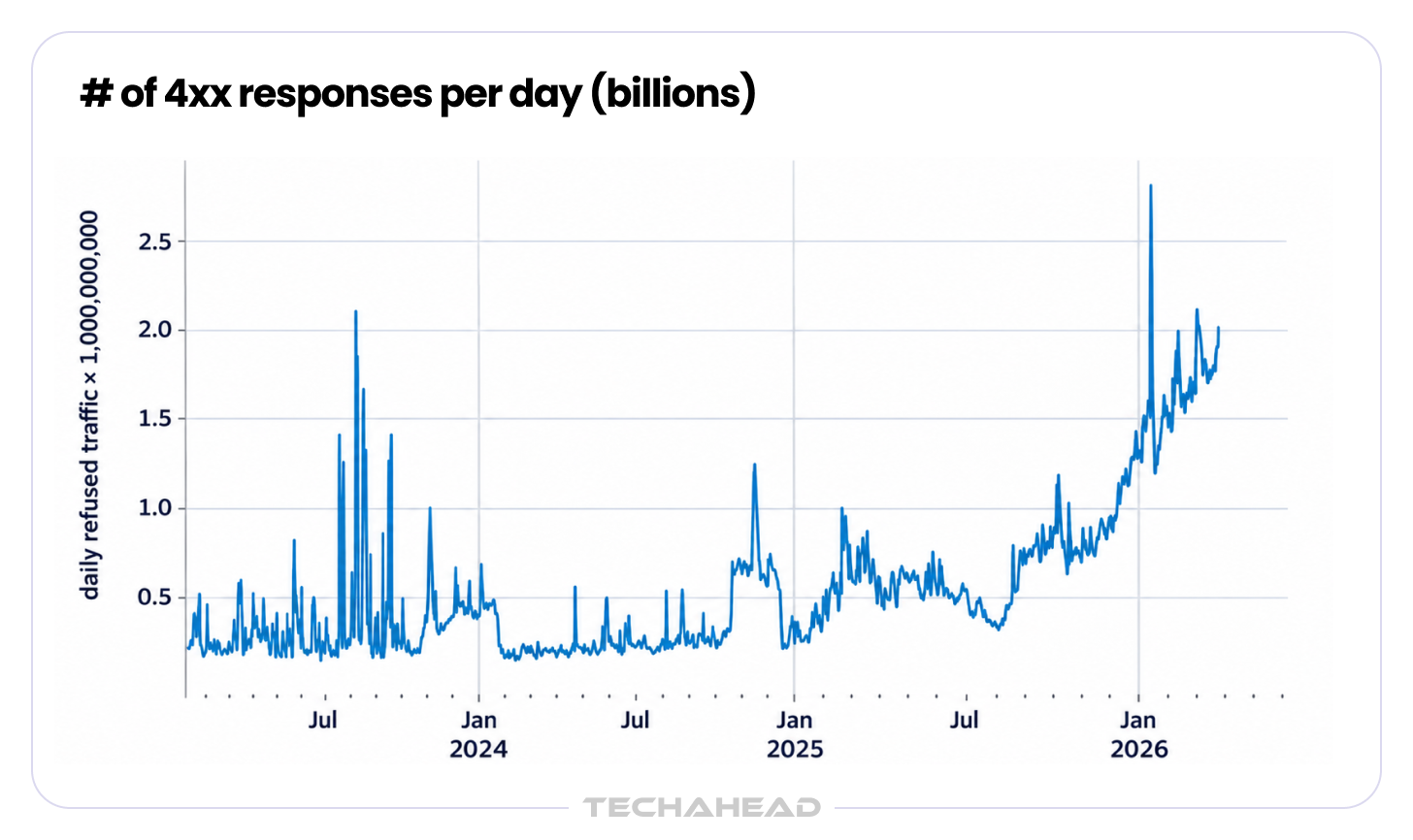
For businesses with large catalogs or content libraries, that scale highlights a growing challenge, keeping information accessible while protecting the infrastructure customers depend on.
AI bot traffic can help an AI service discover information about your business. It can also send the same files out repeatedly, occupy server capacity, and make customer-facing features slower. The impact depends on what the bots access and how your application handles those requests.
You have several ways to manage that access. Understanding where the expense comes from makes it easier to choose between a hosting adjustment, a targeted restriction, and a change to the application itself.
Also Read: The Hidden Cost of AI Crawlers: How to Measure and Reduce Their Cloud Infrastructure Impact
Your website was probably built around how customers use it. They browse a few pages, compare products, perhaps download a brochure, and leave. Automated visitors can move through far more content and return much more frequently.
That activity adds to website bandwidth, the amount of data your site delivers. A crawler working through an image-heavy catalog can create substantial consumption even when the number of human visitors barely changes.
A public file remains available to anyone who can reach its URL. That includes an older report your marketing team stopped promoting months ago or a product manual for a discontinued model.
When automated services repeatedly retrieve those files, each delivery adds to the workload. Large archives are particularly exposed because the accumulated content can be much bigger than the pages customers normally visit.
Wikimedia reported in April 2025 that bandwidth used for multimedia downloads had increased 50% since January 2024, largely because scrapers were collecting images for AI models. Its infrastructure had to accommodate that demand alongside the people using its websites.
For a manufacturer, the equivalent could be a catalog containing years of technical drawings and high-resolution photography. Each file has a legitimate business purpose. Repeated collection of the entire archive can make serving it much more expensive than expected.
A search result can take more effort to generate than a stored article. The application may need to query a database, apply filters, calculate availability, and assemble the response.
Consider a property marketplace. A buyer searches a few locations within their budget. A crawler might explore thousands of combinations of location, price, property type, and amenities. The application performs work for each request, with customer searches competing for the same resources.
The impact can spread across several parts of the business.
These effects can overlap, but the remedy depends on what is actually happening. Repeated file downloads and expensive searches place different demands on a website.
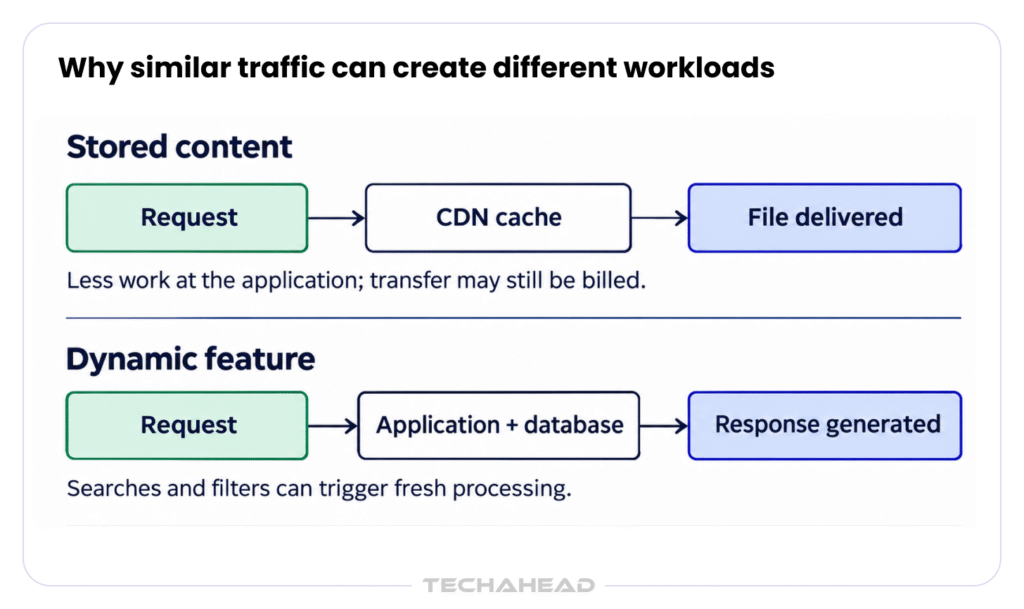
Read the Docs, a software documentation platform, published an incident that shows how a small part of an existing website can create a large expense. The organization already used a content delivery network, or CDN, to serve files efficiently.
In May 2024, one crawler downloaded 73 TB of zipped documentation, generating more than $5,000 in bandwidth charges. A crawler bug caused the same files to be downloaded repeatedly, including files that had been unchanged for years.
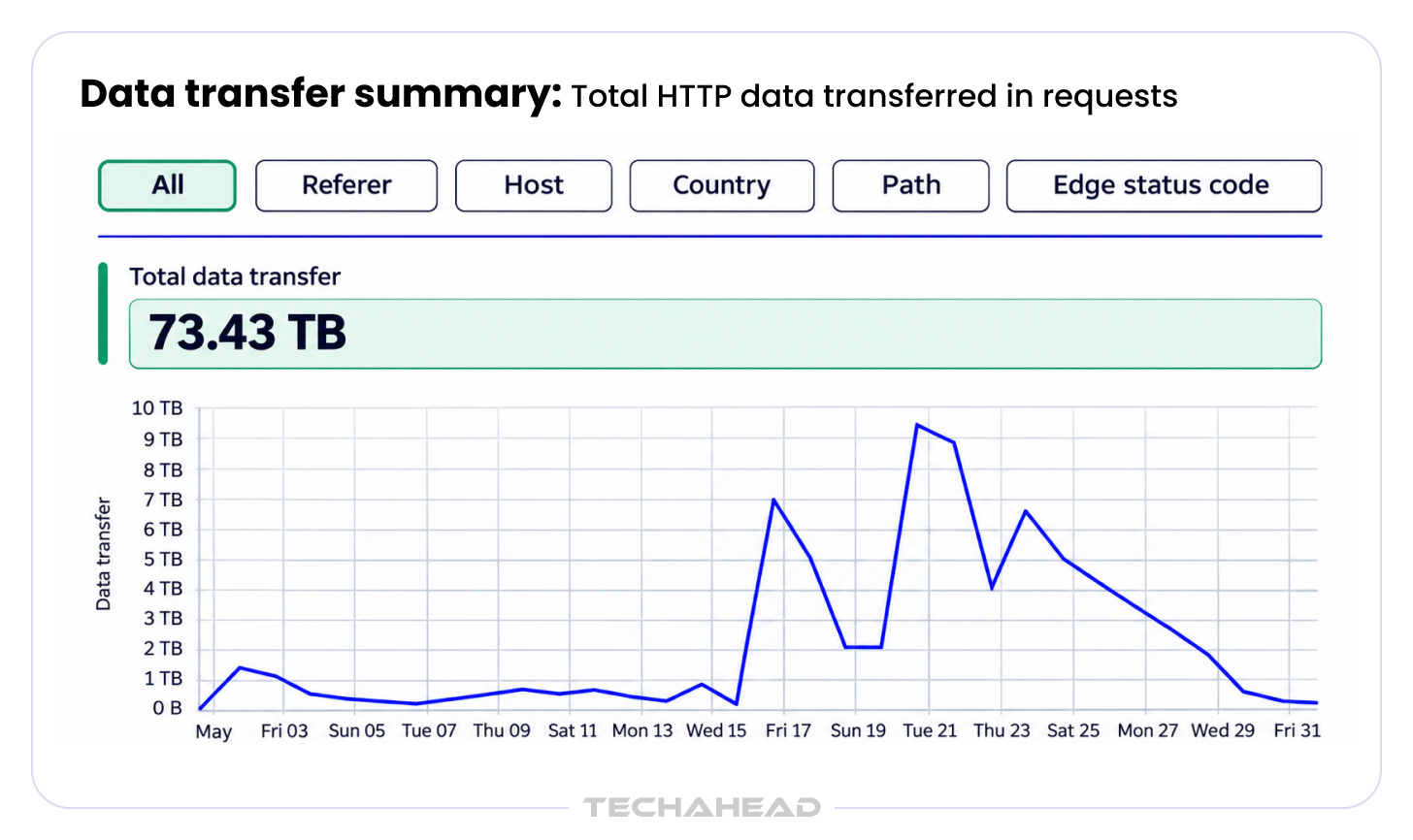
An old URL made those downloads particularly costly. It redirected requests to a location outside the CDN cache, bypassing the stored copies available for efficient delivery. Read the Docs blocked the crawler and identified the redirect it planned to correct. The crawler operator later reimbursed the cost.
The old URL is the detail that matters for an established business. Websites collect redirects, previous product pages, and downloadable assets over several years. Some receive little attention after a redesign, even though they remain publicly accessible.
A similar issue could sit behind your own hosting setup. Your current product pages may be well optimized while an older catalog link sends every download through a more expensive route.
This explains why a development company can have a role beyond configuring bot protection. Someone needs to understand how the website delivers the affected content and correct the behavior that makes it expensive.
High traffic alone provides a limited explanation for a higher bill. The useful finding is more specific: which files or features consumed additional resources, what requested them, and how the provider charged for that activity.
Bot traffic detection helps connect those details. Hosting reports, CDN records, and application data can reveal activity that customer analytics only partly captures.
The most visited page is not necessarily the most expensive one to serve. A large download requested hundreds of times can use more transfer than thousands of visits to a lightweight article.
That is why an investigation often starts with content. A new campaign video may explain a legitimate increase. Repeated downloads of an old archive may point to automation. Both consume capacity, but the business has different reasons to accommodate them.
The explanation becomes clearer when four details come together.
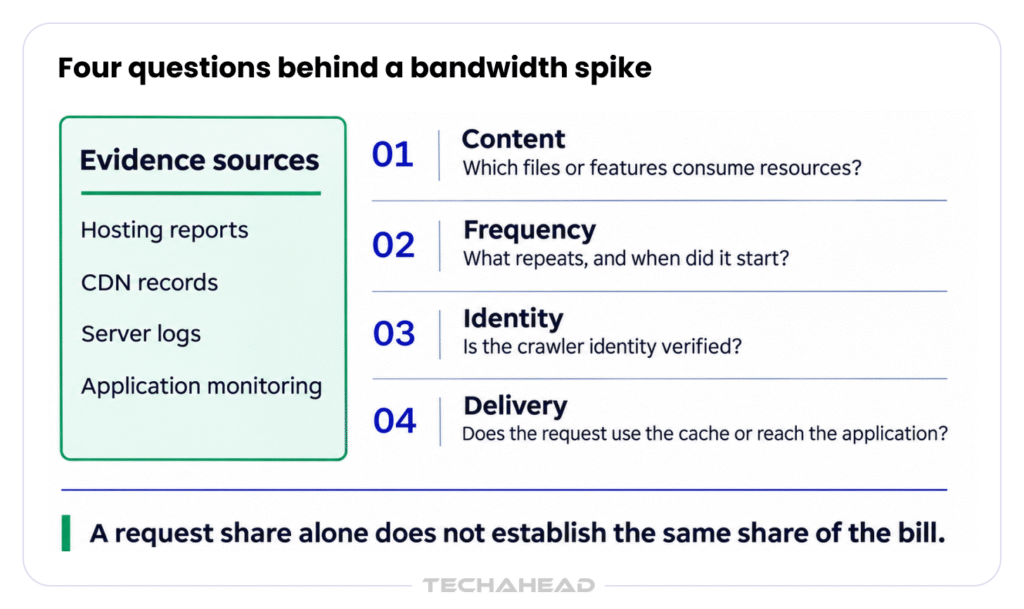
CDN reports and server logs help reconstruct the activity. Cloudflare’s crawler controls, for example, show which AI services access a site and support access policies for individual services.
AI crawlers may announce their identities in requests. Provider verification and the pattern of activity help establish whether those identities can be trusted.
A business might confirm that AI crawler traffic repeatedly retrieved its product archive during the period when transfer charges increased. Other automated activity may remain unidentified. That uncertainty belongs in the explanation, especially before making a broad access decision.
For AI bot traffic, a convincing finding links the behavior to the affected resource and the expense it created. A percentage of requests attributed to automation cannot, by itself, establish the same percentage of the bill.
| At TechAhead, this is where cloud monitoring can connect with application engineering. If an archive appears responsible for the increase, we can investigate both the requests and the download links they follow. That helps establish whether the problem calls for an access restriction or a change to file delivery. |
The value of a fix depends on your hosting contract and the effect on customers. Some businesses pay for each additional unit of transfer. Others have spare capacity within an existing allowance.
Lower consumption can benefit both, although the timing of the saving will differ. Hosting costs only fall when the change affects something the company actually pays for.
A lightweight page and a complex search may count as one request each while using very different resources. This makes visit totals a poor substitute for understanding what the application does.
In COAR’s 2025 survey of 66 repositories worldwide, 80% of respondents reported service disruptions caused by aggressive bots and crawlers, ranging from slowdowns to extended outages.
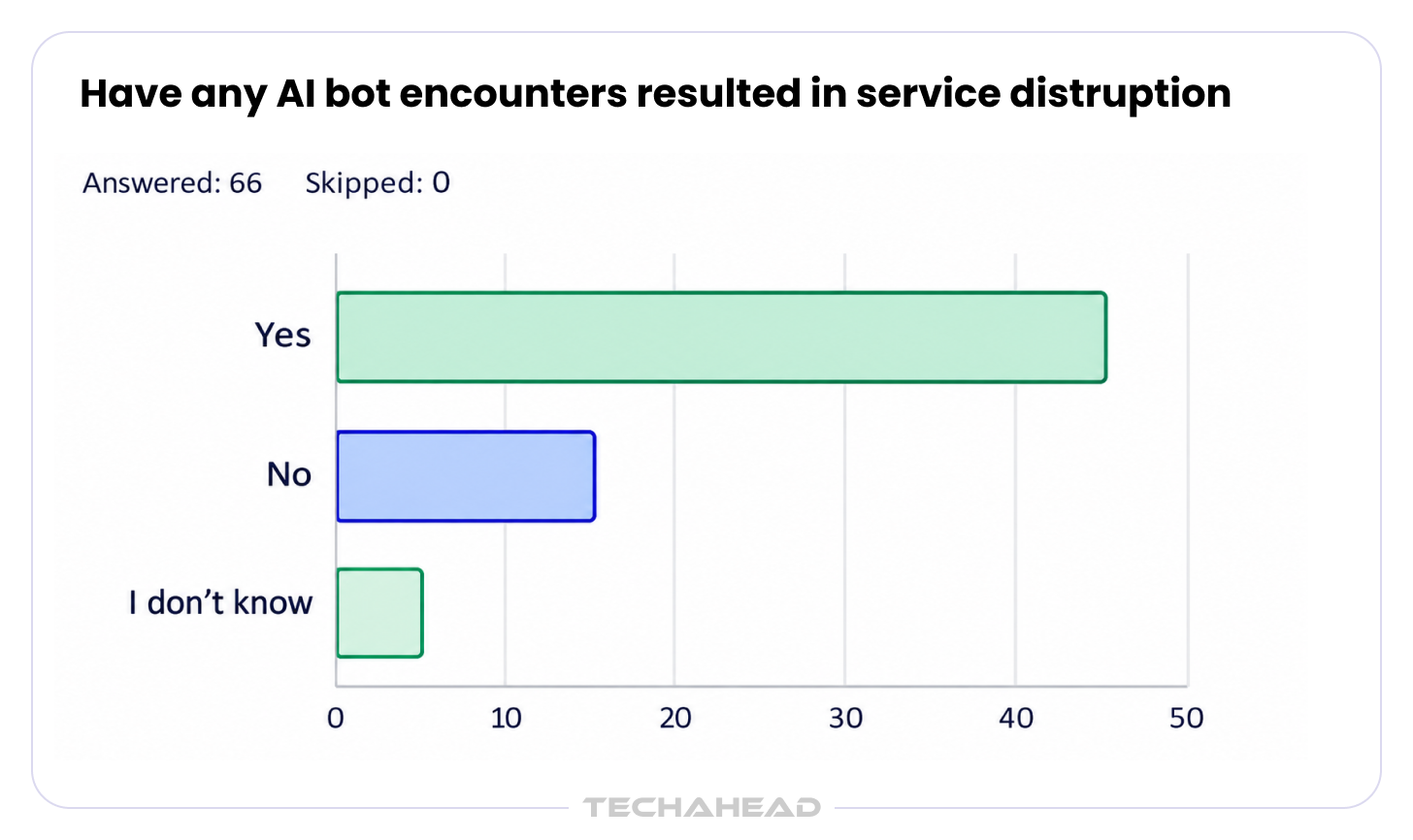
For your business, this highlights why traffic volume alone is an incomplete measure: crawler activity also needs to be assessed against website performance, service availability, and the resources required to keep operations running.
For your business, the potential saving comes from the work that can be reduced and the way that work is billed.
| What is happening | What it means for the investment |
| A brief traffic increase stays within the plan and customers experience normal performance | Monitoring may be enough while the business watches for recurrence. |
| Repeated downloads create a monthly bandwidth overage | The recurring charge gives a basis for comparing the cost of a fix. |
| Automated requests slow down important product features | Customer experience becomes part of the reason to act. |
| The business is considering a larger hosting plan | Removing unnecessary consumption may defer the upgrade. |
New controls can bring subscription charges, request-processing fees, and maintenance work. Those expenses affect how much the business ultimately saves.
The comparison becomes more useful when it distinguishes a lower invoice from extra capacity or better performance. A fixed-price plan may continue to cost the same after bandwidth usage falls, while giving the company more room to grow.
| For TechAhead, that distinction would shape the proposed work. A recurring download charge may justify correcting a delivery path. Slow product searches may require changes to how the application processes requests. Each recommendation should explain the business problem it would address and the result the client could expect to measure. |
There is a reason this decision can be uncomfortable. You want your business to appear where customers research products, including AI services. At the same time, you are responsible for the resources those services consume.
Cloudflare reported that crawling triggered by AI user actions increased more than fifteenfold during 2025. Some automated access therefore happens because a person has asked an AI service to retrieve information, alongside other activities such as bulk content collection.
Before you block AI bots, the useful distinction is what they are accessing and why that access matters to your business.
A retailer may welcome discovery of individual product pages while restricting repeated downloads of every image in its catalog. A software company may value access to current documentation while limiting bulk retrieval of archived versions.
| Access type | Business consideration | Possible response |
| Discovery of public pages | Customers may find relevant products or services | Preserve appropriate access and monitor its impact. |
| Retrieval for an AI user’s question | The visit may support active research | Evaluate the service and the pages it requests. |
| Bulk collection for model training | The organization decides whether to permit that reuse | Apply its content and access preferences. |
| Approved partner downloads | A commercial relationship depends on the data | Offer an agreed channel and usage limits. |
| Repeated unexplained collection | The benefit and purpose are unclear | Investigate and contain excessive activity. |
Access supports the possibility of discovery. Whether that produces citations, visits, or customers remains something to measure.
The decision also becomes easier when it is tied to specific content. Marketing knows which pages support discovery. Product teams know which features customers need. Engineering can turn those requirements into rules that reflect how the business actually operates.
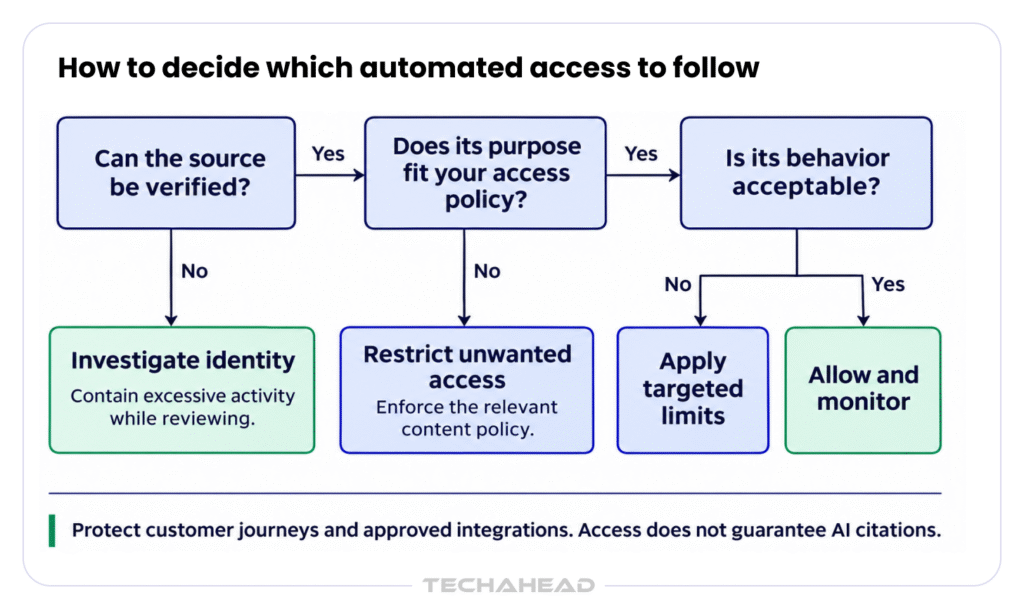
The right response follows the source of the expense. A website serving the same archive repeatedly has a different problem from a marketplace handling excessive automated searches.
Several approaches can work together. Their value comes from reducing the particular activity that is consuming resources.
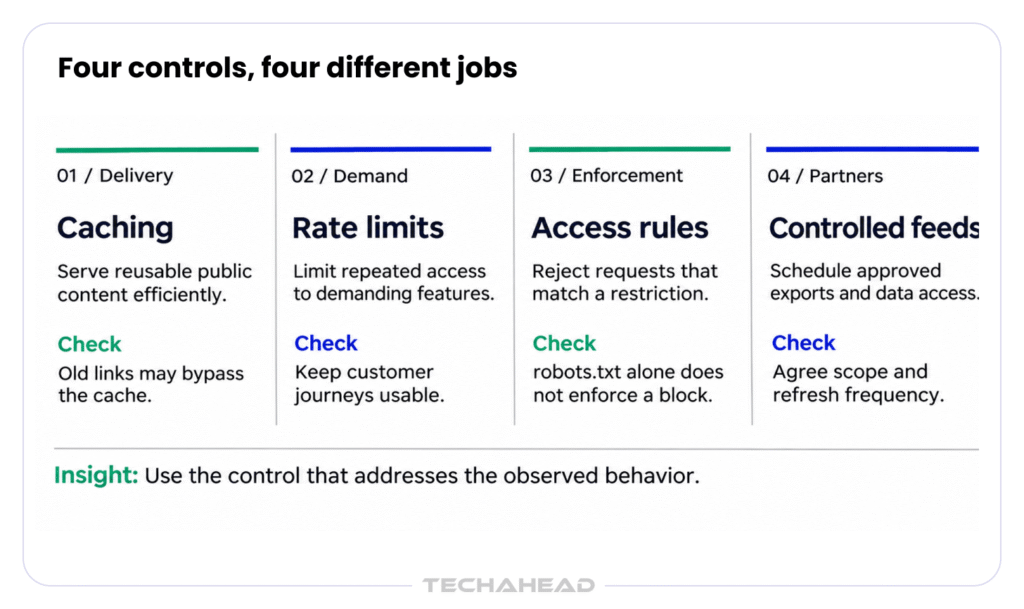
Caching allows repeated requests to use a stored copy of content. It can reduce work at the application server or storage service, provided requests reach that copy as intended.
Older links and redirects sometimes bypass the arrangement. Correcting them can improve delivery without requiring a wider rebuild. The team also needs to establish which content is appropriate for shared caching, particularly where customer-specific information is involved.
CDN bandwidth may still be charged when a cached file is delivered. The saving depends on what work was removed and which provider now serves the content.
For a founder, that distinction makes a proposal easier to assess. A useful recommendation identifies the affected files, explains what currently happens, and connects the change to the expense it could reduce.
Rate limiting controls how frequently requests reach a page or service. It can help when automated visitors create excessive work through repeated access.
On a marketplace, limits might focus on searches across large numbers of filter combinations. On a publisher’s website, they might apply to rapid archive downloads. The rules can reflect the behavior causing the problem and the access the business wants to support.
A robots.txt file communicates preferences to cooperating crawlers. An enforced access rule allows the website’s infrastructure to reject requests that match a restriction.
This matters when unwanted activity continues after preferences have been published. Controls at the CDN or hosting layer can prevent matching requests from reaching the application. Netlify demonstrates both approaches in its explanation of crawler controls.
With AI bot traffic, the quality of a restriction depends on what it catches and what else it affects. Customer downloads, useful discovery services, and approved integrations all need consideration during testing.
| TechAhead can bring application development and cloud operations together for that work. For example, a project could combine correcting a catalog link, introducing an access rule for excessive downloads, and testing the buyer journey. The scope would follow the cause established during the investigation. |
Some frequent downloads have a clear business purpose. A distributor may need an updated catalog, or a partner may require regular inventory information.
A scheduled export or controlled feed can meet that need with a more predictable workload. The agreement defines what information is needed and how often it changes. The application can then deliver it accordingly.
This option has its own development and maintenance cost. It becomes worthwhile when the ongoing relationship and volume of access justify a dedicated solution.
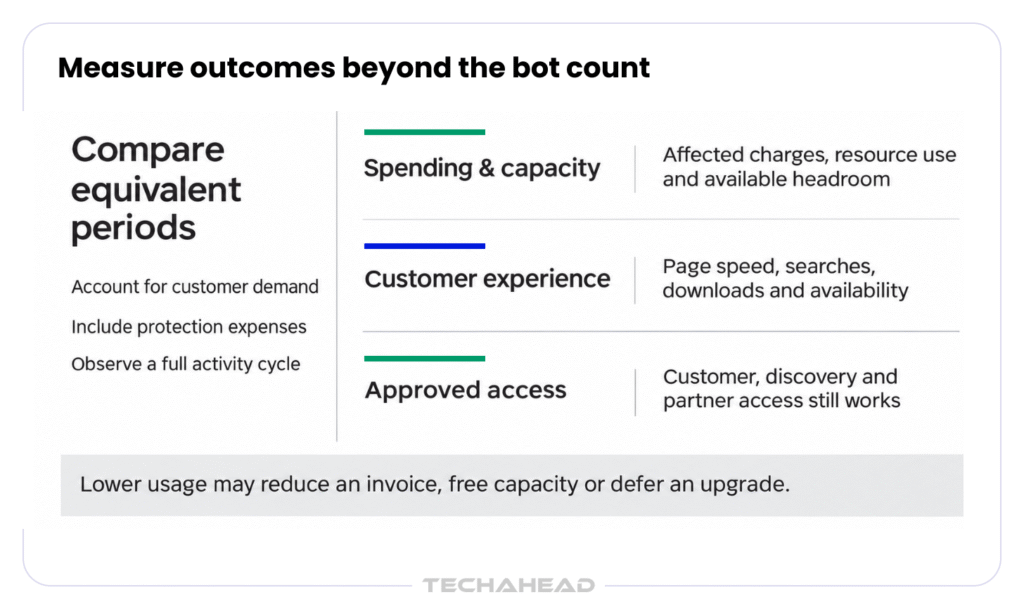
A fall in AI bot traffic is only one part of the result. The more useful question is what improved for the business: the paid consumption, customer experience, or capacity available for growth.
Comparisons need to account for ordinary changes in traffic. A quieter trading period can reduce resource use even without an effective intervention.
The outcome usually becomes visible in three areas.
When bandwidth usage drops, the billing arrangement determines whether the benefit appears immediately on the invoice or helps postpone a future upgrade. Both can justify the work when they are explained accurately.
The observation period matters, too. Continuous unwanted activity can reveal the effect of a change relatively quickly. A monthly archive download requires a longer view. Ongoing monitoring helps identify new links, files, or product features that later create similar exposure.
A hosting provider’s built-in controls may resolve a straightforward crawler problem. When the expense keeps returning, the explanation may involve the application, its older links, or the way different services handle requests.
That is where development experience adds value. A working solution can require more than changing who is allowed through. It may involve changing what the application does when they arrive.
TechAhead’s managed cloud services cover infrastructure management, monitoring, security, and optimization. For businesses dealing with avoidable website bandwidth consumption, those capabilities can support a project that connects the traffic investigation with the necessary application changes.
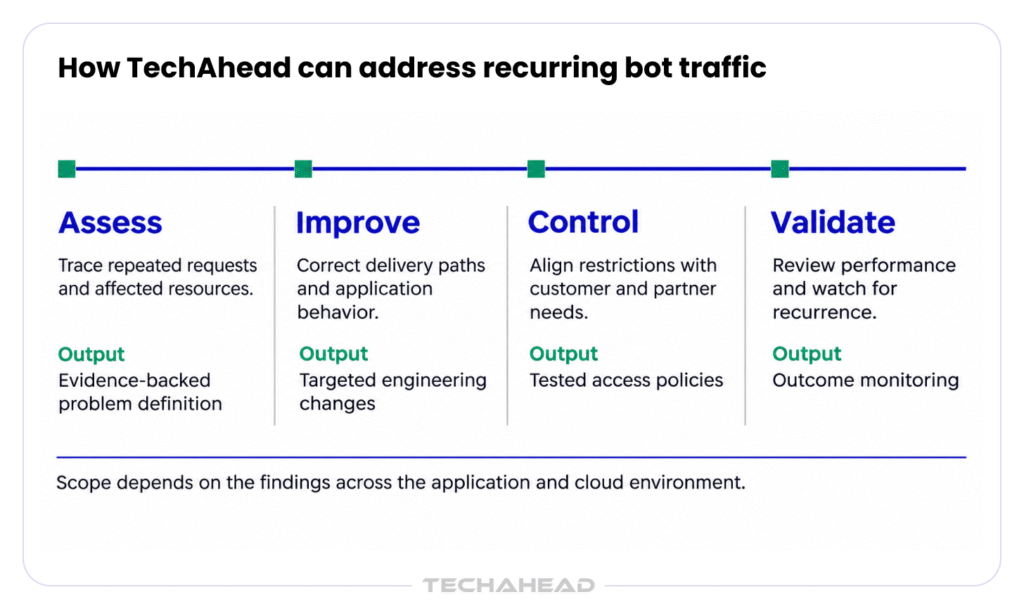
Depending on what the assessment finds, we can discuss work across four areas.
For example, a public catalog can remain useful to buyers while its delivery becomes more efficient and excessive automated downloads are controlled. The proposal would explain which changes are needed, how they would be tested, and what ongoing support they require.
Managing AI bot traffic gives you a clearer view of how your platform’s resources are being used. That understanding supports better decisions about hosting costs, customer performance, and the value of automated access. A recurring issue becomes easier to address when its cause is visible and the response fits the business.
Your website will continue to serve customers, partners, and automated services with different needs. A practical access policy and well-designed application can accommodate that mix within the resources you are prepared to fund. When the next bandwidth spike occurs, you have a stronger basis for deciding whether to monitor it, adjust hosting controls, or invest in a targeted fix.
Contact TechAhead to assess your automated traffic and identify improvements that support your platform’s performance and operating budget.
Identifying AI bot traffic involves examining request patterns, downloaded files, and verified crawler identities across hosting and CDN records. TechAhead can help connect those findings to the application features experiencing repeated access or slower performance.
The effect depends on which crawler you restrict. Blocking a search crawler can reduce access to content used in search answers. Selective controls let businesses limit unwanted collection while keeping important public pages available to approved services.
OpenAI provides separate controls for GPTBot and OAI-SearchBot. Businesses can disallow GPTBot for training while allowing OAI-SearchBot for search discovery. This supports a more selective policy, although allowing access alone cannot guarantee inclusion in ChatGPT answers.
A robots.txt file communicates preferences to cooperating crawlers. Businesses that need to block AI bots ignoring those preferences require enforced access controls. Private documents also need authentication and authorization to prevent access by unauthorized visitors.
Customer information needs protection through authenticated access, appropriate permissions, and monitoring for unusual downloads. Where personal information is publicly visible, businesses should review what they expose and introduce safeguards proportionate to the scraping risks involved.
GDPR compliance involves broader responsibilities wherever the regulation applies, including lawful processing, transparency, and appropriate safeguards. Restricting AI crawlers can support protection against scraping, but compliance also depends on how your organization collects, uses, stores, and shares personal information.
Yes. Rate limiting can control repeated access to demanding features, such as filtered searches or archive downloads. TechAhead can help assess suitable limits and test affected customer journeys before restrictions are introduced more widely across the website.
Some crawlers use changing IP addresses or residential proxy networks, making individual address blocks short-lived. Effective bot traffic detection also considers behavior, request frequency, and the pages being accessed, helping businesses respond when the source address changes.
Pages must remain indexed and eligible for a search snippet to qualify as supporting links in Google AI Overviews. Reviewing crawler access, indexing, and preview controls helps identify unintended restrictions. Google determines whether eligible pages appear.
TechAhead can assess the affected pages, examine how requests reach the application, and propose targeted changes. Depending on the findings, these could include caching improvements, access controls, customer-journey testing, and ongoing monitoring to identify recurring unwanted activity.
We use cookies to ensure our website functions properly, improve performance, and provide a personalized experience. You can choose which types of cookies to allow below.
Required for core functionality such as security, network management, and accessibility. These cannot be disabled.
Help us understand site traffic and user interactions so we can improve performance and usability.
Enable enhanced functionality and personalization such as language or region preferences.
Used to deliver relevant ads, track campaign performance, and measure advertising effectiveness.