


Staff Augmentation
Access top-tier talent on demand: Dedicated, Hourly, or Flexible.





 Copy Link
 Share on X
 Share on Facebook
 Share on LinkedIn
DoorDash is America’s biggest food delivery platform with over 65% market share, and globally, the world’s 2nd biggest.
Although there exist tons of other food apps/platforms which deliver restaurant food to customers, DoorDash has managed to carve a unique niche for itself in this hyper-competitive market by doing just one thing: Delighting its customers consistently.
Foodies who order from DoorDash are known to be fierce loyalists, as if part of a cult, and they dedicatedly order their food from this app without fail.
How has 12-year-old DoorDash been able to delight its customers and their vendors consistently? What magic recipes have been used to understand their customers and decode their needs, and resolve their pain points?
The answer lies in Machine Learning and Optimization Models.
We will discuss that shortly, but before that, let’s have an overview of DoorDash and some fascinating statistics about their operations, which will surely amaze you!
DoorDash: America’s biggest food delivery platform
In 2012, Stanford University students Tony Xu, Stanley Tang, Andy Fang, and Evan Moore started working on a food & grocery delivery app after a local store owner complained about delivery issues. In 2013, they launched PaloAltoDelivery.com, which was incorporated as DoorDash in 2013.

The same year, they received $120,000 as seed funds from the renowned incubator for startups: Y-Combinator in exchange for a 7% stake, and that started a stunning story of growth and expansion, which is still continuing. As per some reports, they grew at an astonishing rate of 20% per week in the first few months of being incorporated.
Within 5 years of their launch, they overtook UberEats to become America’s second biggest food delivery app, and next year, in 2019, they beat GrubHub to become the #1 food delivery app in the USA.
Also Read: What does it take to start a fresh app design for revenue generating app?
DoorDash in numbers: Stunning revelations
- More than 40 million active monthly users (world’s 2nd biggest food aggregator platform)
- It got over 26 million paid subscribers (with free delivery and other perks)
- 7 million+ Dashers (Delivery executives)
- Over $12.6 billion annual revenues (TTM 2025)
- Complete billions of orders annually
- Market value: $80 billion approx
- Cover more than 18000 cities (includes US and Non-US cities)
- Over 600,000 restaurants on-boarded
- $80.1 billion of the gross order value in 2024
What is the DoorDash business model?
There are mainly three entities when we observe the business model of DoorDash: Customers, who place orders for food, groceries, and retail items | Merchants (Restaurants, Grocery, and Convenience Stores), who prepare the items being ordered; and Dashers or Delivery Executives, who pick up the food orders from restaurants and deliver them to the customers.
The revenue model is diversified: They generate commission based on every order delivered, revenue from advertising services (Promoted Listings), and recurring subscription fees from DashPass.
On the surface of it, DoorDash seems like any other food delivery platform, having a simple, straightforward business model and revenue model.
But the fact is, over 46 million active users are placing over 2.5 billion orders on this app annually. And the reason they consistently trust and follow DoorDash is their user experience.
TL;DR of How DoorDash Uses AI to Delight You
| Feature | The Tech Behind It | What It Does for the User |
| Instant Dispatch | DeepRed Engine | Alerts kitchen and finds the nearest Dasher instantly. |
| Personalization | Snowflake & Kafka | Uses real-time data to show food you actually love. |
| Smart Routing | Reinforcement Learning | Factors traffic and parking to ensure ~30 min delivery. |
| Safe Updates | Shadow Mode | Runs new AI silently first to prevent app glitches. |
| Demand Prediction | Deep Learning | Predicts surges to adjust app and driver allocation. |
| Key Tools | Python, PyTorch & LLMs | The core tech behind these smart features. |
How DoorDash uses Machine Learning & Optimization Models to delight customers?
In a high-profile event of software developers, DoorDash data scientist, and software engineers revealed that their company leverages the power of Generative AI, Large Language Models (LLMs) and Optimization Models to delight their customers, and this is considered to be their biggest USP.
By understanding the pain points of their users, and removing the loopholes in the process of delivery, order allotments, customer service and payments, they delighted their customers and scripted a stunning success story.
We studied the talk that Raghav presented, and we analyzed the overall system architecture and operational model of DoorDash to find out how Machine Learning is deployed by them across all the touchpoints and processes.
Here are a few live use cases, wherein they deployed machine learning to delight their customers:
#1 Setting the balls rolling with 1st step
Machine Learning and Generative AI are deployed right at the start of the user journey when the customer places the order. As soon as the order is placed, two processes are set into motion: a) The details of the order are shared with the vendor (restaurant), so that they can start preparing the food, and b) The DeepRed dispatch engine starts searching for the nearest Dasher (delivery executive), who can swiftly pick up the order from the restaurant.
For all key events like customer orders, delivery pickups, or delivery drop-offs, transactional data is stored in a centralized database and then shifted to an analytics database with the sole purpose of delighting the customer.
And Machine Learning is incorporated for the same, so that DoorDash can understand the needs and wants of the customers.
While the transactional data is stored in CockroachDB (a distributed SQL database), the analytics data is processed in Snowflake, which serves as their modern data warehouse, a scalable architecture typical of top-tier cloud consulting services.
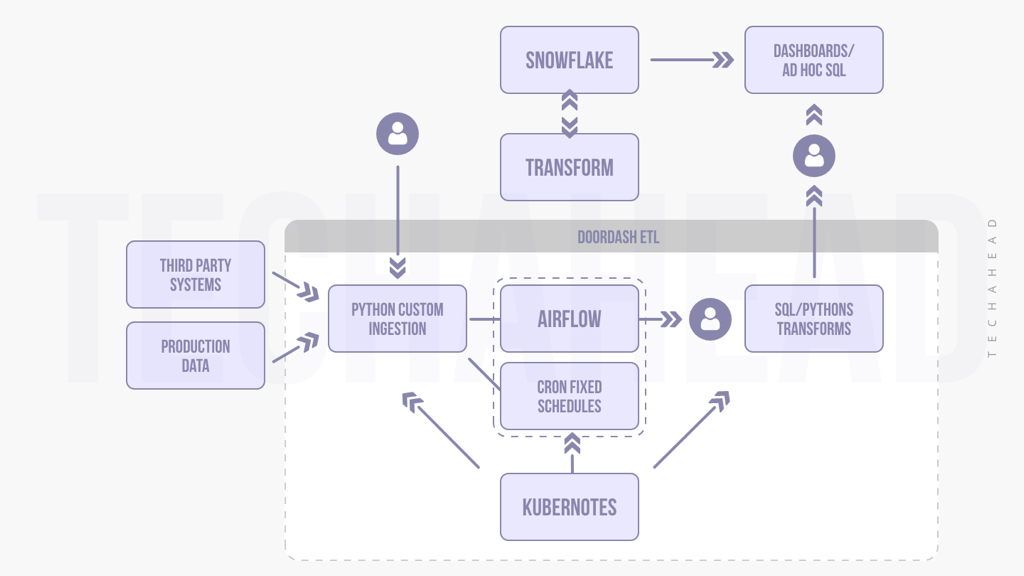
For scheduling the ETL (extract, transform, load) tasks, Apache Kafka and Apache Flink are utilized, to move the transactional data to the analytics database in real-time. n fact, DoorDash processes billions of events daily with near-instant latency to move the transactional data to the analytics data lake, which ensures that their system is upto date with all the needs and wants of the customers.
For scheduling the ETL (extract, transform, load) tasks, Apache Airflow is utilized, to move the transactional data to the analytics database. In fact, DoorDash runs ETL tasks every 24 hours to move the transactional data to the analytics data lake, which ensures that their system is upto date with all the needs and wants of the customers.
This is the reason that different customers are able to see different restaurants and their menus on their home screen, fully customized and tailor-made as per their historical data and their behaviour analysis.
Related: How much does it cost to build a food delivery app like GrubHub?
#3 Solving the routing problem with machine learning
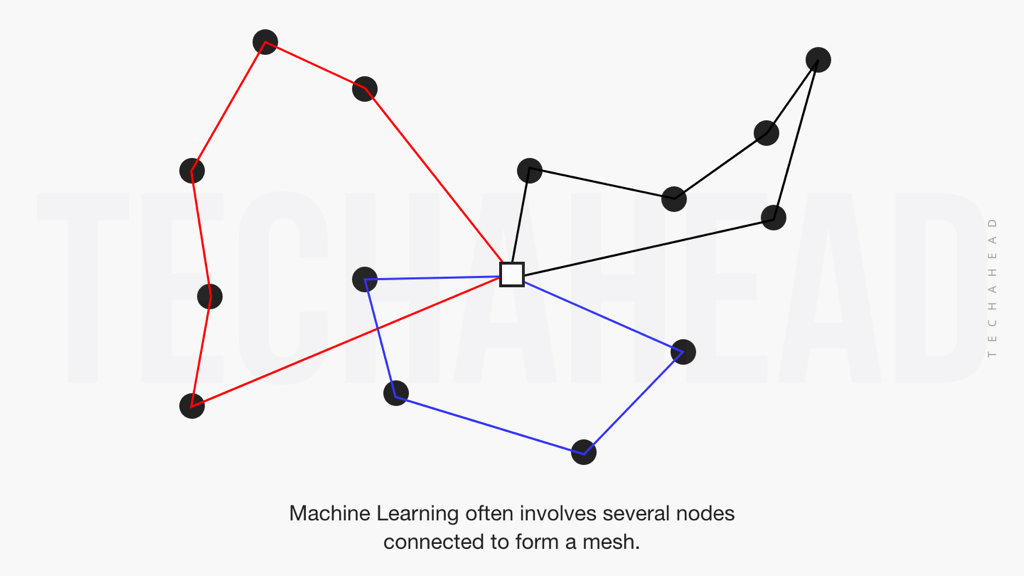
Solving the Last-mile delivery problem is considered the Holy Grail of the ecommerce business model, and DoorDash is solving this with Machine Learning. There are numerous food orders to be delivered, and only a limited number of Dashers and numerous stops in between.
Unlike FedEx or UPS, DoorDash has to solve this problem in real-time, as the food must be delivered within 30-40 minutes.
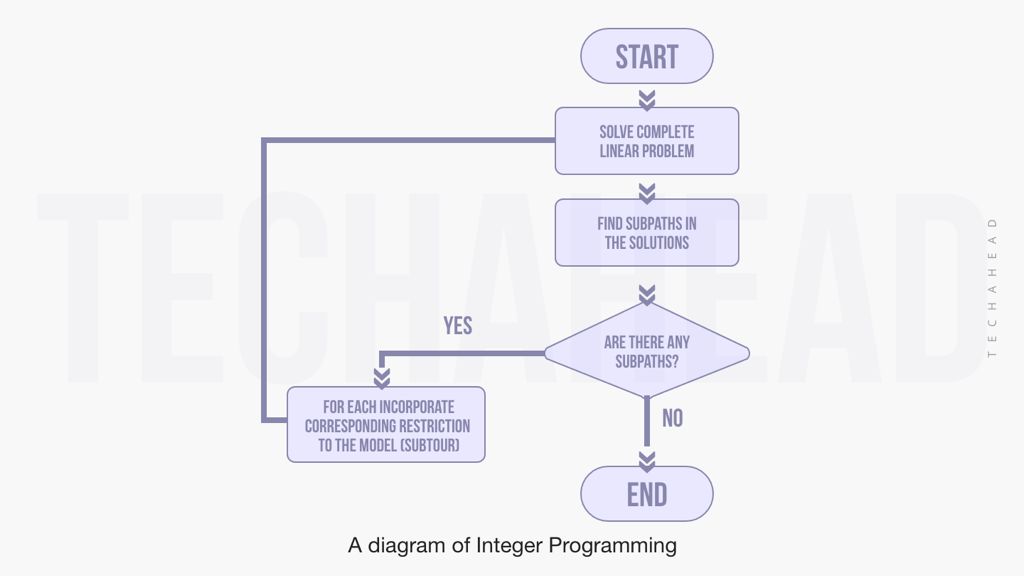
How will DoorDash ensure timely delivery in the least time and with minimal resources?
DoorDash deploys a proprietary dispatch engine known as “DeepRed,” which uses Reinforcement Learning to make sequential decisions. It analyzes thousands of data pointers, such as:
- Real-time food preparation estimates.
- Dasher mode of transport (e-bike, car, or autonomous robot).
- Complex parking data and “time-to-door” metrics.
- Hyper-local traffic and weather patterns.
- Batching potential (stacking orders for efficiency).
And it works, because customers are happy and satisfied with this model, and they seldom complain!

#4 Updating machine learning models
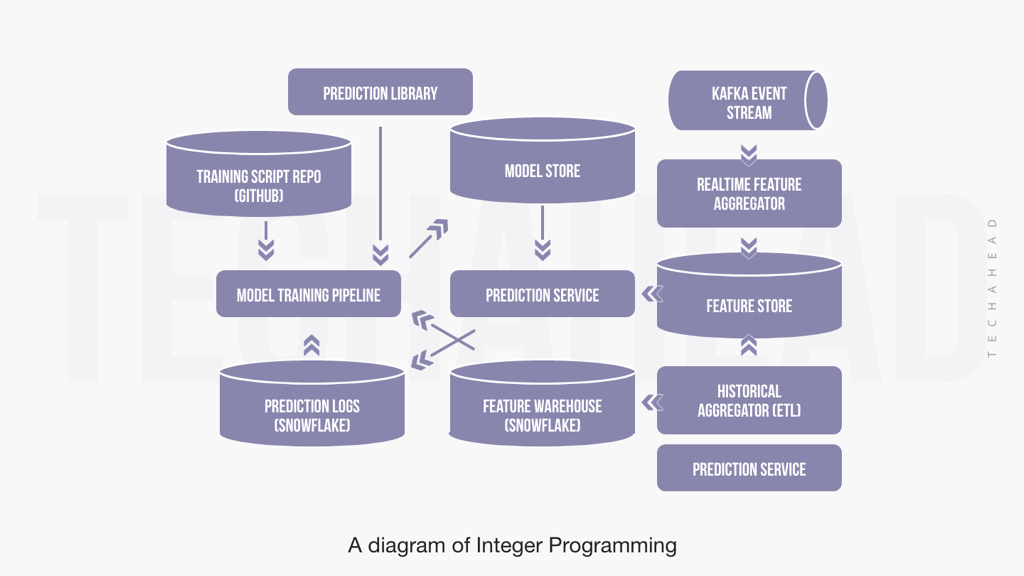
Developing machine learning models based on transactional data and complex variables is relatively straightforward, but updating them continuously requires a robust MLOps pipeline, similar to workflows established by DevOps developers.
Here is what the software engineers did:
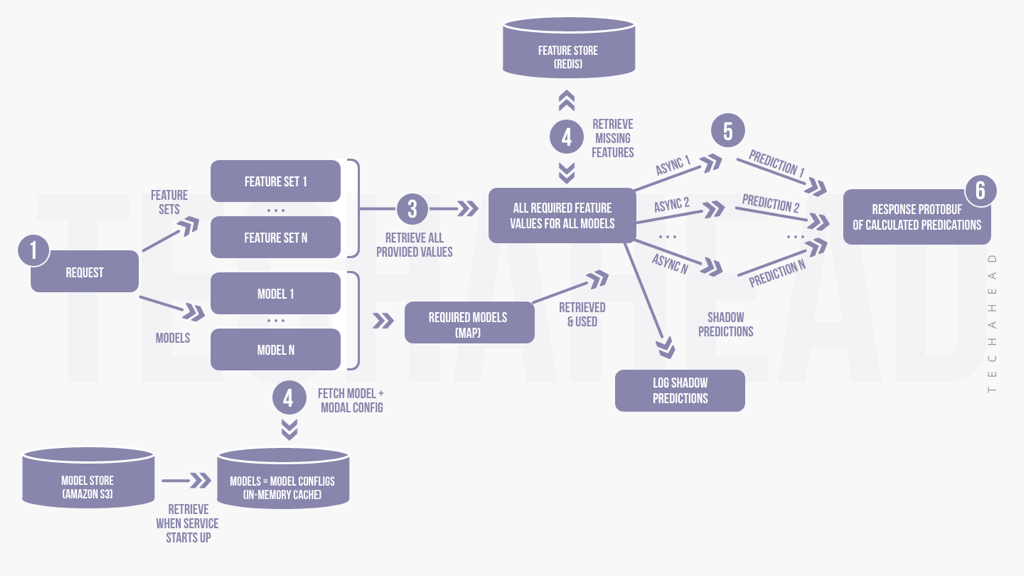
DoorDash first uses existing data to train a model. Once trained, they backtest on historical data and validate performance. Then, they deploy the new model into production in ‘shadow mode’.
In this phase, there are two different machine learning models at work, but only the established production-based model is generating real-time inferences that directly impact the DoorDash delivery process. The new model runs in the background and processes live data with no effect on the user experience. This helps the engineers to compare its performance against the live model safely.
If the shadow metrics meet accuracy thresholds, the number of users exposed to model B (new) will increase via a canary release; meanwhile, model A (old) will be gradually phased out. This concurrent execution of different machine learning models enables DoorDash to seamlessly integrate the most optimized and result-oriented processes, especially for delivery and customer satisfaction.
#5 Predicting demand with machine learning
DoorDash has created powerful Machine Learning models to predict the demand fluctuations, and as per the results from the model, they allocate the resources for optimal results.
And for that, they have a centralized analytics team, which will have Machine Learning Engineer, a Backend Engineer, a Data Scientist and a Product Engineer. They collaborate closely to analyze real-time signals related to specific customer subsets (such as customers aged 30-35 in New York with a preference for Asian cuisine), and subsequently create prediction models for upcoming demand.
If demand shifts, they dynamically adjust the app interface and restaurant recommendations showcased to that subset in real-time.
This is an amazing use case of Machine Learning and Big Data to generate more orders. In fact, industry benchmarks indicate that DoorDash continues to increase conversion rates from search to checkout by optimizing these demand prediction models with deep learning architectures.
#6 Tools deployed for machine learning by DoorDash
They primarily use Python and PyTorch for core machine learning tasks. Large Language Models (LLMs) are now leveraged to optimize the UI through hyper-personalization and predictive user behavior.
For exploratory analysis and visualization, they use Python, alongside Looker and Tableau for business reporting.
There are tons of other examples and use-cases, where DoorDash deploys machine learning such as marketing initiatives, payment confirmations, offers/discounts to be displayed, moment-marketing initiatives, restaurant ranking, profiling of dishes and more, which makes sure that the customers are able to get what they need, as per their timing, and convenience.
If you wish to know more about how Machine Learning and Data Optimization Models can be leveraged to ensure a delightful user experience and to make the customers happy, consult with TechAhead Engineers for mobile app development services, and find out some amazing theories which will help you to up your app’s performance.
Consult with us, if you are planning to launch an app similar to DoorDash, and script an amazing success story with us!
Visit us here to schedule an appointment with our Machine Learning Engineers and Mobile App Architects.