

Staff Augmentation
Access top-tier talent on demand: Dedicated, Hourly, or Flexible.


 Copy Link
 Share on X
 Share on Facebook
 Share on LinkedIn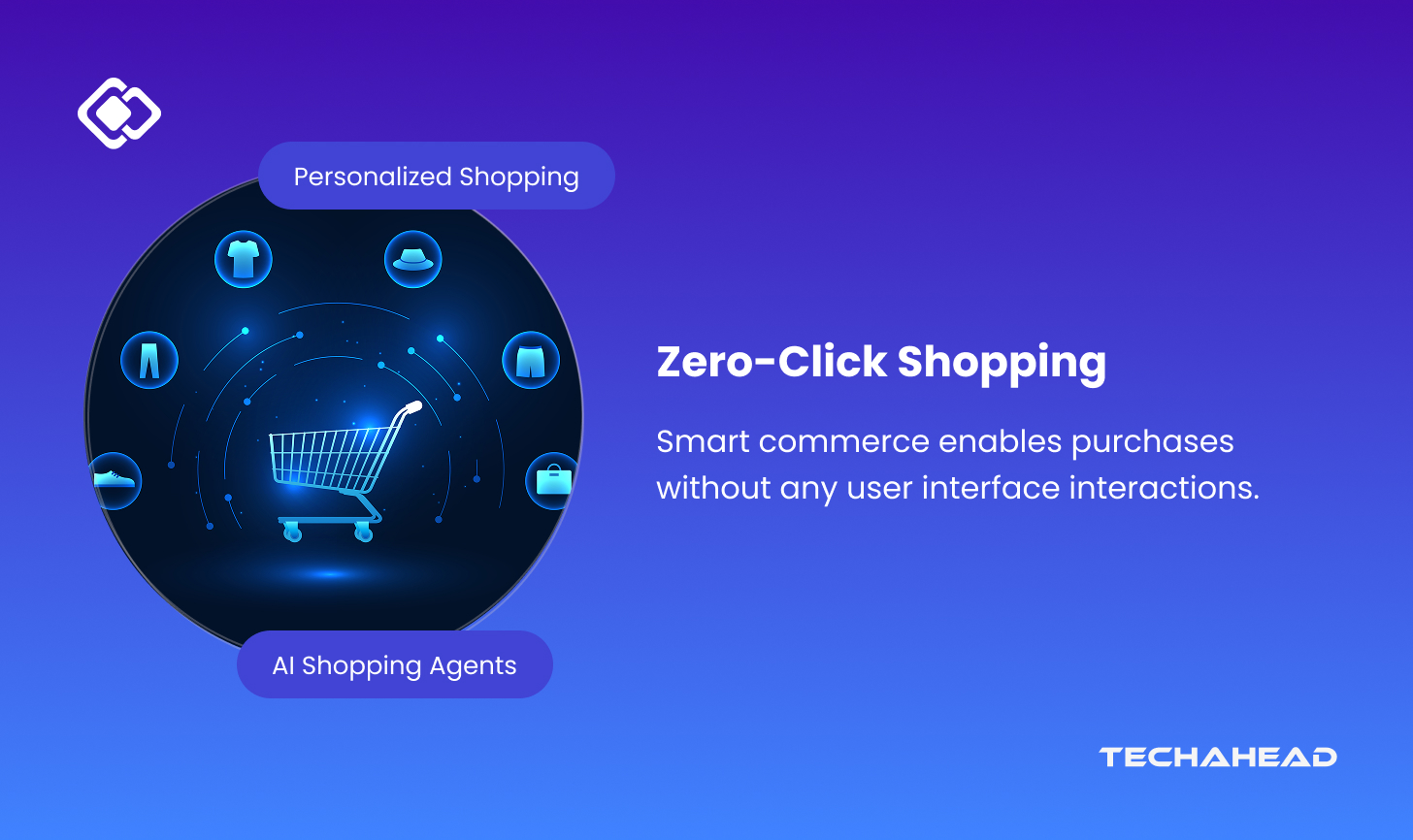
In 2025, browsing is not clicking through endless pages before making a purchase. You are witnessing a seismic shift in consumer behavior that’s reshaping commerce as we know it. Amazon’s revolutionary 1-Click patent, granted in 1999, expired in 2017, but it sparked a zero-click evolution that is accelerating today. In just two years, zero-click interactions jumped from 26% of searches in 2022 to 60% in 2024; that is more than double! A staggering 80% of consumers now rely on zero-click results in at least 40% of their searches, which is fundamentally changing how customers discover and purchase products. What started as Amazon’s frictionless checkout has evolved into AI-powered predictive commerce, voice ordering, and automated replenishment systems. For your enterprise, this is the future of customer experience. In this blog, we are going to explore all the aspects of a zero-click ecommerce shopping experience.
Key Takeaways
- Zero-click shopping eliminates manual website navigation, which allows instant product purchases via advanced technologies.
- Autonomous ecommerce platforms leverage AI and ML for real-time inventory optimization and customer interactions.
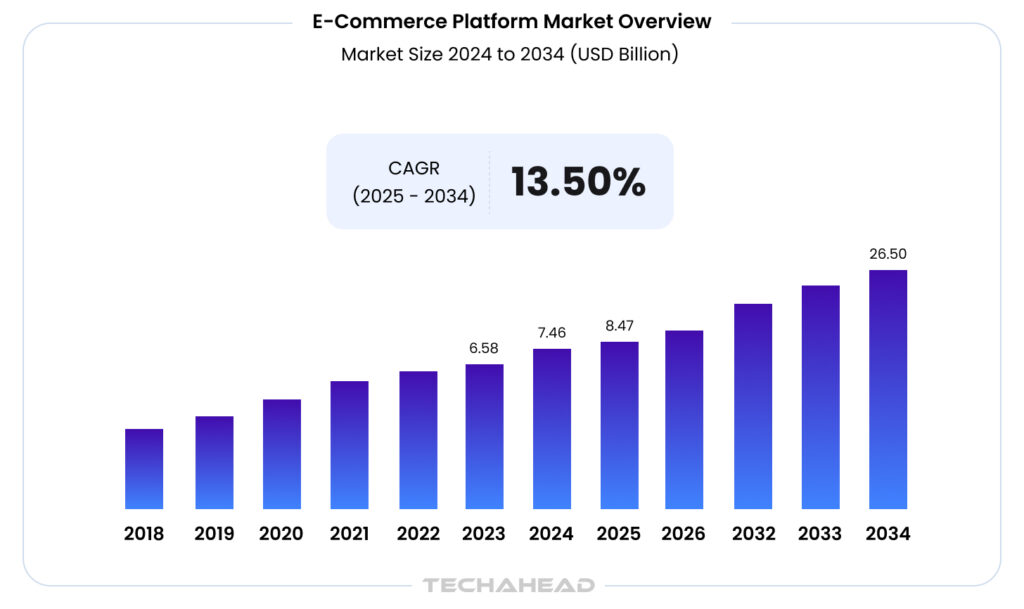
- The ecommerce platform market will grow from $8.47B in 2025 to $26.5B by 2034, a CAGR of 13.5%.
- Hands-free zero-click shopping allows spontaneous purchases anytime, anywhere via smart assistants.
- Zero-click tech boosts customer lifetime value, operational efficiency, and competitive differentiation for enterprises.
What is Zero-Click Shopping?
Zero-Click Shopping is an approach in ecommerce where advanced technologies empower consumers to purchase products instantly without manually navigating websites. You can leverage tools such as context-aware voice assistants and Generative AI agents for zero-click shopping.
This frictionless experience increases convenience, not only drives conversions but also boosts loyalty. Some of the top features are:
- Purchases can be made via biometric-verified voice commands.
- Predictive analytics (powered by advanced AI features) automates recommendations
- It eliminates manual web navigation, checkout steps for shoppers.
- It allows instant, secure one-click or ambient computing transactions.
- Supports personalized, automated product replenishments.
All these features are driving the emergence of zero-click ecommerce platforms that operate with minimal human intervention.
The Rise of Autonomous Ecommerce Platforms
The rise of autonomous ecommerce platforms is reshaping how enterprises operate in the digital marketplace. Such platforms leverage Generative AI & ML to optimize inventory and personalize customer interactions in real time.
Autonomous ecommerce systems also incorporate voice commerce via smart assistants, which allows users to make purchases with simple voice commands. Autonomous Mobile Robots (AMRs) revolutionize order fulfillment to reduce delivery times through automated warehouses and drone-assisted last-mile delivery.
As per the latest Market Research Future Analysis, this autonomous E-Commerce Platform Market is projected to grow from USD 10.46 billion in 2025 to USD 45.60 billion by 2034, with a CAGR of 20.2% during the forecast period.
Moreover, MACH (Microservices, API-first, Cloud-native, Headless) architecture uses flexible, API-driven platforms for better integration of ecommerce mobile app development. As AI-powered personalization becomes the norm, autonomous ecommerce platforms enhance the customer journey with hyper-relevant experiences. But how exactly do these technological advances translate into benefits for everyday shoppers?
How Zero-Click Shopping Transforms the Customer Journey?
The transformation goes beyond simple convenience. It reimagines how consumers discover and purchase products using proactive intelligence.
Seamless Shopping Experience
Zero-click shopping takes the hassle out of online buying by removing the usual steps. It means no more clicking through multiple pages or filling out long forms! Instead, you can complete purchases quickly using voice commands or AI-powered assistants. It means you save precious time, which also makes the shopping experience faster.
Personalized Shopping that Anticipates Your Needs
You can use advanced technologies to analyze your buying behavior, preferences to predict what you might want next. Let’s say, it can be your favorite coffee or essential household items, the system can suggest or even reorder products automatically. The best part? It often happens before you realize your need, which makes the process hyper-personalized.
Hands-Free Convenient Purchases
Imagine you can speak to your smart speaker, and this zero-click shopping experience allows you to shop hands-free anytime, anywhere. Whether you are cooking, driving, or busy with something else, it leads to more spontaneous buying decisions.
Building Trust Through Security
Even though transactions happen faster with less input, security remains a top priority. Technologies like biometric authentication, encrypted payment gateways make sure your purchases are safe. It builds your confidence in using these new autonomous shopping methods.
Enhance Loyalty and Satisfaction
With the zero-click shopping experience, you can streamline the purchase process. Zero-click shopping builds stronger loyalty between you and your favorite brands. A fast & relevant shopping journey makes you more likely to return again, which in turn benefits the enterprise’s growth.
In short, a zero-click shopping experience makes the customer journey faster, more aligned with your modern lifestyle.
TL;DR:Technologies Powering Zero-Click Ecommerce
| # | Technology | Key Function | Main Benefit |
|---|---|---|---|
| 1 | AI & ML | Predicts and automates reorders | Personalized, frictionless buying |
| 2 | Voice & NLP | Voice-based shopping | Hands-free, accurate transactions |
| 3 | IoT Devices | Auto-detects low inventory | Automatic background ordering |
| 4 | Secure Payments | Tokenized, biometric payments | Faster, safer checkouts |
| 5 | AI Agents | Autonomous shopping bots | Instant, intelligent purchases |
| 6 | Biometrics | Fingerprint/face login | Password-free security |
| 7 | Composable Commerce | Modular, API-based stores | Easy customization & scaling |
| 8 | Real-Time Inventory | Smart stock tracking | Auto-replenish & forecasting |
| 9 | Cross-Platform | Unified shopping across devices | Seamless multi-channel experience |
Key Technologies Powering Zero-Click Ecommerce
Now let’s explore the technologies that make these seamless experiences possible behind the scenes. Here, you need to understand these core technologies for implementing autonomous shopping solutions:
#1 Artificial Intelligence (AI) & Machine Learning
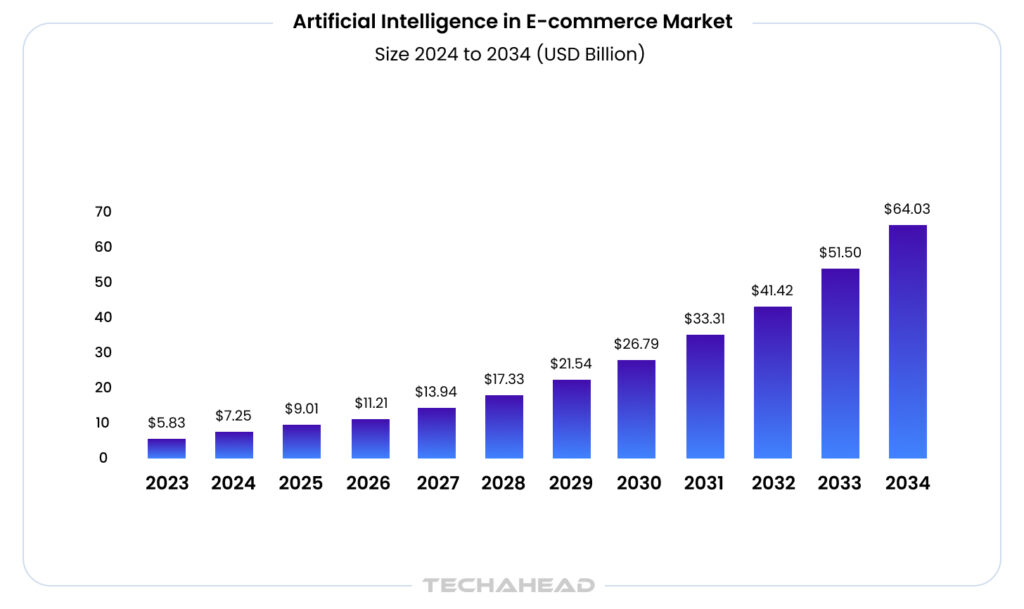
The global artificial intelligence in e-commerce market size is estimated to be USD 9.12 billion in 2025 and is anticipated to reach around USD 64.03 billion by 2034, expanding at a CAGR of 24.34%.
You are probably wondering how AI can eliminate friction from your customers’ buying journey. Here is the reality: AI & machine learning app development creates zero-click experiences for your customers even before they can search.
These technologies analyze purchasing patterns to automatically:
- Trigger reorders when inventory runs low
- Suggest products at the perfect moment using predictive modeling
- Personalize pricing and promotions in real-time
Companies are making use of Agenti AI services to read, learn, and predict what you, as a customer, want. The system learns that Customer A always orders office supplies on the 15th of each month, so it proactively sends a one-click reorder notification on the same day; it helps to convert the target audience better. Moreover, GenAI-driven algorithms achieve up to 35% higher conversion rates, eliminating the need for customers to navigate through multiple pages.
#2 Voice Assistants & Natural Language Processing (NLP)
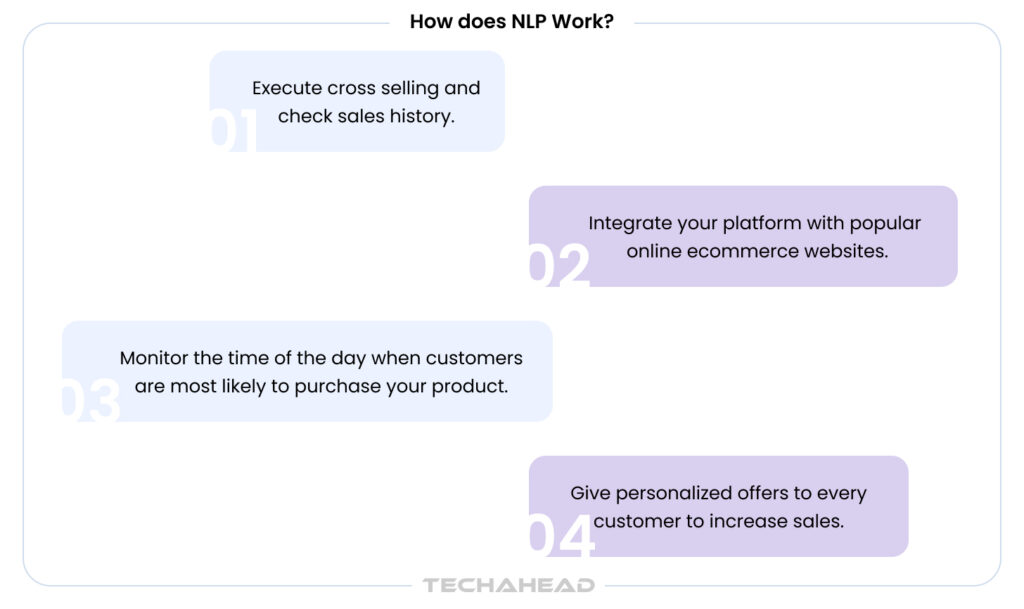
Your customers are already talking to next-gen assistants like Apple Intelligence and Gemini daily. Why not let them shop the same way? Voice commerce powered by NLP transforms casual conversations into completed transactions. When someone says, “I need more printer paper,” advanced Natural Language Processing does not just understand the words; it interprets context and your intent. The real magic happens in the background. It can:
- Process natural language queries without specific commands
- Access customer purchase history instantly
- Execute orders through simple voice confirmation
For internal workflow management, enterprises reorder supplies during meetings, warehouse managers check inventory while walking the floor; busy executives can make purchases hands-free. The truth is that the NLP accuracy has improved to 95%+ in understanding commercial intent, which makes the voice orders as reliable as traditional click-based purchases.
#3 Internet of Things (IoT) & Smart Devices
Use of IoT devices has significantly changed the game. Think of IoT as your silent sales team; it never sleeps. Smart devices throughout your customers’ operations detect when supplies are running low. Such smart devices also monitor:
- Inventory levels in real-time
- Equipment maintenance schedules
- Usage patterns and consumption rates
When your customer’s smart coffee machine detects low bean levels, it can automatically order a replacement shipment from your platform using 5G low-latency networks.
In this way, manufacturing equipment schedules maintenance and parts delivery before breakdowns occur. The beauty of IoT-driven commerce is that it operates completely in the background; your customers’ operations continue seamlessly while purchases happen automatically.
#4 Secure Payment Gateways
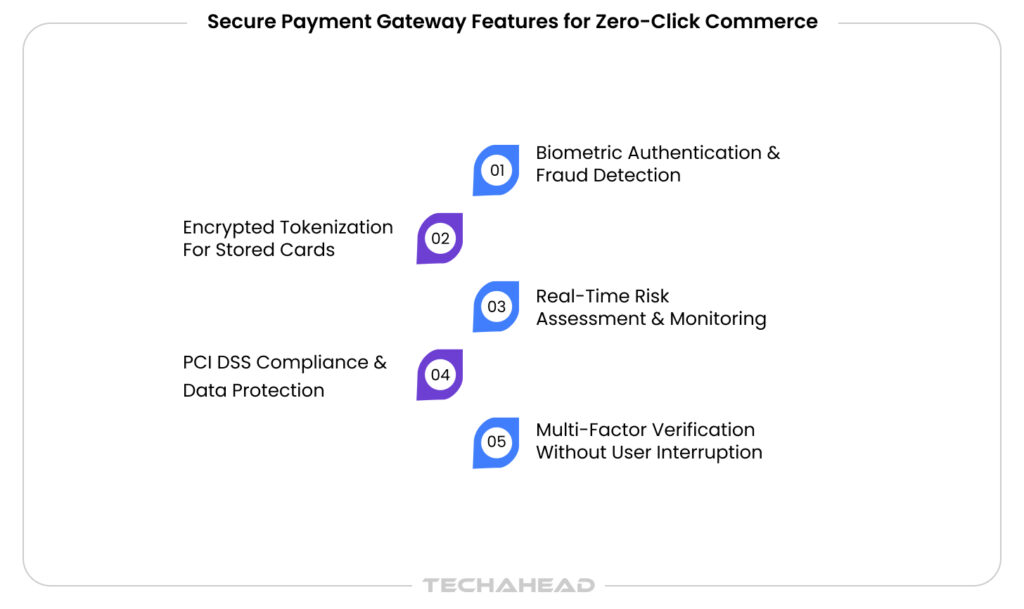
You cannot have zero-click commerce without advanced security. Modern tokenization technology stores encrypted payment credentials for instant transactions without exposing sensitive data. Here is how enterprise-grade security allows frictionless commerce:
- Biometric-backed Passkeys replace password entry
- Agentic tokens process payments in milliseconds
- Multi-factor authentication happens seamlessly
- Behavioral risk analysis happens seamlessly in the background
Advanced tokenization reduces payment processing time by up to 60% compared to traditional checkout flows. The enterprise advantage is clear: your customers experience one-click ordering, and you provide them with the security close to a country’s top banks.
#5 Integrate AI Shopping Agents
Your customers want immediate answers and instant solutions. Autonomous shopping agents provide personalized assistants. They understand context, remember preferences, and execute purchases. Unlike basic chatbots, these Agentic AI systems leverage Large Action Models (LAMs) to execute complex tasks and provide truly intelligent recommendations. These agents process natural language queries, access complete purchase histories, and execute complex orders without human intervention.
#6 Biometric Authentication
When you need security and speed, the next-gen AI-powered biometric authentication delivers both; it replaces passwords and checkout forms with fingerprint scans, facial recognition, palm signatures, or voice patterns. This technology creates truly zero-click experiences because the customer becomes their own password. The global market for these systems has reached $51.22 billion in 2025. The main advantages are:
- Sub-second authentication without typing
- Higher security than traditional passwords
- Seamless integration across devices
Modern biometric systems authenticate customers across different devices that exceed traditional login methods. For customers, it means they approve e-commerce orders, make purchases using facial recognition or fingerprint scans. The benefit is that it eliminates the friction of remembering credentials that satisfy strict 2025 compliance requirements.
#7 Composable Commerce Platforms
Composable commerce is a modern e-commerce approach where businesses build unique digital storefronts that integrate Packaged Business Capabilities (PBCs) through APIs, rather than relying on a single, all-in-one monolithic platform. In 2025, this has evolved into the MACH standard (Microservices, API-first, Cloud-native, Headless). The global composable market is valued at $7.55 billion in 2025. Such platforms offer:
- Micro-frontends for rapid, independent customization
- API-first orchestration for seamless third-party integrations
- Headless commerce customization to deploy on any device (IoT, WatchOS, VR)
Think of composable commerce as digital LEGO blocks. You can build exactly the shopping experience your enterprise customers need.
Want to integrate with their existing ERP system? There is an API for that. Need custom approval workflows for large purchases? You can build that functionality without rebuilding your entire platform.
#8 Real-Time Inventory Management
Nothing kills zero-click commerce faster than “out of stock” messages. That is why you need Computer Vision-powered inventory management, which means automated order, voice purchase, and IoT-triggered reorder that fulfill the needs of your customers. It means the system offers complete visibility into stock levels. It also provides:
- Instant stock updates (99.9% accuracy) across all sales channels
- Automatic reorder points and supplier notifications
- Generative Demand Forecasting to predict spikes before they happen
For enterprise customers, real-time inventory visibility means they confidently set up automated reordering systems without worrying about stockouts. The system even suggests alternative products when primary items run low, or automatically adjusts order quantities based on seasonal demand patterns.
#9 Cross-Platform Commerce Ecosystem
The reality is that your customers do not live in a single-platform world; that is why you need a cross-platform application developer to build you a unified ecosystem with integration of zero-click commerce. It means you are providing a zero-click experience that helps them purchase across every system your customers use daily. It allows purchasing from:
- ERP, procurement software interfaces (Embedded Commerce)
- Mobile apps and web portals simultaneously
- Voice assistants, IoT device networks
- Social media messaging platforms (Social Commerce)
When the integration is done correctly, your customers start a purchase on their laptop, modify it through a voice assistant, and complete it on their mobile device or even through a smart watch. In short, it synchronizes workflows across every touchpoint. It is true that these technologies create compelling business opportunities that directly impact enterprise growth.
Benefits for Enterprise Ecommerce Brands
Smart implementation of zero-click technologies delivers measurable results that justify investment and drive sustainable advantages:
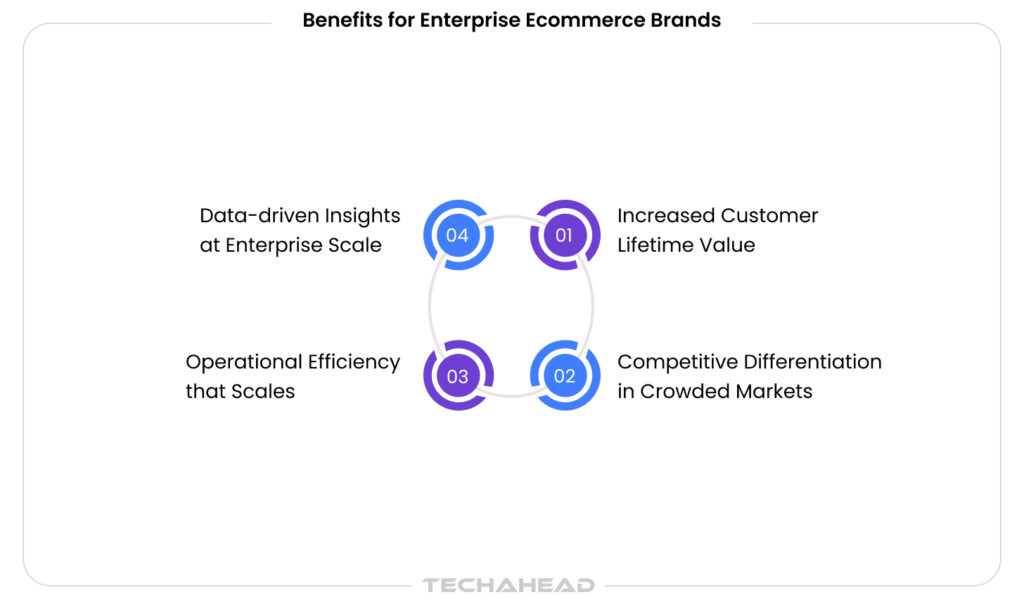
Increased Customer Lifetime Value (CLV)
When you eliminate friction from the buying process, your customers purchase more frequently. Recent 2025 data reveal that a 5% increase in retention via zero-click convenience can boost profits by 25-95%. Zero-click shopping removes the psychological barriers that cause cart abandonment. You see average order values increase because “smart subscriptions” and programmatic reordering cause customers to act on impulse without second-guessing themselves. Brands utilizing these autonomous tools are seeing a 30% jump in repeat purchase rates.
Operational Efficiency that Scales
Here is what most enterprise leaders do not realize about zero-click commerce: it does not just improve customer experience; it transforms your operational efficiency. You are looking at a 40 to 60% reduction in customer service inquiries, fewer abandoned cart recovery campaigns, and streamlined order processing. When customers reorder with a single voice command or through automated IoT triggers, your team spends less time on routine transactions. Overall, enterprises report a 35% decrease in operational costs within the first year of adopting agentic workflows.
Autonomous Problem Resolution
In 2025, businesses are not just selling faster; they are also fixing problems before they even occur using the advanced predictive AI models integrated into their systems. Zero-click systems now leverage “Proactive AI” to detect issues like shipping delays or stock shortages in real-time. The system autonomously initiates solutions, such as upgrading shipping or offering a discount. AI agents can detect and remove issues before the customer even knows something went wrong. This “silent” service builds unbreakable trust and reduces churn by preventing negative experiences entirely.
Data-driven Insights at Enterprise Scale
Zero-click systems generate rich behavioral data that traditional e-commerce misses entirely. Instead of passive reports, you get “Cognitive Intelligence.” You will understand not just what customers buy, but also predict when they are most likely to purchase and which environmental triggers drive demand. Your AI agents then autonomously adjust dynamic pricing and offer personalized experiences, driving revenue growth across your entire customer base without manual analysis.
However, real-world success stories present how forward-thinking enterprises are already capitalizing on these autonomous shopping opportunities.
Case Studies: Enterprises Leading in Autonomous Shopping
Leading companies have already transformed theory into practice that generates millions in additional revenue through strategic zero-click implementations. For example:
Amazon
Amazon revolutionized autonomous shopping through Dash Buttons and Amazon Go stores. Dash Buttons allowed one-press reordering of frequently used products, while Amazon Go eliminated checkout entirely through sensor technology and computer vision. Customers simply walk in, take items, and leave with automatic billing.
The results were impressive: Dash Button users showed 20% higher repeat purchase rates, while Amazon Go achieved 40% faster transaction times than conventional stores. These innovations proved autonomous shopping could work at enterprise scale.
Walmart
Walmart implemented AI-driven autonomous shopping systems across its retail network. Their platform processes over 2 billion inventory data points daily, with 85% of reordering decisions handled autonomously, reducing stockouts by 60%. Walmart has also successfully scaled its Drone Delivery network across five major U.S. states, completing over 150,000 autonomous deliveries
For enterprise customers, Walmart’s B2B marketplace offers automated purchasing agreements that trigger reorders based on consumption patterns. This autonomous approach increased enterprise customer retention by 35% while reducing procurement costs by 22%. It proves that traditional retailers successfully leverage zero-click technology for both consumer and business markets.
Starbucks
In 2025, Starbucks redefined zero-click personalization with its Deep Brew AI and the new “Green Dot Assist” agent. The system uses reinforcement learning to predict exactly what a customer wants based on weather, time of day, and past behavior, often suggesting the order before the app is even opened. Their Green Dot Assist (a Generative AI agent) can listen to drive-thru orders in real-time to auto-fill the POS system, reducing wait times. Additionally, the predictive “Deep Brew” engine drove a 37% lift in repeat purchases for loyalty members, while the autonomous order-taking system cut drive-thru times by 14%
As you can see from these enterprise case studies, autonomous shopping has already moved beyond experimentation to become a powerful driver of revenue and customer loyalty. It is time to look ahead at how emerging technologies will further redefine the boundaries of zero-click commerce.
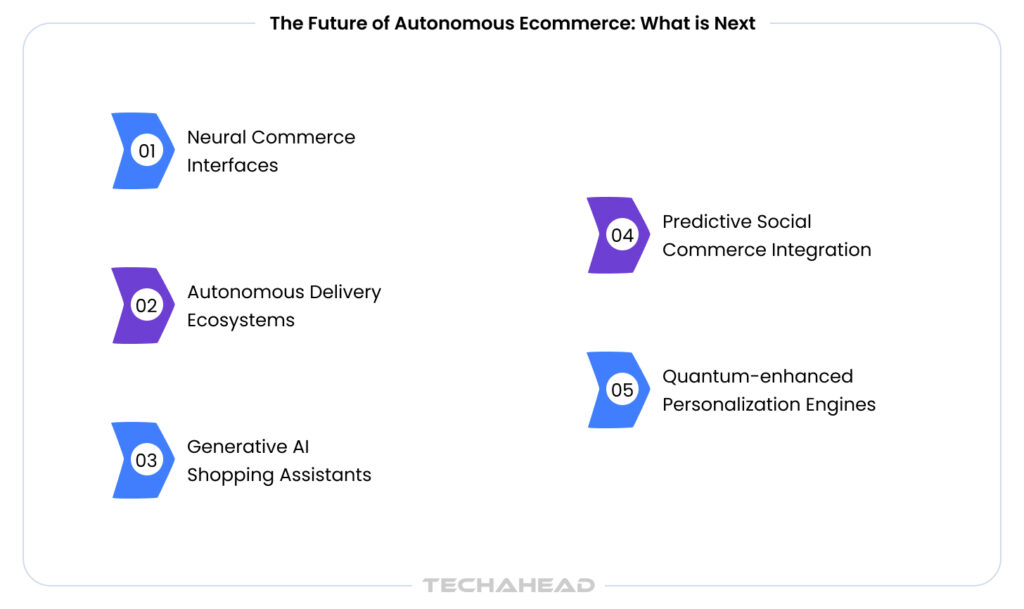
The Future of Autonomous Ecommerce: What is Next?
As zero-click shopping continues to evolve, the next wave of autonomous ecommerce will be fueled by technologies that promise to make purchasing even more seamless. Let’s explore key innovations:
The Future of Autonomous Ecommerce: What is Next?
As zero-click shopping continues to evolve, the next wave of autonomous ecommerce will be fueled by technologies that promise to make purchasing even more seamless. Let’s explore key innovations:
1. Neural Commerce Interfaces
Brain-computer interface technology is projected to reach $12.11 billion by 2035, with companies like Neuralink already implanting devices in humans. Enterprise retailers will soon allow customers to make purchases through thought alone, which eliminates even voice commands. Neural commerce will process intent directly from brain signals that make high-frequency purchases.
2. Autonomous Delivery Ecosystems
By 2030, the autonomous last-mile delivery market is expected to hit $6.2 billion. Sidewalk robots and heavy-lift drones will revolutionize logistics, offering sub-30-minute service. Enterprise retailers will integrate “Predictive Fulfillment” networks that dispatch products to local hubs before customers consciously realize they need them. This closed-loop system will optimize supply chain costs by up to 40%.
3. Generative AI Shopping Assistants
Conversational search tools using natural language across e-commerce platforms. The Generative AI market in retail is set to skyrocket to $109.37 billion by 2030. Enterprise customers will interact with hyper-intelligent AI agents that understand complex procurement requirements or execute purchases through natural conversation. It revolutionizes B2B commerce relationships and decision-making processes.
4. Predictive Social Commerce Integration
Social commerce platforms like Instagram, TikTok, and Pinterest are evolving into buying experiences. This market could turn into a $6.2 trillion ecosystem by 20130, as per some studies. Enterprise retailers will leverage social signals, employee behavior patterns, and workplace trends to automatically trigger B2B purchases. AI will analyze team collaboration tools, project timelines, and corporate social activity to predict business needs.
5. Quantum-enhanced Personalization Engines
Advanced quantum computing allows real-time analysis of infinite customer variables that create hyper-personalized autonomous shopping experiences. Enterprise retailers will process millions of data points simultaneously, from supply chain fluctuations to employee productivity patterns. It delivers perfectly timed product recommendations and automated procurement decisions for enterprises.
Conclusion
The truth is that enterprises that delay adoption risk being left behind by competitors that are leveraging the Artificial Intelligence services. Zero-click commerce represents the most significant shift in customer expectations since the smartphone. We have discussed the Generative and Agentic technologies that shape tomorrow’s ecommerce; today’s early adopters will become the next market leaders.
Your enterprise customers expect frictionless experiences that anticipate their needs, automate routine purchases, and deliver value without complexity. So the question is, are you ready to transform your ecommerce platform into a zero-click autonomous shopping powerhouse? Partner with TechAhead to build enterprise solutions that keep you ahead of the competition. Contact us today to discuss your zero-click commerce strategy.

Can zero-click commerce integrate with our existing ERP and procurement systems?
Yes, modern autonomous shopping platforms are built with API-first architecture specifically designed to integrate with enterprise systems like SAP, Oracle, Microsoft Dynamics, and custom procurement platforms. Most integrations can be completed without disrupting existing workflows.
What happens if the autonomous system makes incorrect purchases?
Enterprise-grade autonomous shopping includes built-in safeguards like spending limits, approval workflows for large orders, and machine learning algorithms that improve accuracy over time. Most systems achieve 95%+ accuracy within 30 days of deployment, with easy return/exchange processes for any errors.
How do we maintain control over purchasing decisions with autonomous systems?
You retain complete control through customizable rules and real-time monitoring dashboards. Autonomous systems operate within parameters you define, and you can override or pause automation at any time.
Is zero-click commerce secure enough for enterprise-level transactions?
Yes, autonomous shopping platforms use bank-level security including tokenization, biometric authentication, encrypted transactions. Many systems exceed traditional security standards because they eliminate human error points like password reuse or phishing susceptibility.
Can autonomous shopping scale with our business growth?
Cloud-based autonomous platforms are designed for elastic scaling that handle everything from startup volumes to enterprise-scale transactions. Most solutions offer usage-based pricing that grows with your business without requiring infrastructure investments.