

Staff Augmentation
Access top-tier talent on demand: Dedicated, Hourly, or Flexible.


 Copy Link
 Share on X
 Share on Facebook
 Share on LinkedIn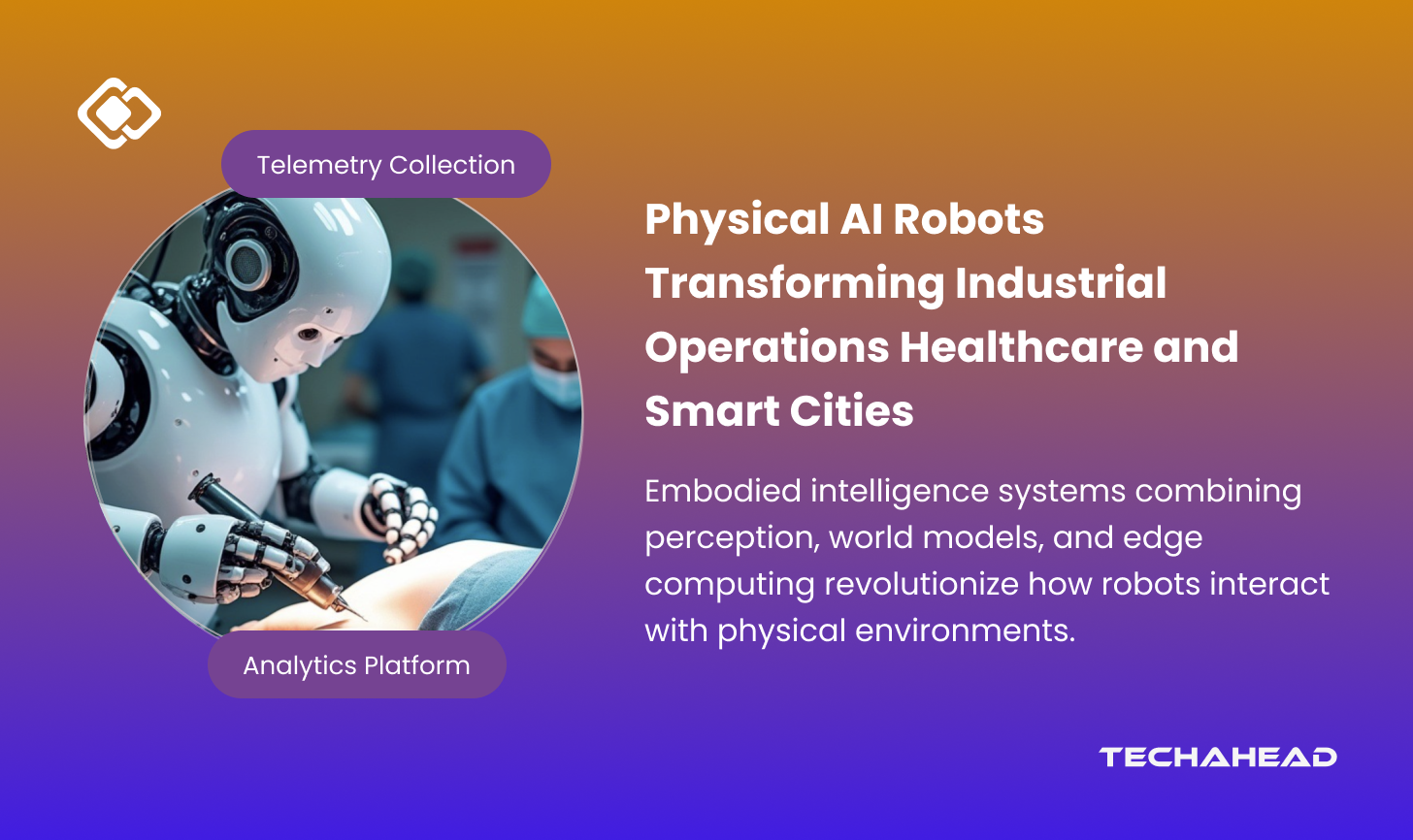
Artificial intelligence has spent decades confined to screens: Analyzing data, generating text, recognizing images.
But in 2025 & beyond, AI is breaking free from its digital prison and entering the physical world.
This transition marks one of the most profound technological shifts of our era: the rise of Physical AI, where artificial intelligence not only thinks but also moves, manipulates, and interacts with the real world through robotic embodiment.
Physical AI, as defined by Citi Research, represents “any physical process learning from and applying AI” in industrial markets. Unlike chatbots that converse or algorithms that recommend products, Physical AI systems perceive their environment through sensors, reason about complex spatial tasks, and take physical actions, like welding car parts, performing surgery, inspecting railway infrastructure, or delivering packages through crowded city streets.
Key Takeaways
- Physical AI market explodes from $4.12B in 2024 to $61.19B by 2034
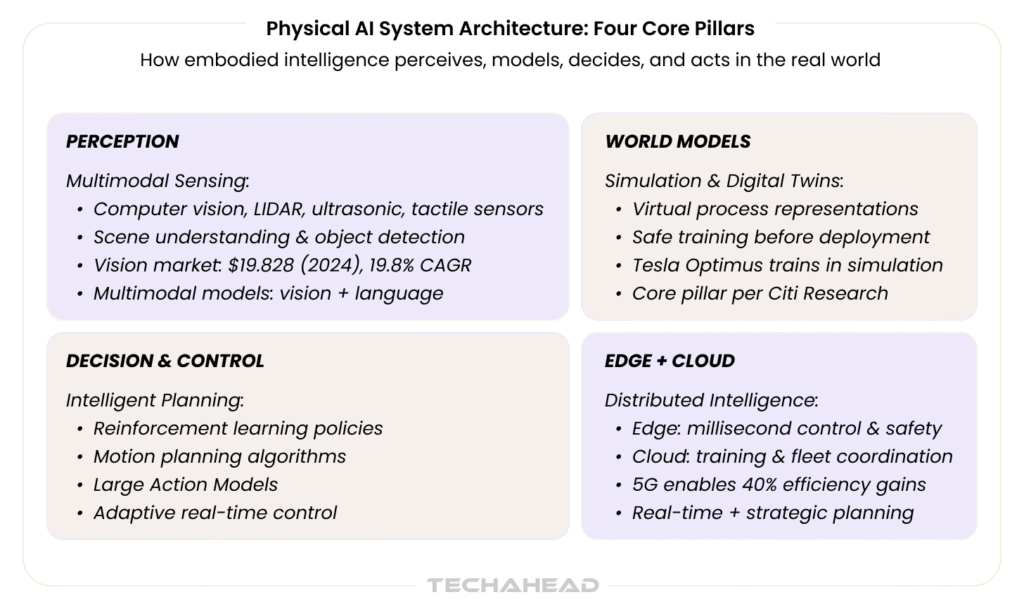
- Four pillars power embodied intelligence: perception, world models, decision, edge-cloud integration
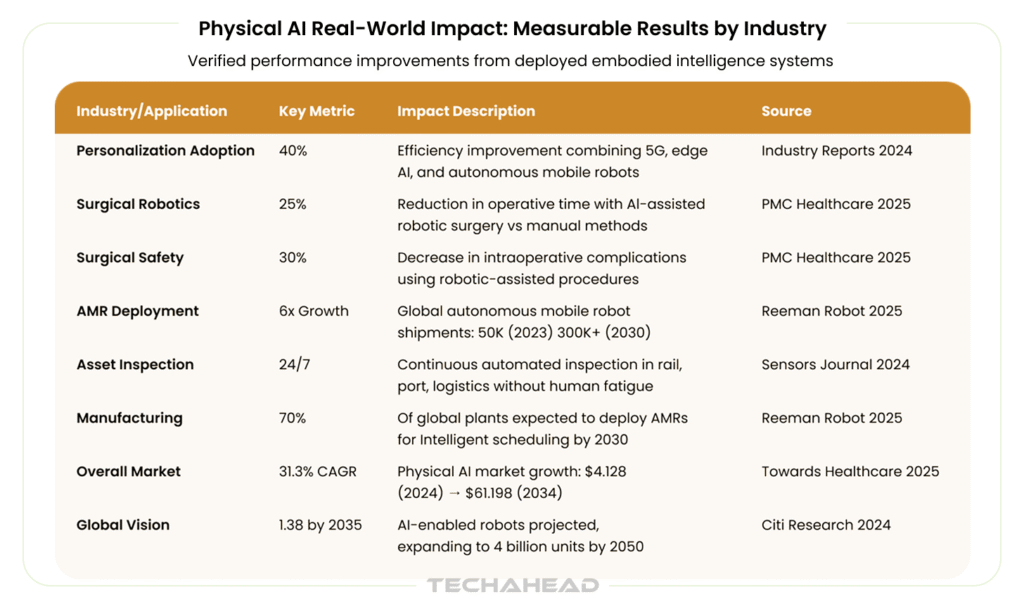
- AI-assisted robotic surgery reduces operative time 25% and complications 30% significantly
- Global AMR shipments grow 6x from 50,000 units to 300,000 by 2030
- 70% of manufacturing plants worldwide will deploy AMRs for production by 2030
- Citi Research projects 1.3 billion AI robots by 2035, 4 billion by 2050
- Digital twins and simulation enable safe training before real-world robot deployment
The market momentum tells a compelling story!
According to multiple industry analyses, the global Physical AI market was valued at approximately $4.12 billion in 2024 and is projected to reach $61.19 billion by 2034, representing a staggering 31.26% compound annual growth rate. This explosive growth reflects a convergence of enabling technologies: advanced robotics hardware, sophisticated AI models, abundant industrial data, and robust edge computing infrastructure.
Consider the scale of transformation ahead. There are currently about 4 million industrial robots deployed globally. Citi Research analysis suggests that if robots displace just 30% of manufacturing tasks over the next decade, the installed base could reach approximately 30 million units, growing at over 20% annually.
More broadly, Citi’s projections suggest 1.3 billion AI-enabled robots by 2035 and 4 billion by 2050, fundamentally reshaping how work gets done across every sector of the economy.
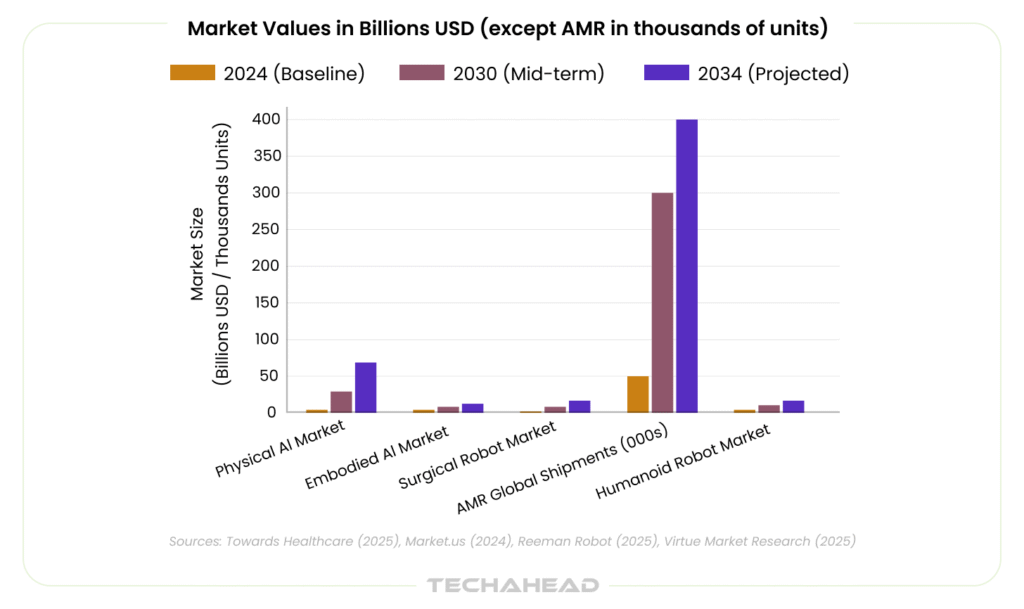
Citi Research identifies Physical AI as being “at an inflection point for industrial markets, marked by abundant capital, maturing technology, and a diversifying ecosystem.” Unlike generative AI investments dominated by hyperscalers building data centers, Physical AI adoption follows domain-specific patterns, each industry deploying embodied intelligence to solve unique operational challenges.
This creates opportunities for engineering partners like TechAhead who can bridge cutting-edge AI research and real-world deployment, building the mobile apps, cloud platforms, and integration layers that make Physical AI systems practical for factory floors, hospitals, and smart cities.

What Exactly Is Physical AI? From Embodied Intelligence to Real-World Systems
Embodied intelligence refers to AI systems that learn and act through a physical body in an environment, tightly coupling perception, cognition, and action. Physical AI is the engineering realization of this concept, such as robots, drones, autonomous vehicles, and smart devices, where AI software directly controls physical behavior and adapts based on real-world feedback.
Key Pillars of Physical AI Systems
1. Perception: Multimodal Sensing and Scene Understanding
Physical AI systems perceive the world through rich sensor arrays: cameras for vision, LiDAR for 3D mapping, ultrasonic sensors for proximity detection, tactile sensors for touch feedback, and more.
Computer vision models process these inputs to detect objects, recognize scenes, track motion, and understand spatial relationships. According to Grand View Research, the global computer vision market reached $19.82 billion in 2024 and is expected to grow at 19.8% CAGR through 2030, providing the perceptual foundation for embodied systems.
Source: TechAhead AI Team
Modern perception goes beyond simple object detection. Systems now employ multimodal large language models that can understand scenes through both vision and language, enabling robots to follow natural language instructions while interpreting visual contexts. Research shows publications on embodied AI in healthcare increased nearly sevenfold from 2019 to 2024, with dense interconnections across computer vision, robotics, and cognitive science driving rapid innovation.
2. World Models and Simulation: Digital Twins as Training Grounds
Citi Research identifies three pillars essential for Physical AI success in industrial settings: digital twin models, real-world data gathering through edge devices, and simulation. Digital twins, which is the virtual representations of physical processes and assets, enable AI systems to learn and optimize before deployment in the real world.
Simulation environments allow robots to practice millions of scenarios that would be impractical, dangerous, or expensive to replicate physically.
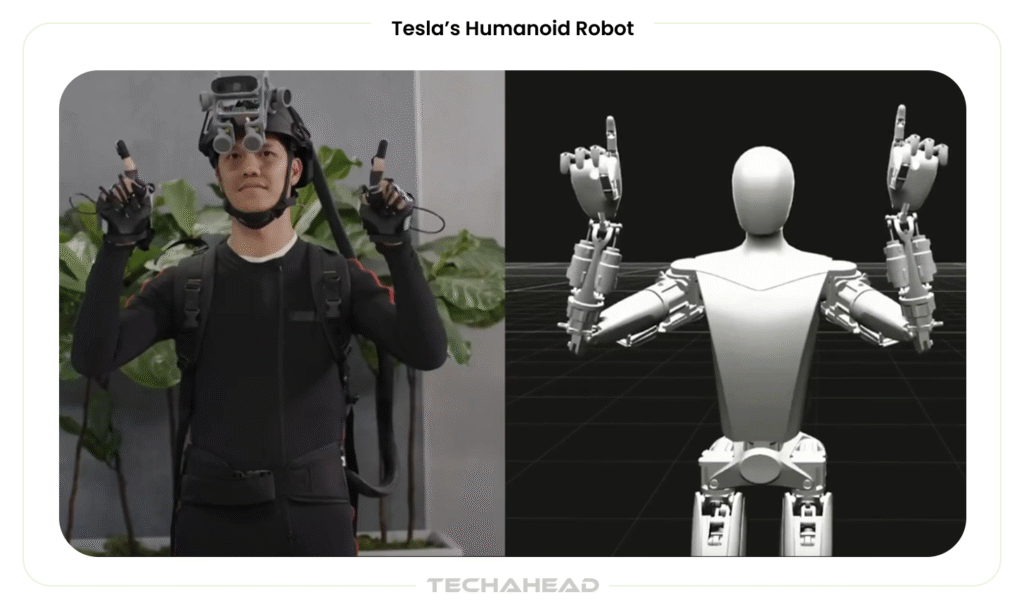
Tesla’s Optimus humanoid robot, planned for mass production in 2025, trains extensively in simulation before transferring learned behaviors to physical hardware. This sim-to-real transfer, while challenging due to reality gaps, dramatically accelerates learning and reduces the cost of acquiring robust behaviors.
3. Decision and Control: Planning, Learning, and Adaptation
Physical AI systems employ reinforcement learning, motion planning, and control algorithms to decide what actions to take. Unlike pre-programmed robots following fixed scripts, embodied AI agents learn optimal policies through experience, adapt to changing conditions, and coordinate with humans and other robots.
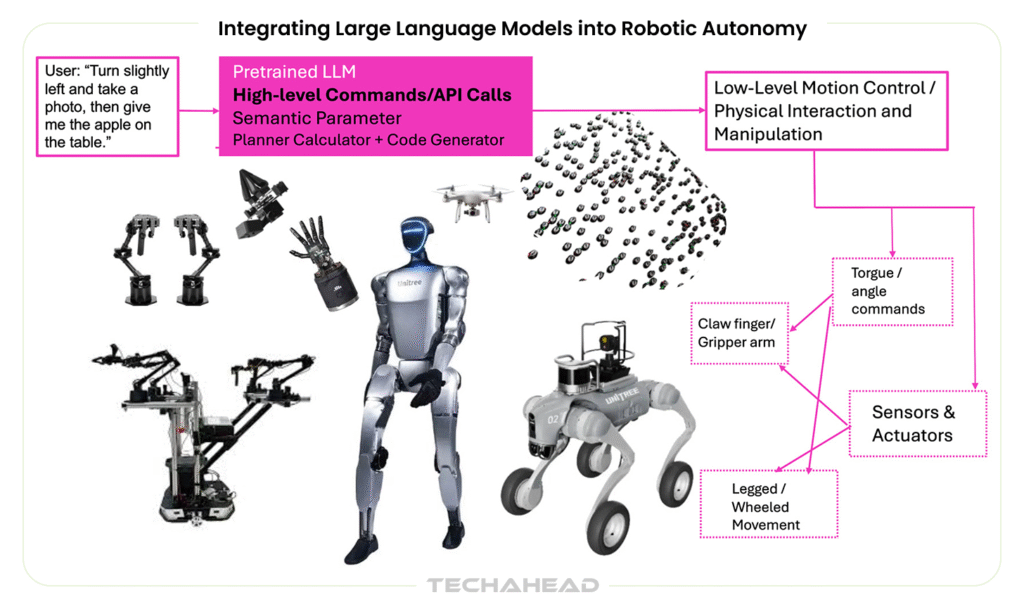
Recent advances in action-based AI and Large Action Models enable robots to translate high-level instructions into complex motor behaviors. For surgical robots, this means converting a surgeon’s intent into precise instrument motions. For warehouse robots, it means dynamically replanning routes when obstacles appear or priorities change.
4. Edge and Cloud Integration: Distributed Intelligence
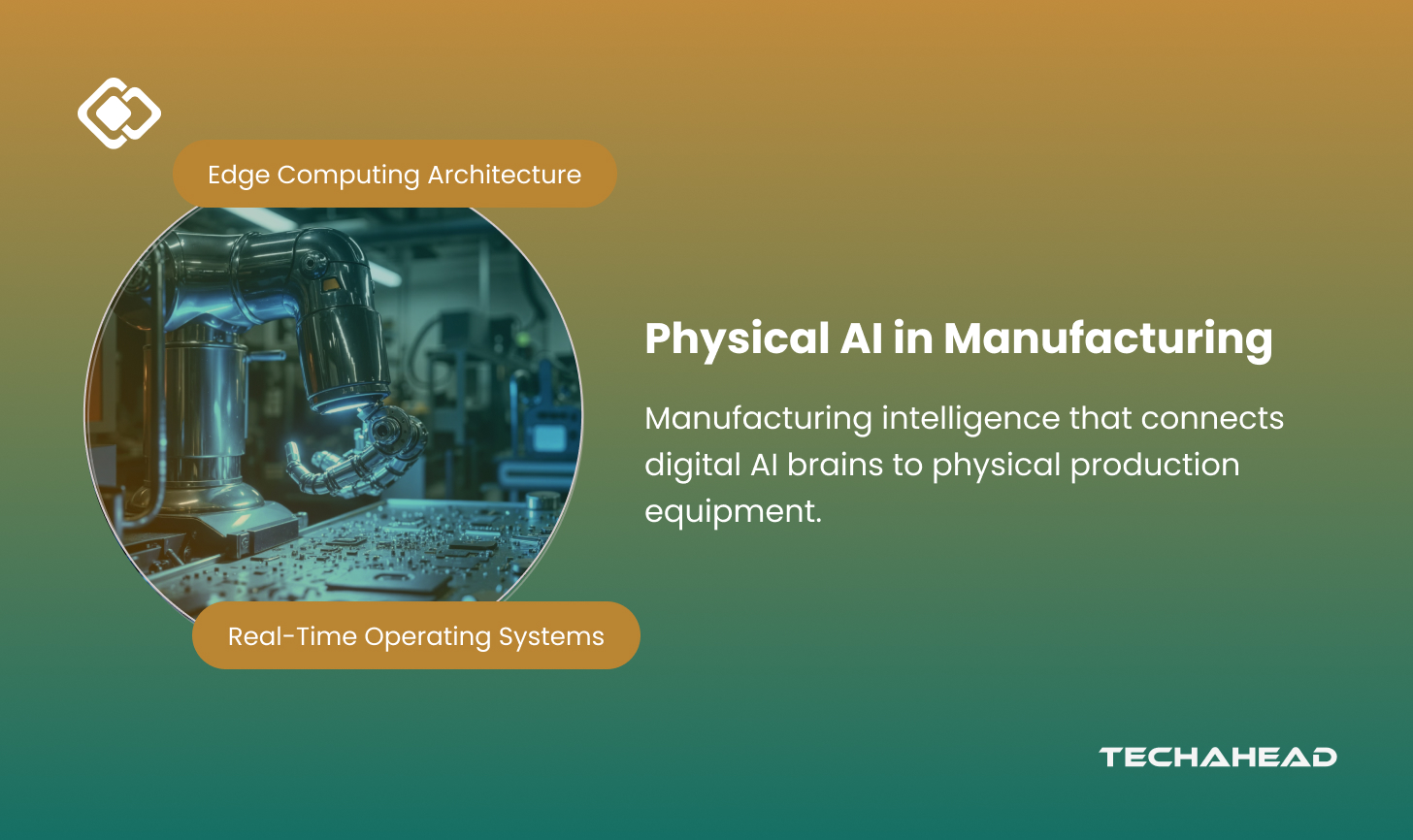
Physical AI requires careful orchestration between edge and cloud computing. Low-latency control loops, such as stopping a robot before collision, adjusting a surgical instrument in real-time, must execute on-device within milliseconds. Meanwhile, cloud infrastructure handles compute-intensive tasks: training new models, aggregating fleet data, coordinating multi-robot systems, and providing high-level planning.
The rollout of 5G networks significantly enhances this architecture.
Reports indicate that combining 5G, edge computing, and robotics in warehouse operations can improve efficiency by up to 40%, enabling responsive automation that adapts to real-time logistics demands.
Distinguishing Physical AI from “Pure” Software AI
Physical AI faces constraints that pure software AI systems don’t encounter. Safety becomes paramount: A simple language model hallucination frustrates users, but a surgical robot error can cause serious harm.
Latency tolerances are stricter; perception must handle real-world sensor noise and occlusion; robots must navigate uncertainty about object locations, material properties, and dynamic obstacles.
These challenges explain why embodied AI development often lags behind software-only AI capabilities despite decades of robotics research. But recent breakthroughs in perception, simulation, and learning algorithms are finally enabling robust real-world deployment at scale.
Physical AI in Industrial Operations: From Inspection to Autonomous Material Handling
Automated Inspection and Maintenance
Industrial assets such as railway infrastructure, port containers, pipelines, and power lines require regular inspection to detect defects, wear, and safety hazards. Traditionally performed by human inspectors, these tasks are time-consuming, expensive, sometimes dangerous, and subject to human error and fatigue.
Case Study: Rail, Port, and Logistics Robotic Inspection
A comprehensive 2024 study titled “Toward Fully Automated Inspection of Critical Assets” evaluated AI-assisted AMRs and AGVs performing inspection tasks across three real-world transportation and logistics use cases. The research benchmarked several generations of YOLO (You Only Look Once) object detection architectures on actual robotic platforms operating in rail infrastructure inspection, port container handling, and loading zone monitoring.
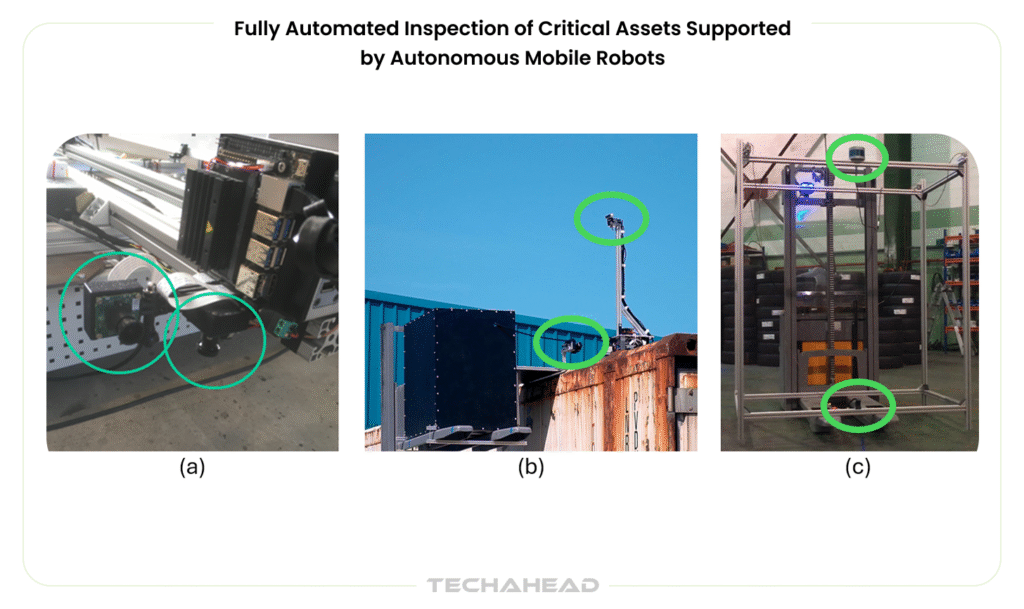
Key findings demonstrate the viability of fully automated inspection:
- Railway Infrastructure: Robots equipped with AI-based object detection successfully identified vegetation and weeds growing between rails, enabling targeted removal instead of broad chemical treatments
- Port Operations: Autonomous systems performed container inspection and loading verification tasks in complex, unstructured port environments
- Performance: Field tests using real datasets showed that the synergy between AMR/AGV platforms and AI object detection is “promising, paving the way for new use cases that leverage the autonomy and intelligence embodied by this technological crossroads”
The study concludes that these systems possess “extraordinary detection and discrimination capabilities to perceive the environment,” achieving performance levels “that cannot be achieved with conventional computer vision” alone.
Smart Logistics and Warehouse Automation
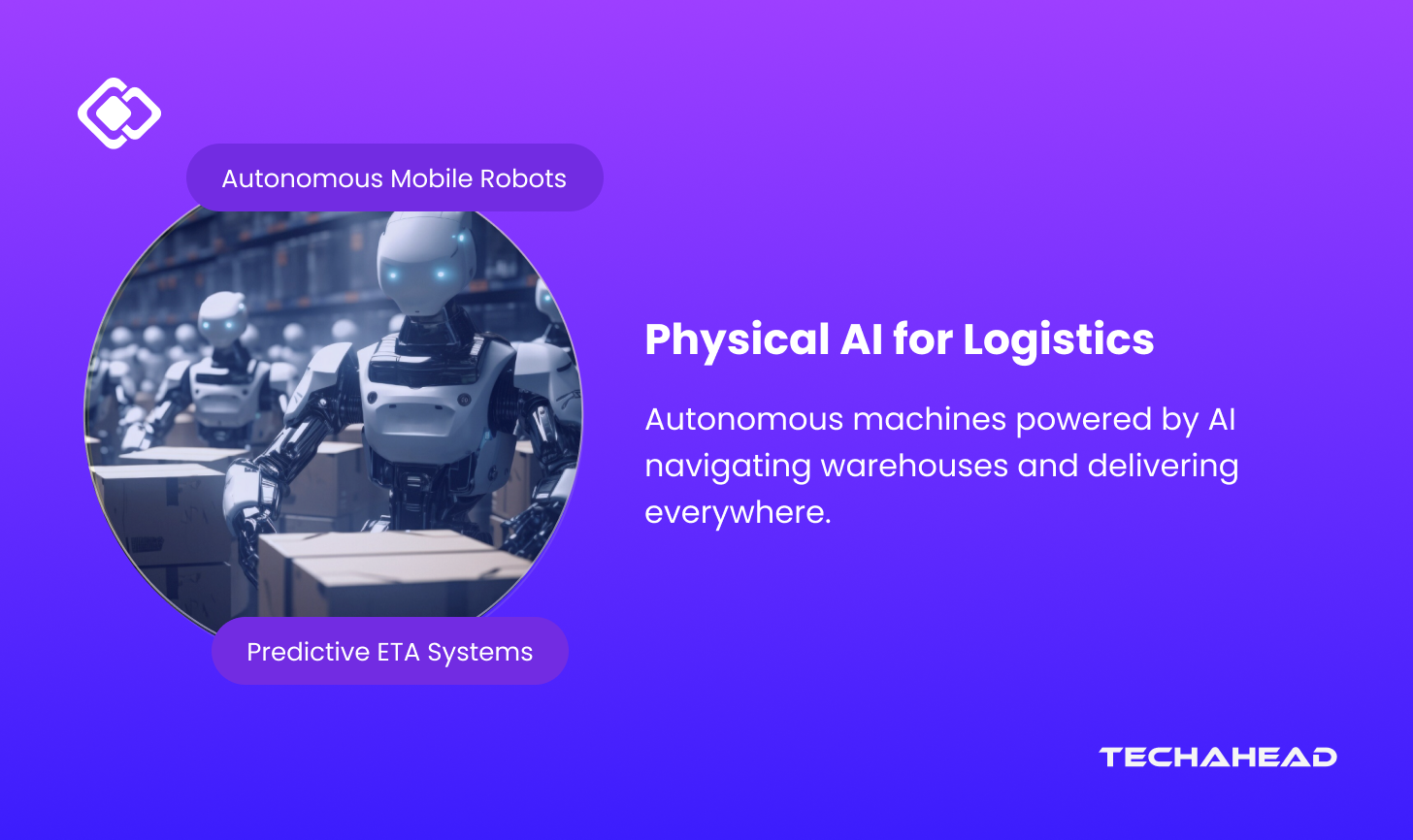
Warehouse automation represents one of Physical AI’s largest current markets.
Citi Research projects the total addressable market for warehouse automation systems will increase by ~11% CAGR to $112 billion by 2029, with AGVs and AMRs capturing approximately 20% of this market.
Modern warehouse robots navigate dynamically around workers, identify and manipulate diverse inventory items, coordinate fleet movements to optimize throughput, and adapt to changing order priorities in real-time. Companies like Amazon, Alibaba, and DHL deploy thousands of robots working alongside human employees.
Operational Benefits: Organizations deploying warehouse automation with embodied AI report:
- Improved throughput: 24/7 operation without fatigue
- Reduced error rates: AI vision systems accurately identify items and verify picks
- Scalability: Easily add robots during peak seasons
- Safety improvements: Robots handle heavy lifting and navigate safely around workers
By 2030, forecasts suggest AMRs will expand beyond material handling to become integral to production processes, including component assembly, automated inspection, and equipment maintenance.
Source: TechAhead AI Team
Physical AI in Healthcare: From Surgical Robots to Carebots
Embodied AI Across the Care Continuum
Healthcare represents one of Physical AI’s most impactful application domains. According to a comprehensive 2024 survey titled “From Screens to Scenes: A Survey of Embodied AI in Healthcare,” EmAI (Embodied AI) is transforming care through:
- Robotic diagnostics and imaging assistance
- Precise surgical interventions
- Personalized rehabilitation
- Companionship and emotional support for vulnerable populations
The survey highlights that embodied AI research in healthcare domains showed remarkable growth, with publications in 2024 nearly sevenfold higher than 2019. Clinical intervention research demonstrates the fastest growth while maintaining substantial shares across biomedical research, infrastructure support, daily care, and companionship applications.
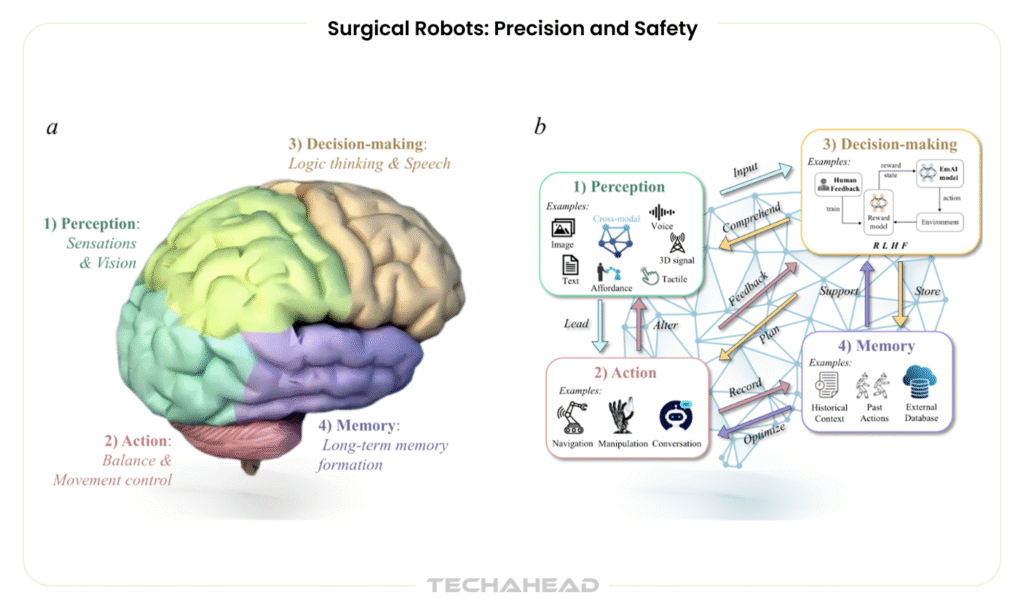
Surgical Robots: Precision and Safety
Robotic-assisted surgery has evolved from a niche application to a mainstream practice across multiple specialties.
The global surgical robot market reached $83.21 million in 2020, with the U.S., Europe, and China as the top markets. By 2026, robotic-assisted surgery systems will dominate the Physical AI healthcare segment.
Clinical Evidence: A 2025 systematic review synthesizing findings from 25 peer-reviewed studies (2024-2025) on AI-driven robotic surgery found:
- 25% reduction in operative time compared to manual surgical techniques
- 30% decrease in intraoperative complications compared to traditional methods
- Improved surgical precision through AI-enhanced feedback and comprehensive analysis
- Enhanced intraoperative decision-making through real-time AI assistance
Specific Applications:
- Neurosurgery and Orthopedics: Robotic systems use frameless navigation and data-driven surgical mapping for optimal implant placement, reducing postoperative complications. This segment shows the fastest projected growth in the forecast period.
- Minimally Invasive Surgery: AI-powered endoscopic systems provide real-time 3D mapping and anatomical reconstruction, enabling clinicians to navigate complex regions (gastrointestinal tract, respiratory pathways) with greater accuracy
- Surgical Training: AI analyzes surgical technique and provides feedback, accelerating learning curves for new surgeons
Leading platforms include Intuitive Surgical’s da Vinci system (with record installations continuing through 2024), CMR Surgical’s Versius robot, and emerging systems integrating advanced AI for autonomous task execution.

Diagnostic and Imaging Assistance
Embodied AI systems enhance diagnostic workflows through tele-operated robotic ultrasound for remote patient assessment, AI-assisted radiology accelerating image interpretation, and robotic systems using CT images to improve the localization of pulmonary nodules and assist in procedures like pedicle screw placements.
These systems proved particularly valuable during COVID-19, enabling remote lung assessments while reducing infection risk for healthcare workers.
Carebots and Social Robots: From Hospital to Home
An emerging application area involves robots providing care, companionship, and support, particularly for elderly populations, chronic disease patients, and individuals with disabilities.
Research on carebots published in 2025 describes systems that “can engage in adaptive conversations and perform complex tasks in dynamic environments, reshaping care from hospital to home.”
Mobile collaborative intelligent nursing robots assist healthcare professionals with patient monitoring, medication management, and bedside care in hospitals. In-home settings, they provide medication reminders, fall detection, social interaction, and coordination with remote healthcare providers.
Physical AI in Smart Cities: Urban Robots, Connected Infrastructure, and Public Services
Urban Robots and Intelligent Infrastructure
Smart cities represent the convergence of Physical AI with urban planning and public services. Embodied intelligence in urban contexts includes autonomous vehicles navigating city streets, delivery robots serving last-mile logistics, inspection drones monitoring infrastructure, and intelligent systems coordinating traffic signals and public transit.
Logistics robots already operate in controlled urban environments such as university campuses, business parks, and designated sidewalk zones, where they are delivering food, packages, and supplies. As technology matures and regulations evolve, deployment scales will expand dramatically.
Infrastructure inspection robots monitor bridges, tunnels, and railway systems, similar to the rail inspection applications described earlier. These systems provide continuous asset health monitoring, detecting problems early before catastrophic failures occur.
Global Initiatives and Policy Directions
China’s Embodied AI Strategy: Carnegie Endowment analysis describes how China views embodied AI and smart robots as pillars of future industrial and urban competitiveness. Investments focus on intelligent manufacturing and smart city development, with policy support extending beyond production subsidies to creating entire industrial ecosystems. This coordinated strategy gives Chinese companies significant advantages in robotics deployment and global market expansion.
Smart City Programs: Leading cities worldwide, such as Singapore, Barcelona, Dubai, and Copenhagen, are integrating robotics and AI for mobility optimization, waste management, energy grid management, and public safety.
These programs balance innovation with regulatory frameworks addressing safety standards, data privacy, and societal impacts.
Platform Vision: City-Scale Physical AI Integration
The complexity of smart city Physical AI creates opportunities for technology partners who can build integration platforms spanning mobile applications for citizens, operator consoles for city personnel, IoT and robot APIs, real-time analytics, and open data frameworks.
TechAhead can evolve from building individual applications to enabling city-scale platforms that emphasize interoperability, open standards, and human-centric design, essential for public trust and adoption in government services.
Design and Implementation Blueprint: How to Build Physical AI Systems
Reference Architecture
Successful Physical AI deployments align with what Citi Research describes as a “simulation, training, edge” framework by using simulation and digital twins for policy development, deploying to edge hardware for real-time control, and continuously updating models based on real-world performance.
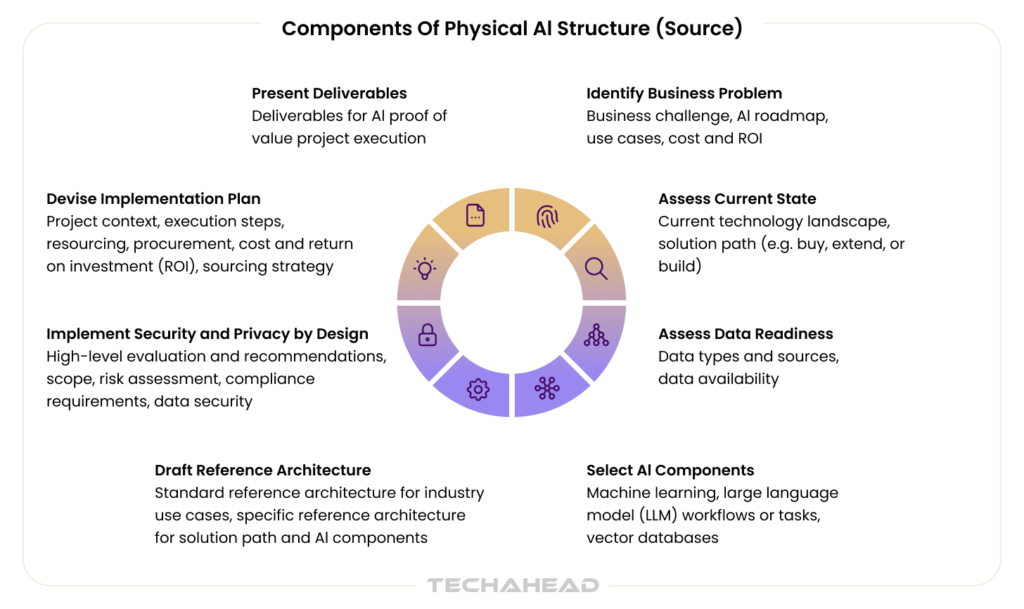
Architecture Layers:
1. Physical Layer: Robots, drones, sensors, actuators, and industrial equipment are the embodied hardware that interacts with the physical world
2. Edge Layer: On-device inference engines, low-latency control loops, safety interlocks, local data preprocessing
3. Cloud and Platform Layer: Training pipelines, fleet management systems, digital twins, logging and monitoring, model versioning
4. Application Layer: Mobile apps, web dashboards, operator tools, APIs, are the interfaces through which users interact with Physical AI systems
This layered architecture separates concerns: edge handles time-critical tasks, cloud provides intelligence and coordination, and applications deliver user experiences.
Build vs. Buy: Platforms, SDKs, and Integration
The Physical AI ecosystem increasingly offers commercial platforms and toolkits, reducing development effort:
- Warehouse Automation Stacks: Companies like Locus Robotics, AutoStore, and Geek+ provide complete warehouse robotics solutions with APIs for integration
- Robotics Platforms: Universal Robots, ABB, and FANUC offer collaborative robot platforms with programming interfaces
- Humanoid Platforms: Companies like Agility Robotics (Digit), Boston Dynamics (Atlas), and Tesla (Optimus) are developing general-purpose humanoid robots with SDK access
Integration Priorities:
The key challenge isn’t building robots from scratch, but integrating robotic capabilities with existing enterprise systems (ERP, MES, hospital information systems, city platforms) and establishing robust data pipelines for telemetry, monitoring, and continuous model improvement.
TechAhead’s Value: Expertise in API integration, cloud platform development, and building developer-friendly interfaces makes it ideal for creating the “glue” that connects Physical AI hardware with enterprise software ecosystems.
TechAhead: Bridging Research and Reality
TechAhead positions itself as the bridge between cutting-edge Physical AI research and real-world deployments on factory floors, in hospitals, and across smart cities. With 16+ years of experience in mobile development, cloud platforms, and AI implementation, TechAhead brings the full-stack capabilities Physical AI projects demand:
- Mobile and web applications for robot operators, supervisors, and end users
- Cloud platform development for fleet management, telemetry, and analytics
- API integration connecting robotic systems with enterprise software
- Edge computing implementations for real-time control
- MLOps infrastructure supporting continuous model improvement
- IoT orchestration coordinating sensors, robots, and backend systems
The Physical AI revolution has arrived. Organizations that move decisively, by initiating focused pilots, building capabilities, and partnering with experienced technology firms, will lead their industries through this transformation. Those that wait risk falling behind as competitors deploy intelligent embodied systems that deliver superior efficiency, quality, and innovation.
Ready to explore how Physical AI can transform your operations? Contact TechAhead to discuss your specific use cases and develop a strategic roadmap for implementing embodied intelligence at scale.
What is Physical AI and how does it differ from software AI?
Physical AI embeds intelligence in robots and machines that perceive, reason, and physically act in real-world environments autonomously.
Which industries benefit most from Physical AI deployment today?
Manufacturing, healthcare (surgical robots), logistics and warehousing, smart cities, and infrastructure inspection see the highest Physical AI adoption.
How does Physical AI improve surgical outcomes in healthcare?
Robotic-assisted surgery achieves 25% faster operative times and 30% fewer complications through precision, stability, and AI-enhanced intraoperative decision-making.
What are the main technical challenges facing Physical AI systems?
Robust perception in unstructured environments, sim-to-real transfer gaps, handling edge cases, energy efficiency, and ensuring safety remain key challenges.
When will Physical AI systems become mainstream in enterprises?
Early adoption is happening now; mainstream deployment expected 2027-2030 as technology matures, costs decrease, and regulatory frameworks solidify.