


 Copy Link
 Share on X
 Share on Facebook
 Share on LinkedIn
Always Active
Required for core functionality such as security, network management, and accessibility. These cannot be disabled.

Uncover the transformative potential of digital and mobile solutions for your industry.





 Last Updated: Sep 29, 2026
Jul 7, 2025
Last Updated: Sep 29, 2026
Jul 7, 2025  3252
3252  20 min. Read


Key Takeaways
When ChatGPT first excited the leadership team, the possibilities for enterprise AI seemed endless! However, as the excitement fades, reality hits: your AI initiatives are running into tough challenges. Hallucinations in business decisions, outdated information, no access to proprietary knowledge. Yes, Gen AI tools are good for general tasks, but they are not built for a complex enterprise world.
Here, Retrieval-Augmented Generation (RAG) comes in, which promises to ground AI responses in your company’s own data. However, for many organizations, even traditional RAG solutions are not enough.
Besides that, enterprises deploying traditional Retrieval Augmented Generation (RAG) models report persistent issues with data accuracy, hallucinations, and integration gaps across siloed information sources.
The result? Billions wasted annually on underperforming AI implementations. Yes, these models enhance reasoning capabilities, but they come at a price (financial and latency cost).
For example, according to Open AI, GPT-4o costs $2.50 per 1 million input tokens and $10 per 1 million output tokens. The o1 costs $15 per 1 million input tokens and $60 per 1 million output tokens.
Indeed, traditional RAG architectures, while promising, often fail to deliver enterprise-grade accuracy. In fact, a recent IDC survey found that large organizations cite “fragmented knowledge bases” as the top barrier to effective AI adoption.
However, there is a way to unlock the true potential of your business data. That is why enterprises like JP Morgan and IBM are using Hybrid RAG Architecture for niche processes. It seamlessly combines the semantic understanding of vector search with the reliability of structured knowledge graphs.
In this blog, we are going to explore how Hybrid RAG Architecture can transform your enterprise AI strategy. You will discover the technical foundations that make it work, real-world implementations across industries, and practical steps to evaluate whether this technology fits your organization’s needs. So, let’s dive in:


Hybrid RAG Architecture is an advanced framework in artificial intelligence. It combines multiple retrieval techniques (vector-based search and structured knowledge graphs) to enhance the accuracy of generative AI outputs.
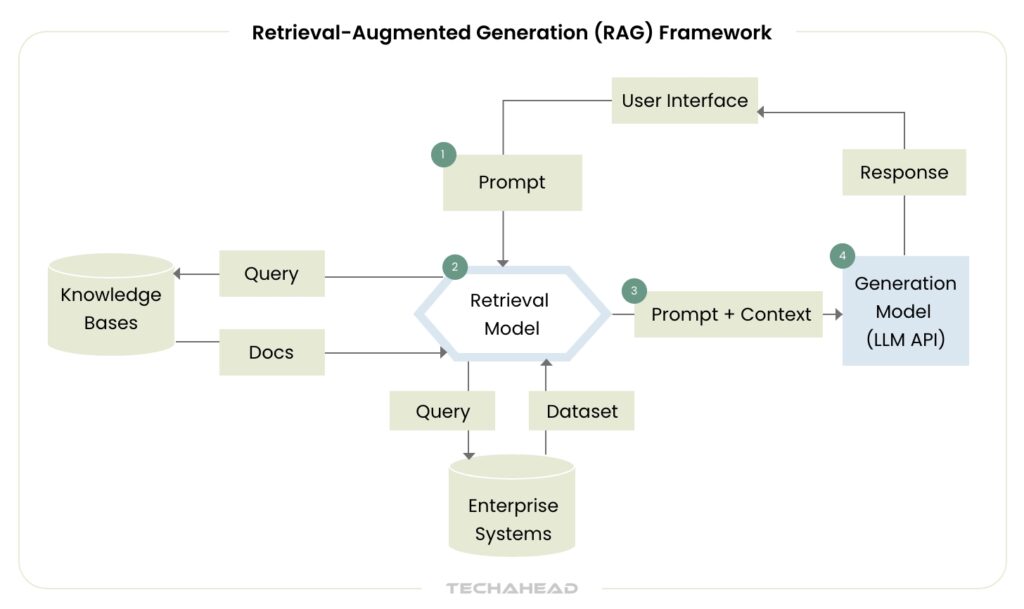
Traditional language models usually rely on pre-trained knowledge. However, hybrid RAG dynamically retrieves both unstructured and structured data at the time of a user query. The hybrid nature of this system lies in its ability to blend different retrieval methods—such as dense, sparse, and graph-based approaches—allowing it to handle a wide range of query types and improve answer accuracy.
It means that when you ask a question, the retrieval module selects relevant documents or passages from external data sources, which are then passed to the generative model. The retrieval system integrates multiple retrieval mechanisms, including semantic and keyword-based search, to optimize the information retrieval process and ensure responses are grounded in both internal training data and external data. As a result, you can expect ‘personalized’ responses suitable for your enterprise needs.
Hybrid RAG is the advanced form of simple RAG that addresses the challenges more efficiently and helps your enterprise get better responses. Following table shows the key differences between the two models:
| Feature | Simple RAG | Hybrid RAG |
| Retrieval Method | Single (usually vector or keyword) | Combines multiple (vector, keyword, graph, etc.) |
| Data Types Supported | Unstructured text only | Structured and unstructured data |
| Context Handling | Independent text chunks | Merges structured and unstructured context |
| Accuracy & Robustness | Moderate, can miss nuanced queries | Higher, handles complex and ambiguous queries better |
| Scalability | Easier to deploy, less resource intensive | More complex setup, suited for enterprise environments |
| Use Cases | FAQs, basic Q&A, simple summarization | Financial analysis, compliance, multi-domain reasoning |
| Hallucination Risk | Higher, limited grounding | Lower, better factual grounding |
Hybrid RAG retrieves relevant documents by leveraging multiple retrieval methods, such as combining vector similarity search with keyword-based search, which results in higher keyword precision and improved semantic matches. This approach enables the system to retrieve and synthesize information from multiple documents, ensuring that responses are more accurate and contextually relevant based on the retrieved data and retrieved information.
Now, you may ask what makes Hybrid RAG so powerful compared to traditional AI solutions? The answer lies in its multi-layered architecture that seamlessly orchestrates data retrieval, processing, and generation.
A key component is the knowledge graph, which represents entities, attributes, and relationships within structured graph data. Knowledge graphs are typically stored in a graph database, enabling efficient storage and traversal of this structured information. This allows the system to quickly access and reason over complex relationships, enhancing the retrieval and generation process.
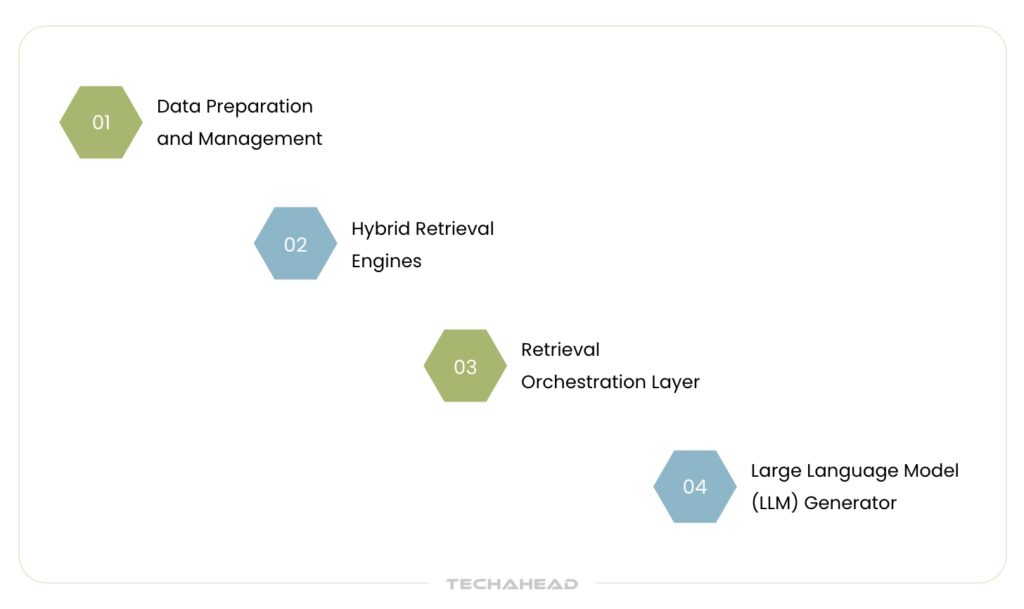
Data ingestions and processes are essential parts of data management. Generally, enterprise data is divided into manageable segments (chunks) and transformed into vector embeddings using advanced embedding models. Unstructured text data, such as product reviews, earnings call transcripts, or financial documents, is processed and converted into embeddings to enable effective retrieval and answer generation.
Moreover, effective data management includes generating metadata and summaries (for quick retrieval) and data cleaning for indexing relevant, high-quality business information.
The best feature of Hybrid RAG is its integration of multiple retrieval methods.
You can say this orchestration layer is the system’s brain. It determines how and when to leverage each retrieval engine. Orchestration layer merges and ranks results from different sources and makes sure the most relevant (contextually appropriate) information is selected.
Moreover, this layer also optimizes the inputs for the language model with better query reformulation, context window management, and relevance tuning.
Once the most relevant data is retrieved, both the original user query and the curated context are sent to the generator component. There, the Large Language Model synthesizes this information to produce a context-aware response, which is tailored to the user’s needs. It is a crucial step that transforms raw data into actionable insights.
Hybrid RAG architecture is a complex one and all the layers work together to deliver context-rich AI outputs for enterprise needs.
While traditional systems struggle with enterprise complexity, Hybrid RAG follows a precise workflow based on the retrieval augmented generation (RAG) approach. This workflow uses a systematic retrieval mechanism to fetch relevant context and external data, ensuring that the language model is grounded in accurate and comprehensive information. Let’s walk through the seven-step workflow that transforms your fragmented enterprise data into actionable insights by processing retrieved data from multiple sources to provide the most relevant context for your queries:
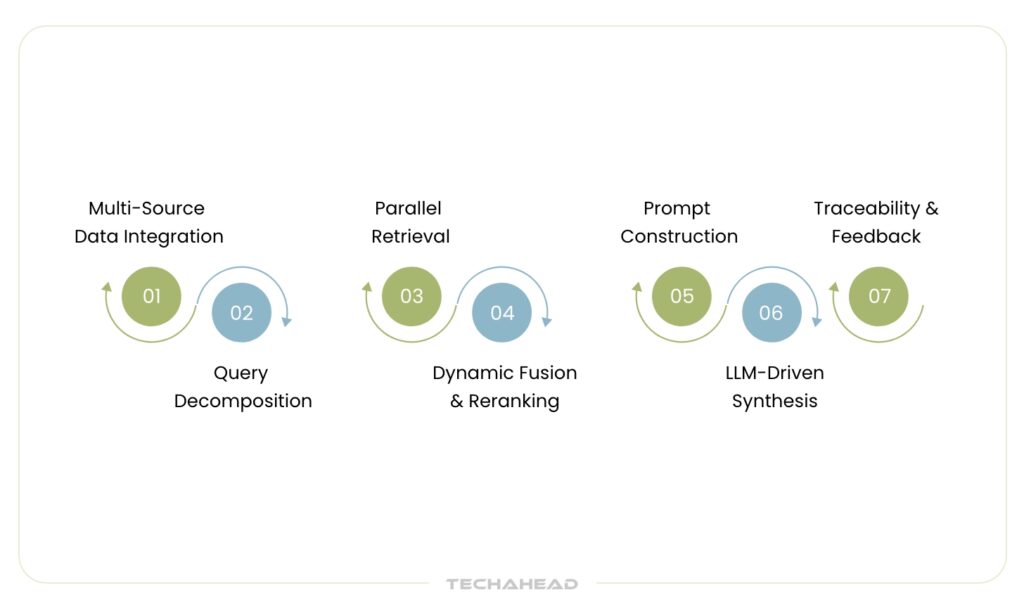
First, the data management part, here, hybrid RAG connects different data sources, even unstructured documents, SQL databases, and knowledge graphs. Then, each data type is pre-processed; text is embedded, tables are structured, and graph data is mapped for traversal.
Upon receiving a user query, the system decomposes it into components suitable for different retrieval engines. For example, entities and relations are extracted for graph searches, while semantic embeddings are generated for vector retrieval.
Distinct retrieval engines operate in parallel, forming hybrid systems that combine multiple retrieval approaches and are particularly effective at handling complex, multi-constraint queries requiring both semantic understanding and keyword precision:
After that, results from all engines are dynamically fused. Advanced reranking models (powered by machine learning) prioritize results based on context relevance and query intent.
The orchestrator balances the inclusion of structured facts and narrative context. This step makes sure the input remains within the language model’s context window.
Then, the language model synthesizes a response using the curated prompt and generates an output tailored to enterprise needs.
As each response is linked to its source data, it helps in better traceability. For improvement, RAG uses the feedback from the users and optimizes the responses.
It is a simple step by step process, but hybrid RAG follows a more complex process to deliver context-rich, relevant answers.
Here is a list of structured and unstructured data sources for an enterprise-level hybrid RAG architecture. Hybrid RAG systems leverage both structured and unstructured text data, including external data sources, to enhance the accuracy and relevance of generated responses. By integrating information from sources such as product reviews, earnings call transcripts, financial documents, and knowledge graphs, these systems ground AI outputs in factual and contextually rich information.
Vector databases are foundational to the effectiveness of Hybrid RAG systems, enabling the storage and rapid retrieval of high-dimensional vector embeddings that represent the semantic meaning of documents, passages, or even individual sentences. When a user submits a query, the system transforms it into a vector using advanced embedding models.
Vector retrieval then searches the vector database to identify the most semantically similar documents, ensuring that the most relevant information is surfaced—even when the query wording differs from the source material.
This semantic search capability allows Hybrid RAG to go beyond traditional keyword search, which relies on exact term matches and may miss contextually relevant documents. By leveraging vector search, Hybrid RAG systems can capture subtle relationships and meanings, retrieving information that aligns closely with the user’s intent.
However, Hybrid RAG doesn’t stop there; it combines vector retrieval with other retrieval methods, such as keyword search, to ensure comprehensive coverage. This hybrid approach ensures that both semantically relevant and keyword-precise documents are retrieved, maximizing the relevance and accuracy of the information provided.
The integration of vector retrieval with keyword and structured search methods allows Hybrid RAG to handle a wide variety of queries, from straightforward fact-finding to complex, context-rich questions. As a result, organizations benefit from improved retrieval accuracy, richer context, and more actionable insights, making Hybrid RAG a powerful solution for enterprise-scale information retrieval.
Knowledge graphs are a powerful asset within Hybrid RAG systems, providing a structured representation of entities, relationships, and concepts that underpin enterprise data. By organizing information in a graph format, knowledge graphs enable Hybrid RAG to understand not just isolated facts, but the connections and context that give those facts meaning.
This structured data is invaluable for interpreting complex user queries, disambiguating terms, and surfacing relevant documents that might otherwise be overlooked.
In practice, knowledge graphs enhance the retrieval process by allowing the system to traverse relationships between entities—such as customers, products, or regulations—and extract structured information that directly addresses the user’s needs. For example, in finance or healthcare, knowledge graphs can map intricate relationships between regulations, procedures, or patient data, enabling the retrieval of highly relevant and precise information.
By incorporating knowledge graphs, Hybrid RAG systems can deliver responses that are not only contextually rich but also grounded in authoritative, structured information. This leads to more accurate, explainable, and trustworthy outputs, especially in domains where the interplay of structured and unstructured data is critical.
Ultimately, knowledge graphs empower Hybrid RAG to provide deeper insights and more meaningful answers, elevating the overall retrieval process.
Understanding the core architecture is important, but what really matters is the bottom-line impact. Here is how Hybrid RAG Architecture delivers tangible business value for your enterprise:
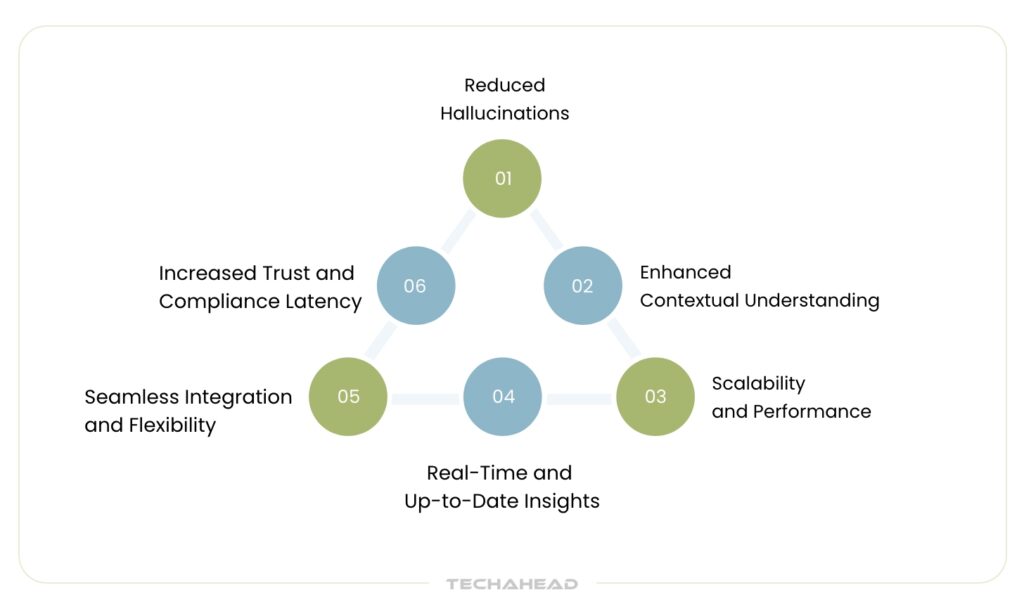
Hybrid RAG Architecture offers better responses than regular Gen AI tools because it combines structured reasoning with flexible semantic search. As a result, it reduces the hallucinations even for ambiguous queries.
Hybrid RAG uses multiple retrieval strategies for delivering deeper contextual understanding. Knowledge graphs map relationships between entities and allow the model to interpret nuanced queries and provide richer, human-like responses. It plays an important role where interplay of data points is crucial, especially in finance, healthcare, and law.
Hybrid RAG addresses scalability challenges through efficient design and modular retrieval mechanisms that handle large datasets. However, hybrid RAG systems require significantly more computational resources and engineering effort compared to traditional “naive” RAG architectures, as they must perform dual-vector generation, double-search operations, and complex fusion logic.
Implementing a hybrid RAG approach also increases technical and operational overhead due to the complexity of managing multiple retrieval methods. It uses dynamic orchestration, efficient indexing methods, such as
Unlike static language models (limited training data), Hybrid RAG can access and integrate the latest business information for your enterprise. It is crucial for healthcare and finance industries where regulations, market conditions, or research findings are essential.
Hybrid RAG is designed to work with existing enterprise infrastructure, which supports the integration of tools like SharePoint, Salesforce, wikis, legacy databases. The best part? You can unlock more value from your current information assets, which helps you make more informed business decisions.
Hybrid RAG offers source-linked responses, which means better transparency and trust, which you cannot expect from regular open source Gen AI models. Here, users can verify the origin of every answer that supports informed business decisions.
Hybrid Retrieval-Augmented Generation (RAG) architecture is transforming different industries from healthcare to finance. Here is how different industry leaders are leveraging the Hybrid RAG model to solve their complex business challenges:
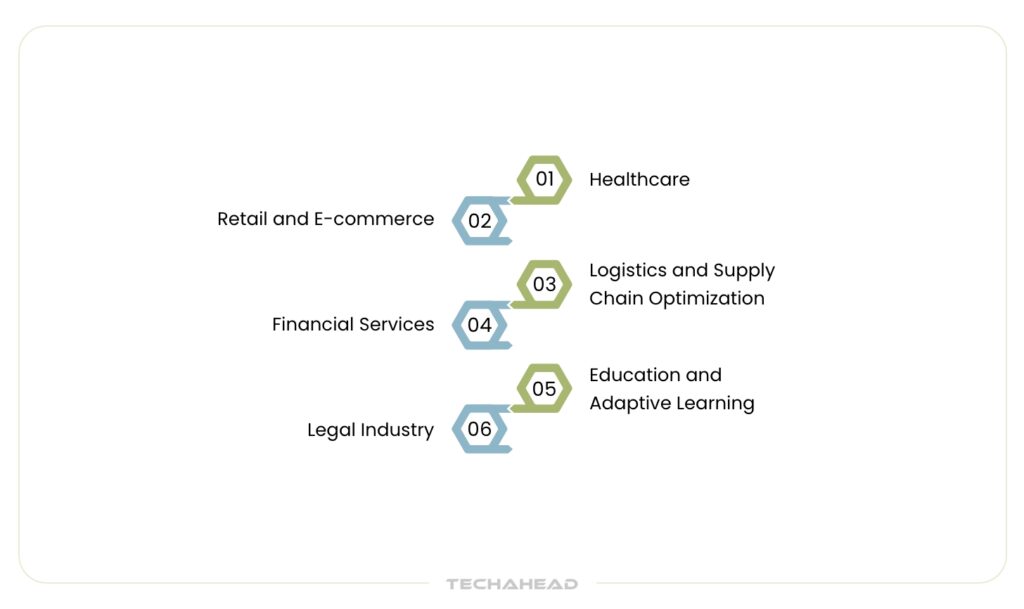
In healthcare, Hybrid RAG helps medical professionals quickly synthesize clinical evidence. They use research papers, hospital protocols, and patient records as the main data sources.
IBM Watson Health, for example, uses RAG to provide doctors with tailored treatment recommendations from (structured and unstructured) electronic medical records (EMRs). As a result, it reduces review time and supports faster, evidence-based clinical decisions.
Retailers like Walmart deploy AI agents to manage real-time inventory data and product manuals. These systems deliver personalized, accurate responses to customer queries in the ecommerce industry, which improves satisfaction and reduces return rates. It works like RAG, which usually updates answers based on seasonal trends and customer needs that helps to optimize customer engagement.
DHL uses Hybrid RAG to optimize delivery routes by integrating real-time traffic data, logistics databases, shipment records. RAG helps them in dynamic route planning, which reduces significant operational costs. The combination of semantic search and structured data retrieval helps them adapt rapidly to changing conditions.
Financial firms leverage RAG to analyze market trends, financial reports, and regulatory documents. JP Morgan’s RAG-based systems reduce settlement errors and speed up legal document retrieval. RAG also helps banking and other financing institutions provide better investment decisions with up-to-date market information.
In EduTech, you can employ RAG to deliver personalized learning experiences tailored to individual student needs. It offers data charts and student-friendly responses that improve knowledge retention.
Law firms utilize RAG to quickly scan vast legal databases, statutes, and case laws. Here, keywords and semantic retrieval help lawyers build stronger cases with less research time. As a result, it accelerates legal workflows and quality of advice.
Indeed, Hybrid RAG empowers enterprises across industries to unlock the full value of their diverse data assets.
Assessing the performance of a Hybrid RAG system requires a comprehensive set of evaluation metrics that reflect both the quality of information retrieval and the accuracy of generated responses. Retrieval accuracy is typically measured using precision, recall, and F1-score, which evaluate how effectively the system identifies and returns relevant documents in response to a query. These metrics help ensure that the retrieval component of Hybrid RAG consistently surfaces the most pertinent information.
A balanced evaluation approach—combining retrieval accuracy, factual correctness, and text quality—provides a holistic view of a Hybrid RAG system’s strengths and areas for improvement. This ensures that the system not only retrieves the right information but also presents it in a clear, accurate, and actionable manner, supporting confident decision-making in enterprise environments.
Hybrid RAG stands out among retrieval architectures due to its ability to combine multiple retrieval methods—such as vector search, keyword search, and knowledge graph-based retrieval—within a unified framework. Traditional retrieval systems often rely on a single method: keyword search excels at matching exact terms but may miss semantically relevant content, while vector retrieval captures semantic similarity but can overlook precise keyword matches or structured data.
By integrating these diverse retrieval methods, Hybrid RAG offers a more flexible and robust retrieval process. It can handle both structured and unstructured data, adapt to complex user queries, and deliver more accurate and contextually relevant results. This hybrid approach is particularly advantageous in enterprise scenarios where data sources are varied and user intent can be nuanced.
Compared to single-method systems, Hybrid RAG’s ability to orchestrate multiple retrieval strategies ensures that no relevant information is left behind—whether it resides in unstructured text, structured databases, or knowledge graphs. This results in improved retrieval accuracy, richer context, and more comprehensive answers, making Hybrid RAG the preferred choice for organizations seeking to maximize the value of their data assets and support advanced AI-driven decision-making.
Building a successful Hybrid RAG system is not about connecting data sources; it is about architecting a foundation that scales with your business growth.
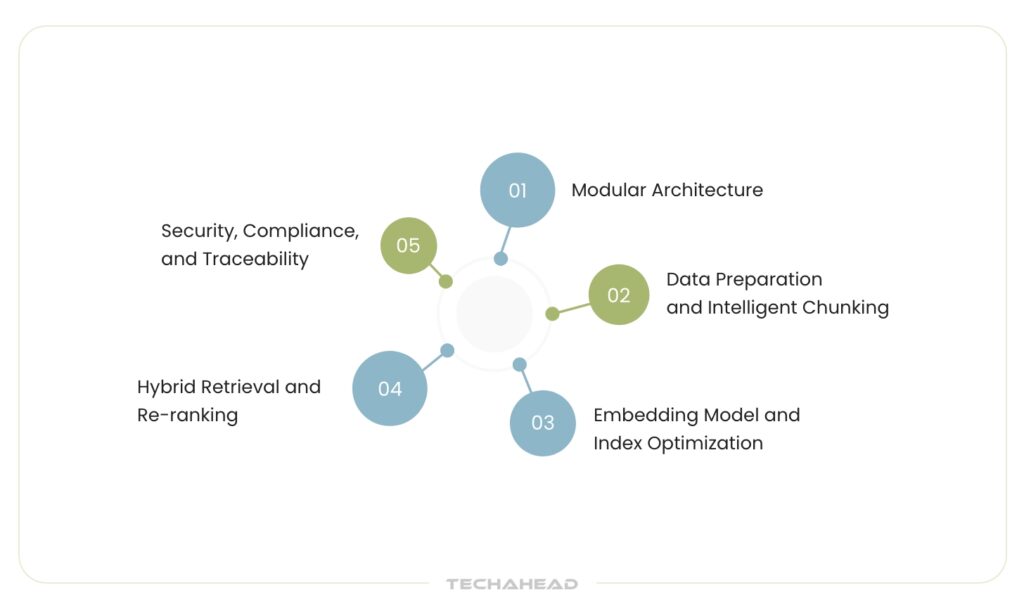
Design your Hybrid RAG system with a clear separation between the retriever, generator, and orchestration layers. This modularity is good for independent updates, easier debugging, and seamless scaling. Microservices or containerized deployments are recommended for flexible scaling.
Effective data ingestion and chunking are essential for hybrid RAG. You can also use semantic or hierarchical chunking strategies for improved retrieval accuracy. Besides that, enrich your data with metadata such as timestamps, authors, and topics to boost both search relevance. Regularly prune outdated or duplicate content to keep your knowledge base current.
Select embedding models tailored to your domain, such as Sentence-BERT or domain-specific transformers. Moreover, you can optimize your vector database with sharding, caching, and appropriate similarity metrics for high-throughput retrieval. Fine-tune your models/retrieval strategies based on user feedback.
Developers combine vector-based semantic search with graph-based retrieval for a better outcome. You can also implement advanced re-ranking algorithms to prioritize the authoritative results.
Developers usually design RAG to provide source linked responses that offer transparency. Moreover, you can secure data pipelines, granular access controls, and audit trails for fetching essential outputs.
The industry is moving towards “RAG as a Service.” It means cloud-based solutions will abstract much complexity, which allows your teams to quickly integrate Hybrid RAG into existing applications without significant infrastructure investments. Indeed, the journey with Hybrid RAG is just beginning and you need to understand the future trends to maintain a competitive edge in your industry:
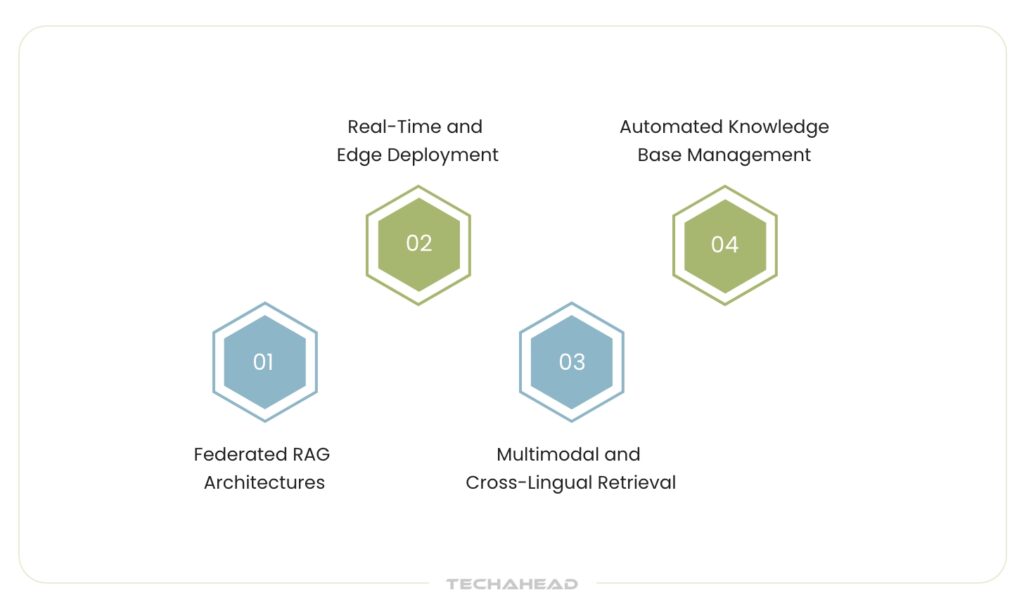
Federated RAG is emerging that encourages collaboration across organizations without sharing raw data. This approach supports secure knowledge sharing, especially in regulated industries like healthcare and finance.
Hybrid RAG systems can be deployed at the edge for real-time applications. For example, Walmart’s Edge RAG agents autonomously update shelf inventory and pricing based on live store conditions, while JP Morgan’s “RAG-on-Edge” reduces latency. It provides ultra-low-latency and context-aware responses.
Future RAG systems will integrate multimodal data, text, images, audio, and video. It expands the range of queries they can address. Cross-lingual retrieval capabilities are also advancing to expand the use of RAG in different industries.
Automated pipelines for data ingestion, deduplication, and re-indexing are becoming standard. As a result, you can expect a fresh and relevant knowledge base. Intelligent summarization and context window management will help overcome LLM input limitations.
If you are seeking faster, more accurate insights from your data, then Hybrid RAG is a smart investment. You can benefit from reduced operational costs, and the ability to scale without complexity. If you want to make confident decisions, backed by AI, then hybrid RAG should be your best investment.
Leading enterprises are already seeing measurable ROI and competitive advantages. As companies are already realizing transformative gains, now is the time to future-proof your business with Hybrid RAG and unlock the full value of your data assets.
The future of enterprise AI is not about choosing between accuracy and innovation; it is about having both. Hybrid RAG architecture is the evolution your organization needs to unlock the full potential of your data assets.
Ready to turn your fragmented data into a competitive advantage? Do not let your competitors get ahead while you are still dealing with AI hallucinations and siloed information.
TechAhead’s expert development team has successfully implemented advanced AI solutions for Fortune 500 companies, delivered 30%+ cost reductions and measurable business outcomes. Schedule a strategic consultation today to discover how we can transform your enterprise AI infrastructure and unlock millions in operational savings.
We use cookies to ensure our website functions properly, improve performance, and provide a personalized experience. You can choose which types of cookies to allow below.
Required for core functionality such as security, network management, and accessibility. These cannot be disabled.
Help us understand site traffic and user interactions so we can improve performance and usability.
Enable enhanced functionality and personalization such as language or region preferences.
Used to deliver relevant ads, track campaign performance, and measure advertising effectiveness.